Irish Weather Footwear Advisor
Select your current weather conditions and planned activity to get a tailored recommendation on whether to wear leather or switch to an alternative.
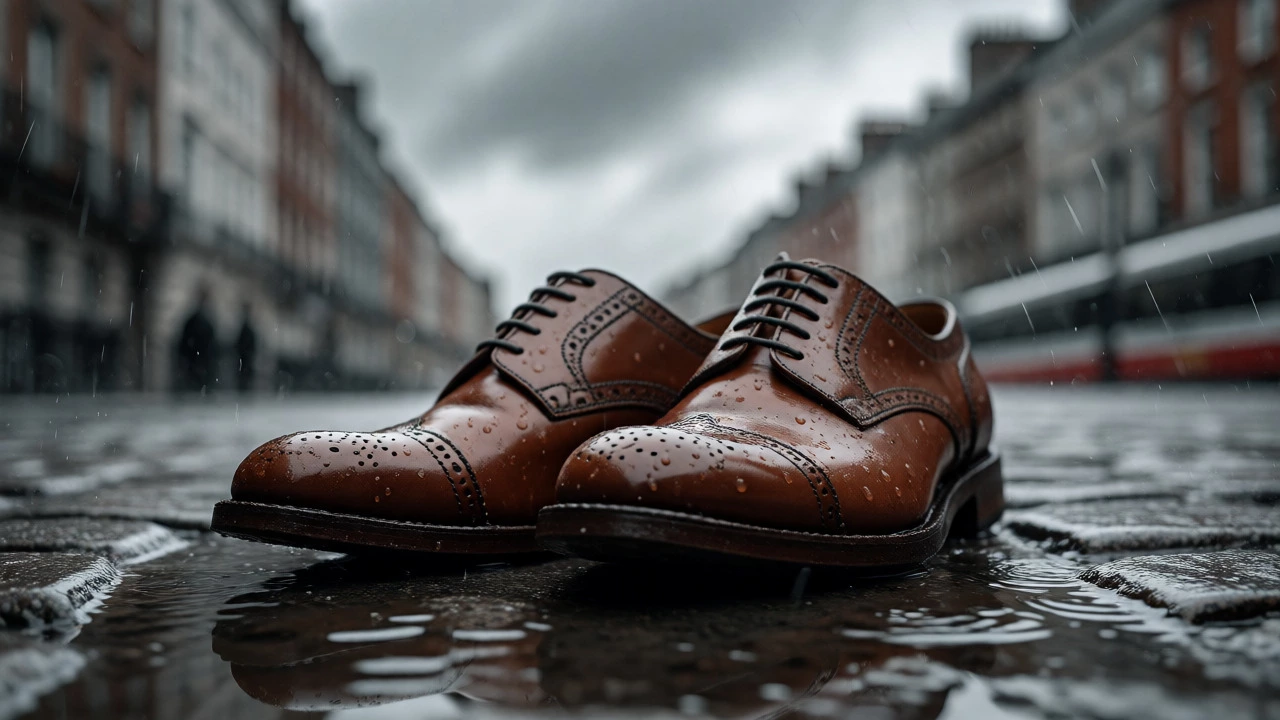
You step out of your office in Dublin’s city center, the sky is that familiar shade of grey, and a light drizzle begins to fall. You look down at your polished leather shoes, a type of footwear made from animal hide, prized for its durability and aesthetic appeal. For many, this is a moment of quiet dread. While leather has long been the gold standard for formal and smart-casual wear globally, the specific conditions in Ireland make it a surprisingly tricky choice for daily use. Is it really worth the hassle, or are we just being overly cautious? The answer isn't black and white, but understanding the interaction between traditional materials and our wet, mild climate changes how you should approach your wardrobe.
The Reality of Irish Rain vs. Traditional Leather
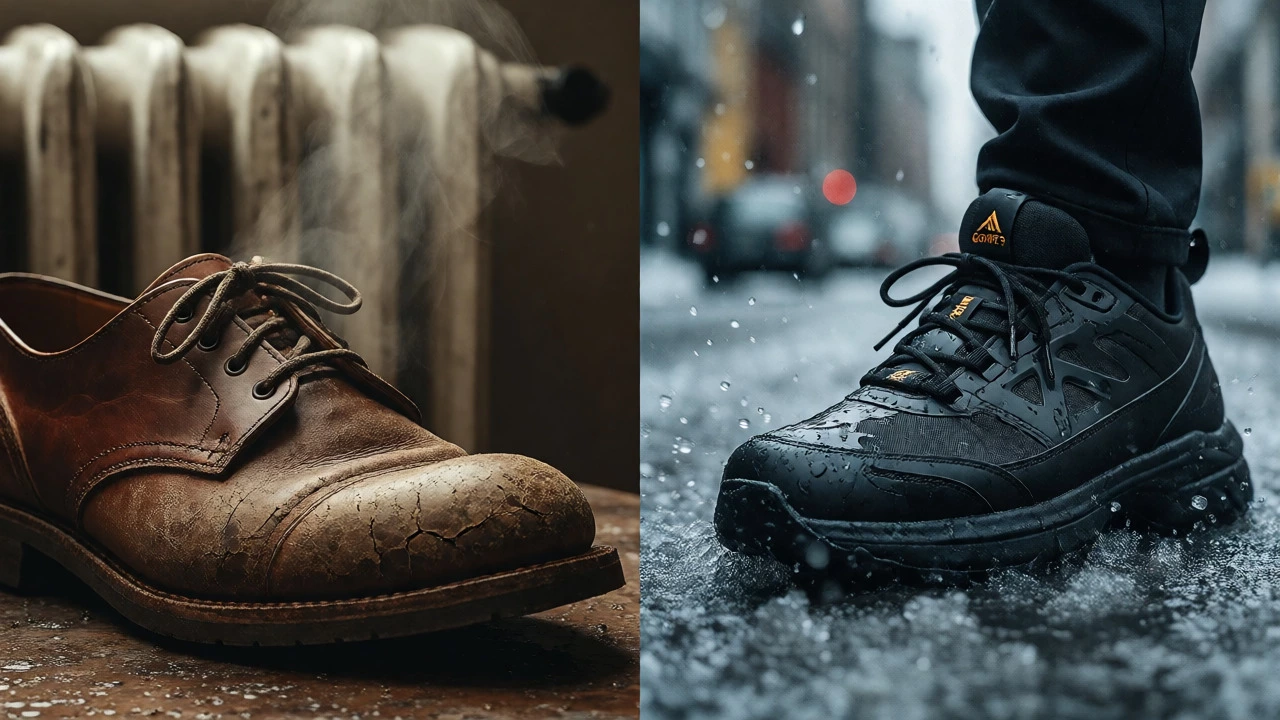
Let’s be honest: Ireland doesn’t get torrential monsoons like Southeast Asia, but we do get persistent, sideways rain that finds every gap in your umbrella defense. Standard full-grain leather, the highest quality leather with natural grain intact, offering strength but limited water resistance unless treated is porous. When exposed to our typical November dampness, untreated leather absorbs moisture. This leads to two immediate problems: warping and stiffness. If you’ve ever walked through Grafton Street during a sudden downpour without proper protection, you know the feeling of soggy soles and cold toes. Unlike synthetic materials, leather needs time to dry slowly; rushing this process near a radiator can crack the material permanently.
This isn’t just about comfort-it’s about longevity. In a country where we spend a significant portion of our waking hours outdoors commuting or walking, the wear-and-tear factor is amplified. A pair of expensive Italian leather brogues might last five years in a dry climate like Arizona, but in Cork or Galway, they might degrade in half that time if not meticulously maintained. The salt used on roads during occasional winter frosts further accelerates this damage, eating away at the stitching and the leather itself.
Health and Hygiene Concerns in Damp Conditions
Beyond weather damage, there’s a biological factor often overlooked. Leather is breathable, yes, but only when dry. Once it becomes saturated with sweat and external moisture, it creates a warm, dark environment perfect for bacteria and fungi. Athlete’s foot thrives in these conditions. If you’re wearing leather shoes for an eight-hour workday followed by a pub crawl, the internal humidity levels can skyrocket. For people with sensitive skin or existing fungal issues, switching to non-leather alternatives or highly breathable synthetics can significantly reduce irritation and odor.
| Material | Water Resistance | Drying Time | Best Use Case |
|---|---|---|---|
| Full-Grain Leather | Low (without treatment) | Slow (12-24 hours) | Office, Dry Days |
| Suede/Nubuck | Very Low | Very Slow | Indoor, Special Occasions |
| Treated Leather | Moderate | Moderate | Commuting, Light Rain |
| Vegan Leather (PU/PVC) | High | Fast | Rainy Commutes, Casual |
| Wool/Synthetic Knit | Low-Moderate | Fast | Casual, Indoor |
The Ethical and Environmental Angle
For many Irish consumers, the decision to skip leather is less about rain and more about ethics. With growing awareness of factory farming practices, brands like Stella McCartney, a luxury fashion brand known for using no leather, fur, or feathers have paved the way for high-quality alternatives. But it’s not just about animal welfare. The tanning process, particularly chrome tanning which accounts for roughly 80-90% of global production, involves heavy metals that can contaminate local waterways. In regions with strict environmental regulations, such as those enforced by the Environmental Protection Agency (EPA) in Ireland, sourcing ethically produced leather can drive up costs significantly.
Moreover, the carbon footprint of cattle farming is substantial. By choosing plant-based leathers-made from pineapple leaves (Piñatex), apple peels, or mushrooms (Mylo)-you reduce reliance on livestock agriculture. This aligns with the broader sustainability goals many Irish businesses are adopting. If you’re conscious of your ecological impact, the argument against leather extends far beyond the puddle on your doorstep.
When Leather Still Makes Sense
It would be unfair to dismiss leather entirely. It molds to your foot over time, providing a custom fit that few synthetics can replicate. For formal events, weddings, or business meetings where appearance matters, nothing quite matches the sheen and structure of well-maintained leather. Plus, high-quality leather boots, like those from heritage brands available in Dublin’s independent stores, offer excellent insulation against the cold if properly waxed.
The key is context. Wearing leather loafers to a festival in Clonmel might be a mistake, but wearing them to a boardroom meeting in Sandyford is perfectly acceptable. The issue arises when we treat leather as an all-purpose solution for a climate that demands versatility. Rotating your footwear is crucial. Never wear the same pair two days in a row. This allows the internal moisture to evaporate completely, extending the life of the shoe regardless of material.
Practical Tips for Surviving Irish Weather
If you decide to keep some leather in your rotation, here is how to manage it effectively in Ireland:
- Invest in Waterproofing Spray: Apply a silicone-free waterproofing spray every month. This fills the pores of the leather without blocking breathability.
- Use Shoe Trees: Cedar shoe trees absorb moisture and maintain shape. They are essential for anyone living in a humid climate.
- Rotate Your Shoes: Buy at least three pairs of everyday shoes. Let each rest for 24-48 hours between wears.
- Clean Salt Stains Immediately: Mix equal parts vinegar and water to wipe off road salt before it dries and damages the finish.
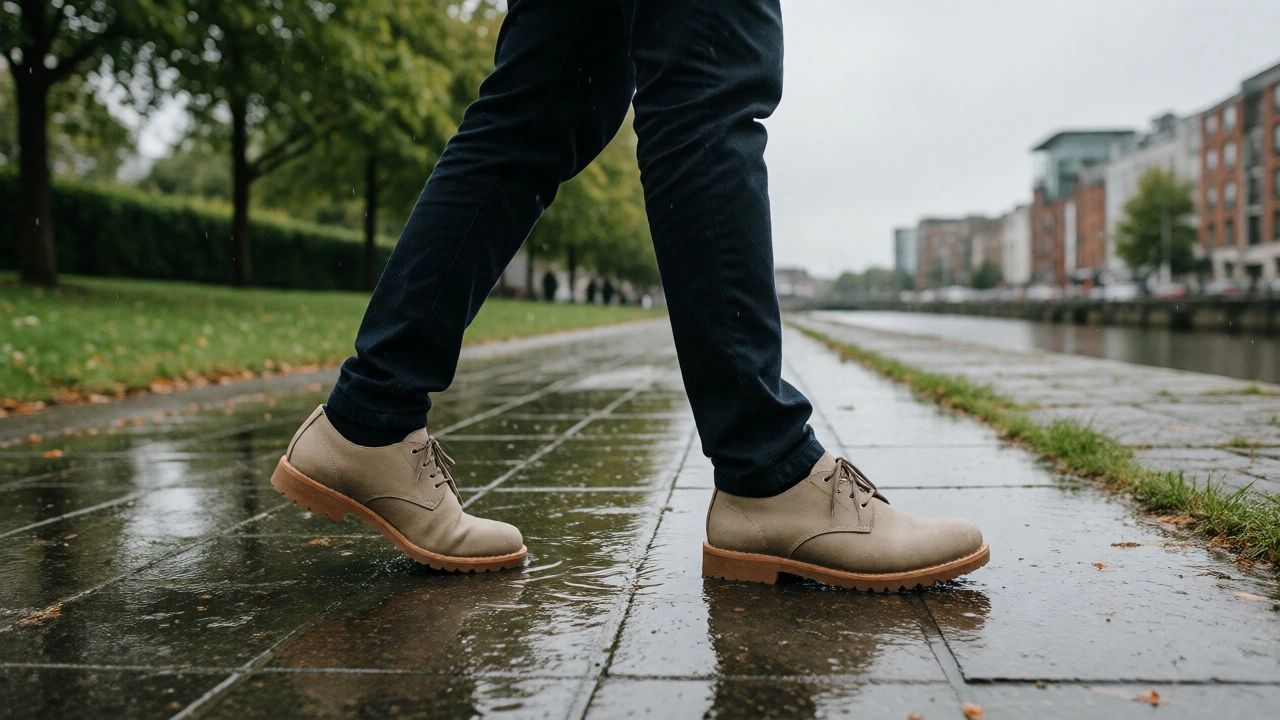
- Consider Rubber Soles: Choose shoes with Vibram or similar rubber soles rather than leather soles, which become slippery and wear down quickly on wet pavement.
Alternatives That Actually Work Here
So, what should you wear instead? Modern technology has closed the gap between style and function. High-performance synthetic materials now mimic the look of leather while offering superior water resistance. Brands specializing in urban hiking shoes, often seen on commuters around Grand Canal Dock, blend sneaker comfort with weatherproof membranes like Gore-Tex. These shoes breathe better than cheap vinyl and handle the slush of a January morning in Limerick with ease.
Vegan leather options have also improved dramatically. Early versions were stiff and prone to cracking, but current iterations are flexible and durable. Look for products labeled as "microfiber" or "bio-based" rather than just "synthetic," as these tend to age better. For casual wear, canvas sneakers with water-repellent coatings are a staple in the Irish wardrobe, pairing well with jeans and jackets without the maintenance burden of traditional leather.
Is leather waterproof?
No, natural leather is not inherently waterproof. It is porous and will absorb water, which can cause it to warp, stain, or crack if dried improperly. However, specially treated leathers or those with sealed seams offer moderate water resistance suitable for light rain.
How do I protect my leather shoes from Irish rain?
Apply a high-quality waterproofing spray designed for leather every few weeks. Always clean and condition the shoes first. After exposure to rain, let them air dry away from direct heat sources and insert cedar shoe trees to absorb internal moisture and maintain shape.
Are vegan leather shoes better for the environment?
Generally, yes. Vegan leathers avoid the high carbon footprint and water usage associated with cattle farming and toxic tanning processes. However, some synthetic vegan leathers rely on plastics derived from fossil fuels. Plant-based alternatives like Piñatex or Mylo are considered more sustainable choices.
Can I wear suede shoes in Dublin?
Suede is particularly vulnerable to water and stains. While you can wear suede in Dublin, it requires extreme caution. Avoid wearing them on rainy days or in muddy conditions. Regular brushing and specialized suede protectors are mandatory to prevent permanent water spotting and matting of the nap.
What is the best alternative to leather for daily wear in Ireland?
Synthetic microfibers or treated canvas with waterproof membranes are excellent alternatives. They offer similar aesthetics to leather but provide better water resistance and faster drying times, making them ideal for the unpredictable Irish weather.