Suit Value Calculator: Cost Per Wear & ROI
Understand why a €1,500 suit might be cheaper in the long run than a €300 one. Adjust the values below to see your personal break-even point.
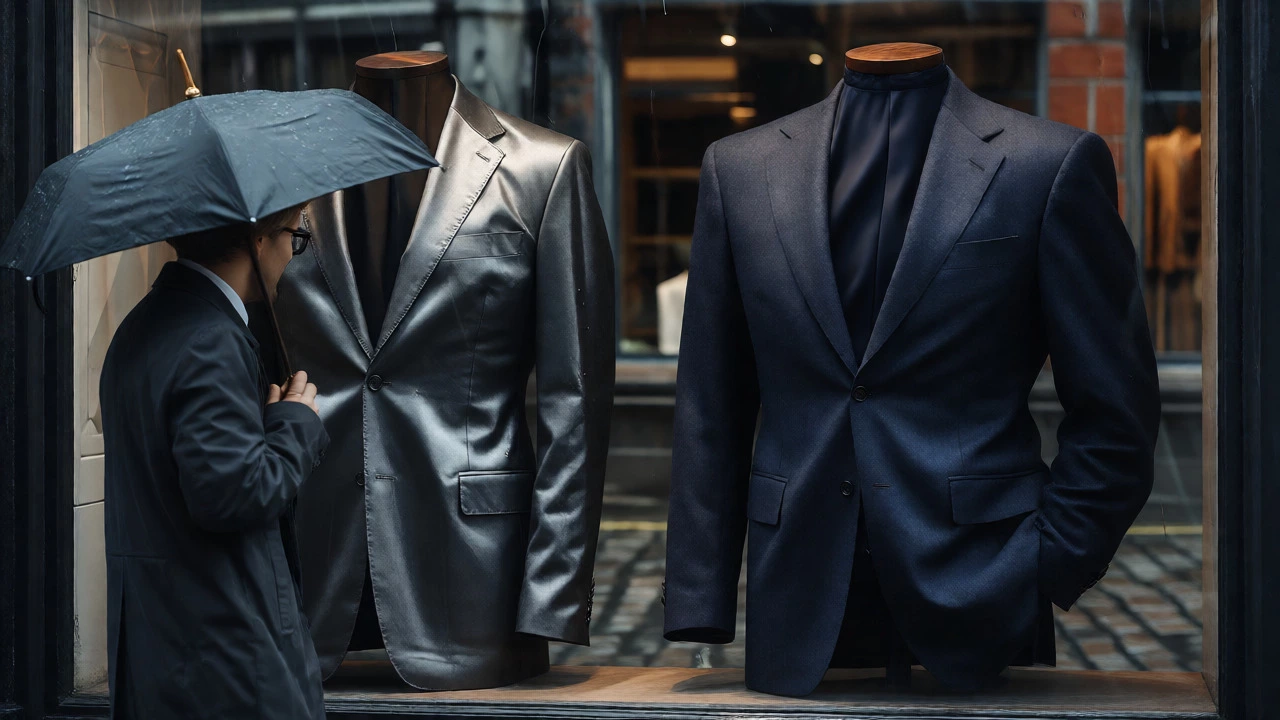
You walk into a shop in Grafton Street or browse online, and you see a men's suit priced at €1,500. You blink. You check the tag again. Is it gold-threaded? Does it come with a private jet? Meanwhile, two streets away, you can grab a similar-looking black number for €299. Why is there such a massive gap? If you’ve ever wondered why do men's suits cost so much, especially here in Ireland where we value both tradition and practicality, you’re not alone. The answer isn’t just about brand names; it’s about physics, labor, and the specific way clothes are built.
| Component | Off-the-Rack (€300) | Bespoke/Made-to-Measure (€1,500+) |
|---|---|---|
| Fabric | Synthetic blends, mass-produced wool | Super 120s-150s Merino, Italian mills like Loro Piana |
| Lining | Polyester or viscose | Bemberg cupro or pure silk |
| Construction | Fused (glued) interlining | Full canvas (hand-stitched horsehair) |
| Labor Hours | 4-6 hours (machine heavy) | 40-80+ hours (significant handwork) |
The Fabric Factor: It’s Not Just Wool
Let’s start with the raw material. When you buy a cheap suit, you’re often buying polyester mixed with low-grade wool. It looks fine under fluorescent lights, but put it on during a damp November day in Dublin, and you’ll feel the difference immediately. Cheap fabrics don’t breathe. They trap sweat against your skin, making you look and feel clammy by lunchtime.
High-end suits use natural fibers, primarily high-twist Merino wool from Australia or New Zealand. These fibers are finer, lighter, and more resilient. Brands like Harrisons of Edinburgh or Italian mills like Vitale Barberis Canonico supply the cloth used in premium Irish tailoring. The cost isn't just in the sheep; it's in the processing. Turning raw fleece into Super 120s or Super 150s yarn requires precision machinery that runs at slower speeds to prevent breakage. This yields less output per hour, driving up the price per meter. In Ireland, where our weather swings from drizzle to gale-force winds, investing in breathable, water-resistant natural fibers isn't a luxury-it's survival comfort.
Construction Methods: Glue vs. Canvas
This is the biggest secret the fashion industry doesn’t shout about loudly enough. Most affordable suits are "fused." This means the inner structure of the jacket-the part that gives it shape-is glued to the outer fabric using heat-activated adhesive. It’s fast, cheap, and uniform. But glue has a shelf life. After three or four dry cleans, or after a few years of wear, that glue starts to separate. You get bubbles on the chest or lapels that curl up like burnt toast. Once a fused suit bubbles, it’s dead. You can’t fix it.
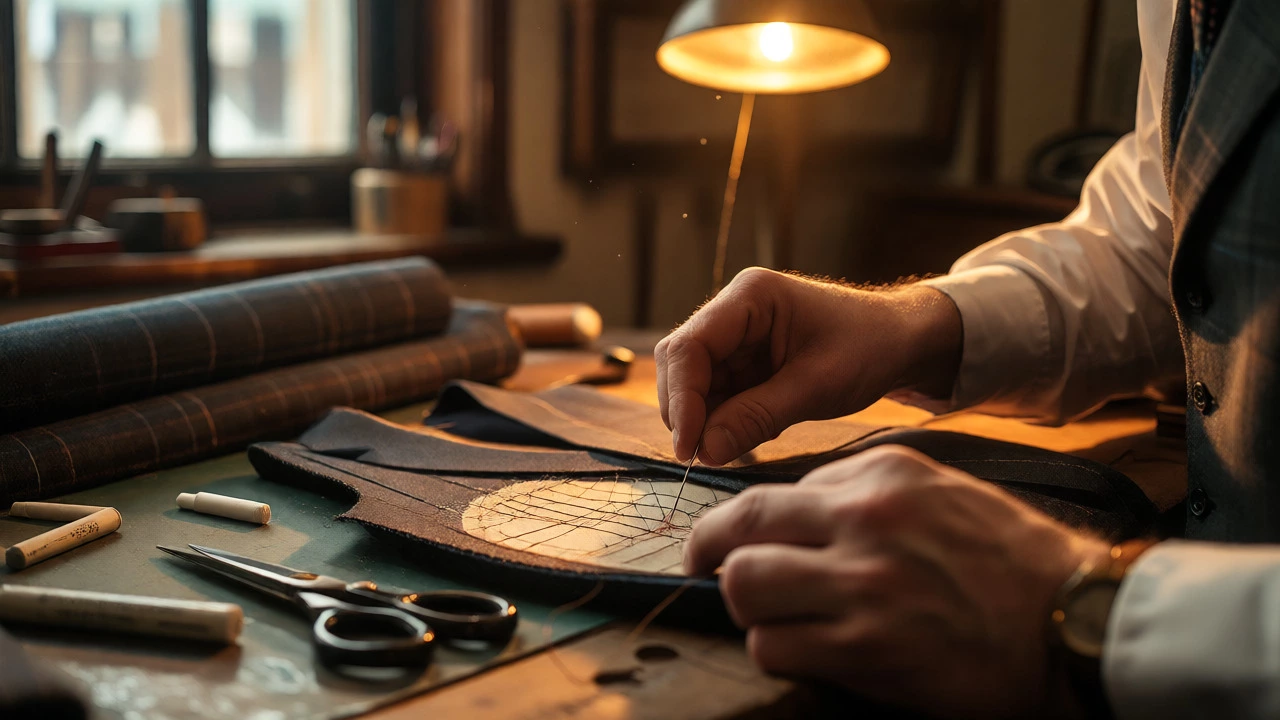
Expensive suits use a technique called "canvassing." There are two types: half-canvas and full-canvas. In a full-canvas construction, a layer of horsehair canvas is stitched between the outer fabric and the lining. It is not glued. This allows the jacket to mold to your body over time. It moves with you. When you raise your arm, the canvas flexes. When you sit down, the jacket breaks naturally rather than stiffening up. Hand-stitching this canvas takes a skilled tailor hours-sometimes days. In Dublin, tailors at places like Keating Green or The Tailor Shop on South Great George's Street rely on this method because it ensures longevity. You’re paying for the hours of human labor required to stitch those invisible layers together.
The Hidden Costs of Labor and Skill
We live in an era of automation, but tailoring remains stubbornly manual. A buttonhole on a mass-produced suit is done by a machine in seconds. On a bespoke suit, it’s often done by hand, using silk thread. Why does this matter? Machine buttonholes are rigid. Hand-worked ones have a slight flexibility and a richer texture. More importantly, fitting a suit to a human body is not a linear process. We all have quirks-one shoulder higher than the other, a curved spine, longer arms relative to our torso.
In Ireland, the tradition of craftsmanship is deep-rooted. Think of the Aran sweaters or tweed jackets woven in Donegal. High-end suiting respects this heritage. A master cutter in London or Dublin spends years learning how to draft patterns that account for posture. When you pay €2,000 for a suit, you aren't just buying cloth; you're buying the expertise of someone who knows exactly how much ease to leave in the sleeve cap so you can drive a car without pulling the shoulder seam up to your ear. That knowledge cannot be replicated by an algorithm yet.
Customization vs. Compromise
Buying off-the-rack is a compromise. You find a size that fits 80% of your body, and you hope the other 20% doesn't show. Bespoke or Made-to-Measure (MTM) eliminates that guesswork. In MTM, you choose the fabric, the lapel width, the pocket style, and the lining color. In true bespoke, the pattern is drawn from scratch based on your measurements.
Consider the logistics. For a bespoke commission, the tailor might need three fittings. Each fitting involves pinning, marking, and adjusting. This ties up the tailor’s schedule. While they are fitting you, they are not selling ten off-the-rack units. The opportunity cost is real. Furthermore, custom orders mean minimum waste. Mass production cuts hundreds of identical panels, discarding scraps. Custom cutting optimizes the expensive fabric roll specifically for one person, reducing waste but increasing the administrative overhead of managing unique orders.
Ireland’s Market Specifics: Import Duties and Retail Markup
Here’s a local reality check. Ireland imports almost all its luxury textiles. Whether it’s Scottish Harris Tweed or Italian wool, these goods cross borders. Post-Brexit trade adjustments and standard VAT rates (currently 23% in Ireland) add significant layers to the final price tag. When you buy a suit made in Italy or the UK, you’re covering shipping, customs clearance, and import duties before it even hits the sales floor in Brown Thomas or Arnotts.
Retailers also need to maintain margins. Physical stores in prime locations like Dublin’s city center pay hefty rents. They employ staff trained in styling, not just stocking shelves. They offer alterations-a service often free with purchase, which costs the retailer money in labor. When you compare a €300 online-only brand to a €1,500 store-bought suit, remember that the latter includes the cost of the building, the heating, the expert advice, and the guarantee that if a seam bursts six months later, they’ll fix it. Online brands often lack this safety net.

Longevity: The Cost Per Wear Argument
It’s tempting to look at the sticker price and balk. But let’s flip the script. Calculate the cost per wear. A €300 fused suit might last two years if worn weekly. That’s roughly €1.50 per wear, assuming 200 wears. But once it fuses, it looks shabby. You stop wearing it confidently.
A €1,500 full-canvas suit, properly cared for, can last 10 to 15 years. If you wear it twice a week, that’s over 1,000 wears. The cost per wear drops to €1.50 initially, but the residual value and aesthetic integrity remain high for a decade. Plus, natural wools self-clean better than synthetics. You don’t need to dry clean them as often, saving further on maintenance costs. In a culture like ours, where networking events, weddings, and formal business meetings are frequent, having a suit that retains its sharpness matters. A wrinkled, bubbling suit signals neglect; a well-maintained bespoke suit signals attention to detail.
How to Get Value Without Breaking the Bank
Does this mean you must spend thousands to look good? Absolutely not. Here is how to navigate the Irish market smartly:
- Know Your Fit: Spend more on fit than brand. Buy a mid-range suit (€400-€600) and take it to a local alterations specialist. A perfect fit makes a mediocre suit look expensive.
- Check the Label: Look for "Full Canvas" or "Half Canvas." Avoid anything that says "Fused" if you want longevity. If it doesn’t say, ask. If they don’t know, walk away.
- Seasonal Sales: Irish retailers like Arnotts or Brown Thomas have significant sales in January and July. Premium brands drop prices by 30-50%. This is the best time to buy entry-level bespoke or high-end ready-to-wear.
- Local Tailors: Consider Made-to-Measure packages from local Irish tailors. They often use European fabrics but charge lower labor rates than London Savile Row houses. You get 90% of the quality for 70% of the price.
Ultimately, men's suits cost what they do because they are complex engineered garments disguised as simple clothing. They involve global supply chains, skilled artisan labor, and precise manufacturing techniques. In Ireland, where we appreciate both rugged durability and refined elegance, understanding this value proposition helps you make smarter choices. You don’t always need the most expensive suit, but you do need one that respects the craft behind it.
Is a €500 suit worth it compared to a €200 one?
Yes, usually. The jump from €200 to €500 typically moves you from synthetic blends and fully fused construction to pure wool and potentially half-canvas construction. This significantly improves breathability, drape, and lifespan. In Ireland's variable climate, the comfort difference is noticeable.
What is the difference between Made-to-Measure and Bespoke?
Made-to-Measure (MTM) adjusts an existing base pattern to your measurements. Bespoke creates a unique paper pattern from scratch for you. Bespoke offers superior fit and customization options but costs more and takes longer (weeks vs. days). MTM is a great middle ground for most professionals in Dublin or Cork.
How many times should I dry clean my suit?
Less than you think. Dry cleaning uses harsh chemicals that degrade wool fibers over time. Aim for once or twice a year unless stained. Instead, brush your suit with a horsehair brush after each wear to remove dust and restore the nap. Hang it in a steamy bathroom to release wrinkles.
Where can I find good quality suits in Ireland?
For high-end, check out boutiques in Dublin like Keating Green or Hackett. For solid mid-range, consider Marks & Spencer (look for their 'Autograph' line) or Next (premium lines). For local craftsmanship, search for independent tailors in Galway or Belfast who offer MTM services using imported fabrics.
Do expensive suits actually last longer?
If constructed with full canvas and high-quality natural fibers, yes. Fused suits tend to delaminate after 2-3 years of regular wear. Full-canvas suits can last 10+ years because the stitching holds the structure together rather than glue, which fails with heat and age.