Ireland School Uniform Cost Calculator
Calculate Your School Uniform Costs
Estimate the real cost of school uniforms in Ireland based on your situation. This tool reflects the current reality of uniform costs across primary and secondary schools.
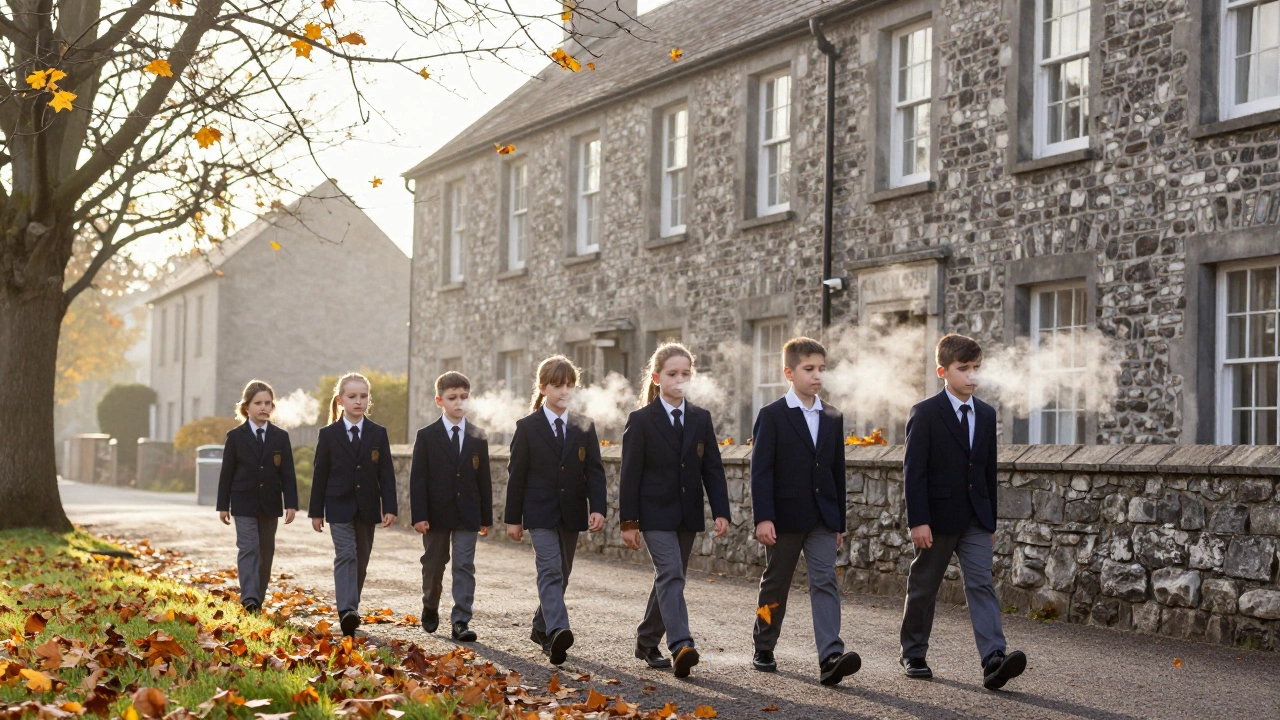
When you walk past a primary school in Clonmel or a secondary college in Galway on a crisp autumn morning, you’ll see rows of kids in navy blazers, grey trousers, and white shirts. It’s so normal in Ireland that most of us don’t question it anymore. But why did school uniforms even start here? The answer isn’t just about discipline or neatness-it’s tied to class, religion, and the way Ireland shaped its education system over centuries.
The Roots of Uniforms in Irish Education
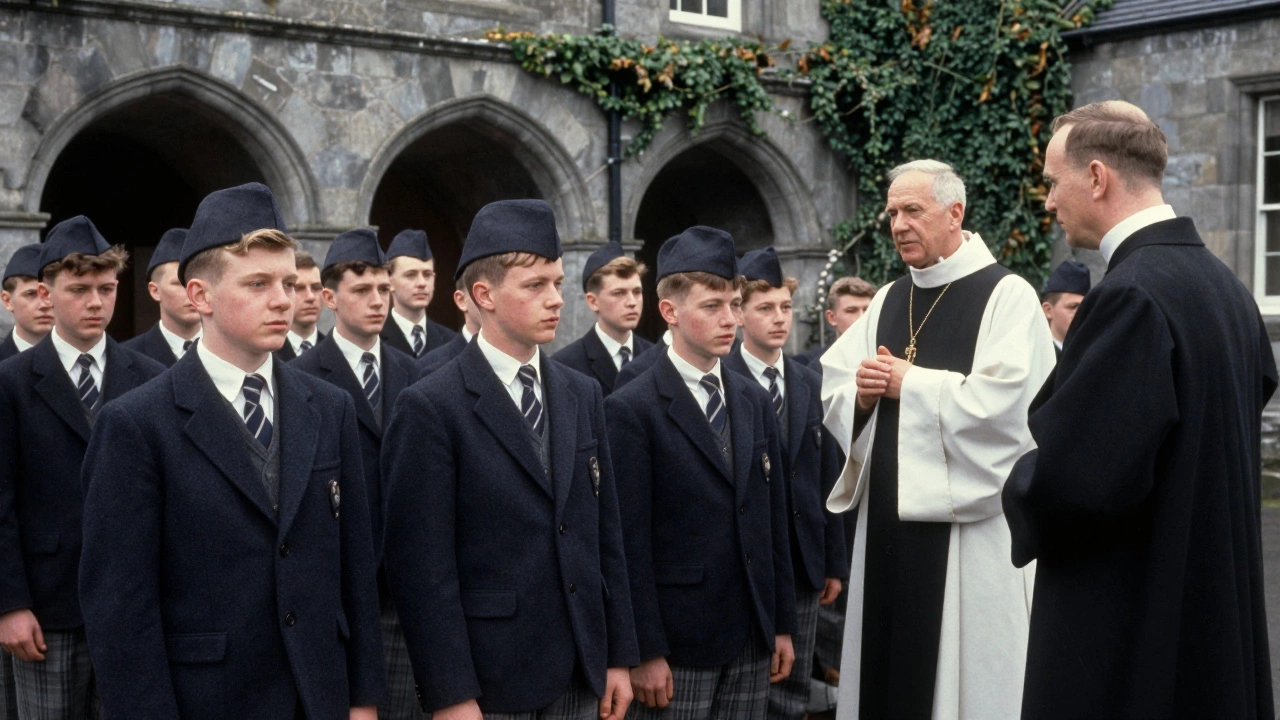
Uniforms didn’t begin in Irish classrooms because someone thought kids looked better in matching clothes. They started because of the Church. In the 1800s, as Catholic and Protestant schools expanded across Ireland, religious orders needed a way to identify students and reinforce order. The Jesuits, Dominicans, and Sisters of Mercy all ran schools with strict codes of conduct-and uniforms were part of that control.
At the time, many Irish families were poor. A uniform meant one set of clothes that could last years, washed and repaired, instead of buying multiple outfits. For a child in rural Tipperary or a tenement in Dublin’s North Strand, a uniform was practical. It erased visible differences in wealth. A boy in a worn-out blazer looked no different from the son of a landowner. That mattered in a country still healing from centuries of economic inequality.
How the British System Left Its Mark
Before Ireland’s independence in 1922, most schools followed British models. Public schools like Eton and Harrow had long used uniforms as symbols of status and loyalty. When Irish grammar schools were founded-like Rockwell College in County Tipperary or St. Mary’s in Dublin-they copied the style. Dark wool blazers, ties, and caps weren’t just fashion; they were a way to align with the colonial elite.
Even after independence, the tradition stuck. The Irish state didn’t push for change. Instead, it handed education largely back to religious orders. Those orders kept the uniforms because they worked. They created a sense of belonging. They made it easier to manage hundreds of children without constant supervision. And in a country where community and conformity often went hand-in-hand, uniforms became part of the culture.
The Role of Religion and Identity
In Ireland, schools weren’t just places to learn maths and Irish. They were extensions of the parish. The uniform became a quiet marker of faith. At a Christian Brothers school in Cork, the grey trousers and green tie weren’t just school colors-they signaled allegiance to a specific religious community. In Protestant areas like Bangor or Portadown, the uniform was different: often a tartan sash or a specific crest. These details mattered. They told you where someone came from, even before they spoke.
Even today, many Irish parents choose schools based partly on uniform. A family moving to Bray might pick a school because the navy blazer matches the local community’s expectations. A mum in Letterkenny might avoid a school with no uniform because she believes it helps her son focus. It’s not just about rules-it’s about identity.
Modern Uniforms in Ireland: Practicality Over Prestige
Today, Irish school uniforms are less about class and more about convenience. Brands like Uniforms Ireland and Clare’s Uniforms in Limerick have become staples for parents. You’ll find them in every town-small shops near the local church, with racks of polo shirts, jumpers, and PE kits. Many schools now allow cheaper, more flexible options: navy joggers instead of trousers, or plain white T-shirts under blazers. The rise of budget retailers like Aldi and Lidl has made uniforms more affordable, especially for large families.
Some schools have dropped ties. Others let girls wear trousers year-round. The changes reflect Ireland’s shift toward practicality and inclusion. In 2023, a survey by the Irish National Teachers’ Organisation found that 78% of primary schools allowed flexible uniform policies to accommodate different cultures and budgets. That’s a far cry from the rigid rules of the 1950s.
Why Uniforms Still Work in Ireland
Despite debates about individuality and cost, uniforms remain popular. Why? Because they solve real problems in Irish schools.
- They reduce bullying based on clothing brands-something that’s especially important in towns where kids from different economic backgrounds mix.
- They make morning routines easier. In a country where 40% of households have two working parents, a simple uniform means less arguing over what to wear.
- They build school pride. When a team from St. Louis Secondary School in Monaghan wins the All-Ireland Schools’ Debating Championship, you see them in matching blazers. The uniform becomes part of the story.
Even in urban areas like Dublin’s Docklands or Cork’s City Centre, where diversity is growing, uniforms help new students feel included. A child from Ukraine or Nigeria who joins a school in Waterford doesn’t need to learn the latest fashion trends-they just need the right blazer. It’s a quiet form of belonging.
What’s Changing Now?
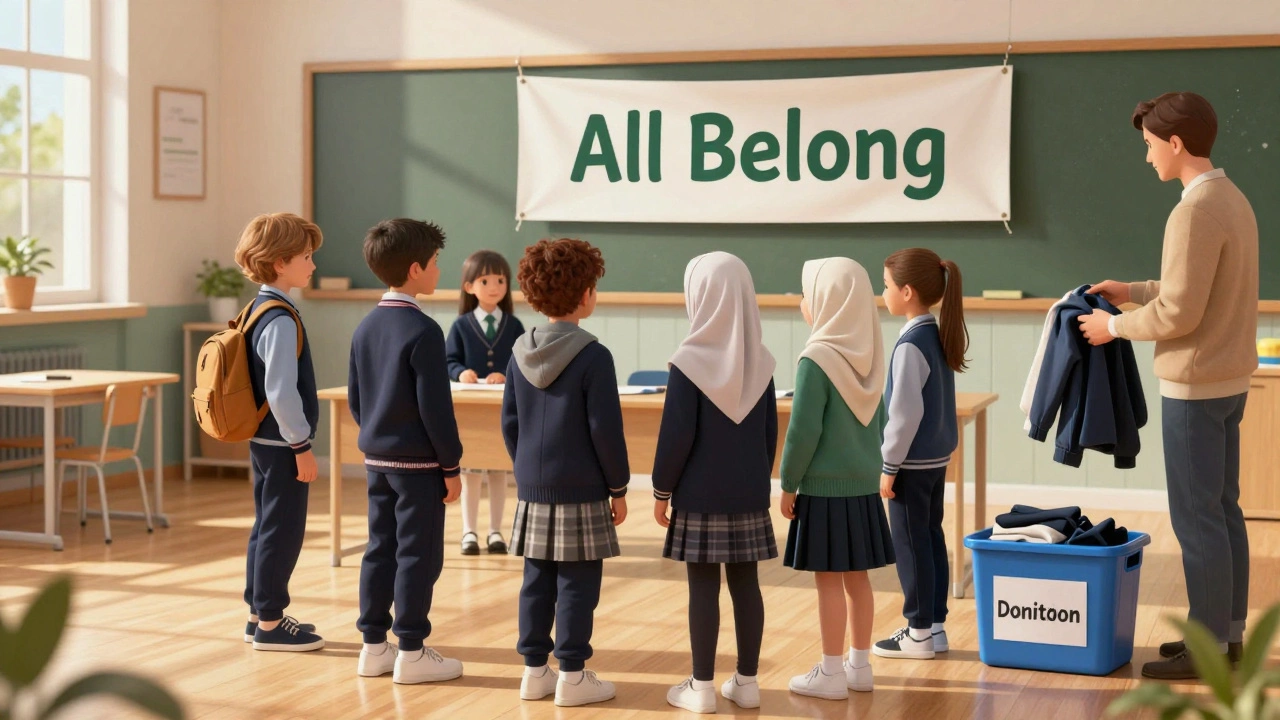
There’s growing pressure to make uniforms more inclusive. Some schools now offer hijabs as part of the uniform. Others let students choose between skirts and trousers. In 2024, a school in Louth became the first in Ireland to let students wear gender-neutral uniforms without needing parental permission.
Cost is still a big issue. A full uniform set from a branded supplier can cost over €200. That’s why many parents buy second-hand uniforms through Facebook groups like Irish School Uniform Swap or local charity shops in Sligo and Kilkenny. Some schools now run uniform banks, where families can pick up free clothes at the start of term.
And while some teenagers grumble about the rules, most admit it’s better than the alternative. One 16-year-old from Drogheda told a local paper: "I’d rather wear the same thing every day than worry about what everyone’s wearing. At least I know I won’t be judged."
The Bigger Picture: Uniforms as a Mirror of Ireland
So why did uniforms start in Ireland? Not because of fashion trends or school principals’ preferences. They started because Ireland needed a way to educate its children in a society still recovering from poverty, colonialism, and division. Uniforms offered structure when structure was scarce.
Today, they’ve evolved. They’re no longer about obedience or class. They’re about fairness, simplicity, and inclusion. In a country where community still matters deeply, the school uniform remains one of the quietest-and most enduring-symbols of shared experience.
Next time you see a group of kids in navy blazers walking home from school in Ennis or Dundalk, remember: they’re not just dressed for class. They’re dressed in the history of Ireland itself.