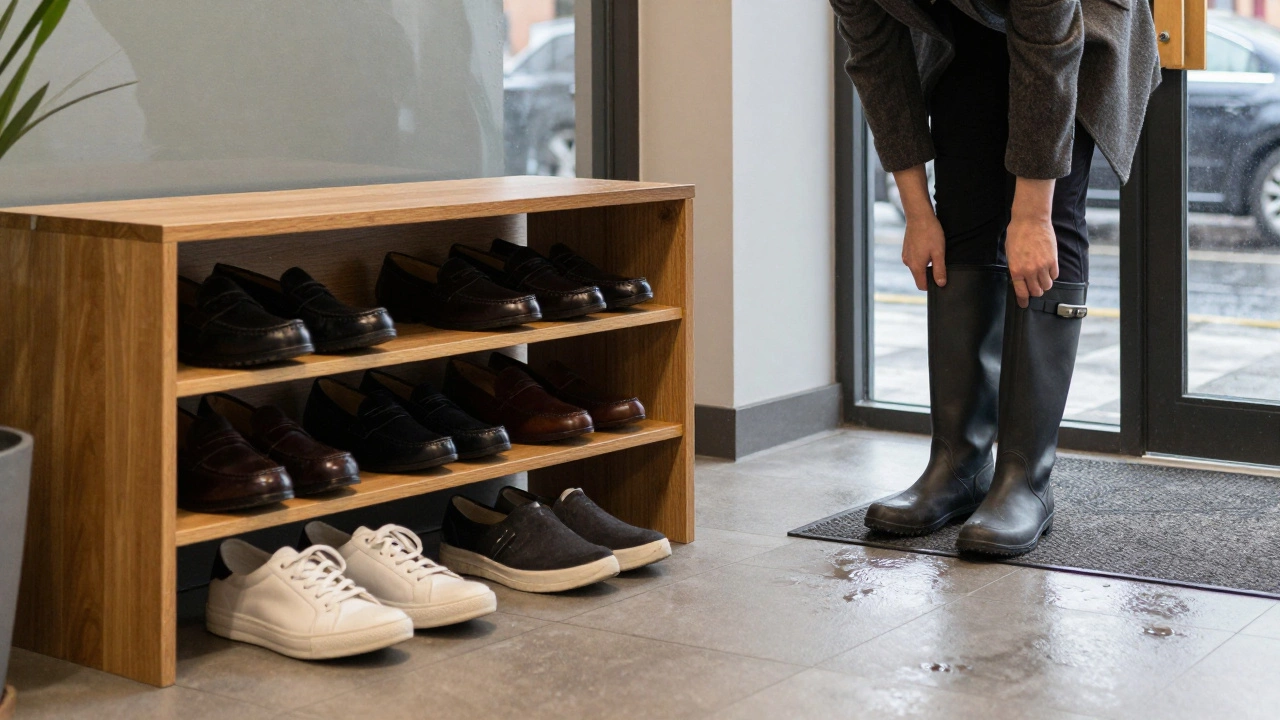
When it comes to work shoes in Ireland, there’s no one-size-fits-all answer. Unlike corporate offices in London or New York, where black oxfords are law, Ireland’s workplace footwear rules are shaped by weather, culture, and a deep-rooted practicality. Whether you’re in a Dublin startup, a Galway hospital, or a Cork manufacturing plant, your shoes need to handle rain, cobblestones, and casual Fridays - all in the same week.
Why Irish Workplaces Are Different
Ireland’s climate alone makes footwear choices a daily puzzle. Rain falls an average of 225 days a year, and even in summer, the ground stays damp. You’ll see nurses in Cork wearing waterproof clogs, accountants in Limerick swapping heels for loafers, and construction workers in Donegal in steel-toe boots that have seen more Irish winters than most people’s first cars. This isn’t just about comfort - it’s about safety and adaptability. Irish employers know that soggy socks and slipping on wet floors cost more in lost productivity than a few extra euros on decent shoes. So while formal dress codes still exist, they’ve been rewritten for real life.What’s Allowed in Office Environments
In Dublin’s financial district, you’ll still find a few people in polished brogues. But most offices - even banks and law firms - have quietly shifted to a smart-casual standard. Think:- Leather loafers (like those from Clarks or Geox)
- Minimalist sneakers (think Allbirds or Ecco)
- Closed-toe flats with low heels
- Dark, clean canvas shoes - if they look intentional, not worn to the pub last night
Healthcare, Retail, and Public Services
In hospitals across Ireland - from Our Lady of Lourdes in Drogheda to Galway University Hospital - non-slip, closed-toe shoes are mandatory. Most staff wear clogs from brands like Sanita or Alegria, which are slip-resistant, easy to clean, and designed for long shifts. These aren’t optional - they’re part of health and safety policy. In retail, whether you’re at Dunnes Stores in Waterford or Penneys on Grafton Street, closed-toe shoes are required. No exceptions. You’ll often see employees wearing slip-on shoes with cushioned soles - brands like Clarks and Dr. Scholl’s dominate here. Why? Because standing for eight hours on tile floors in a cold warehouse or a drafty store is no joke. Even in government offices - like those in County Hall in Limerick or the Department of Social Protection in Cork - employees wear practical footwear. You’ll rarely see stilettos. Instead, you’ll notice women in low-heeled ankle boots and men in leather derbies that have been worn for years, polished with Dublin-made shoe cream.
Construction, Manufacturing, and Manual Jobs
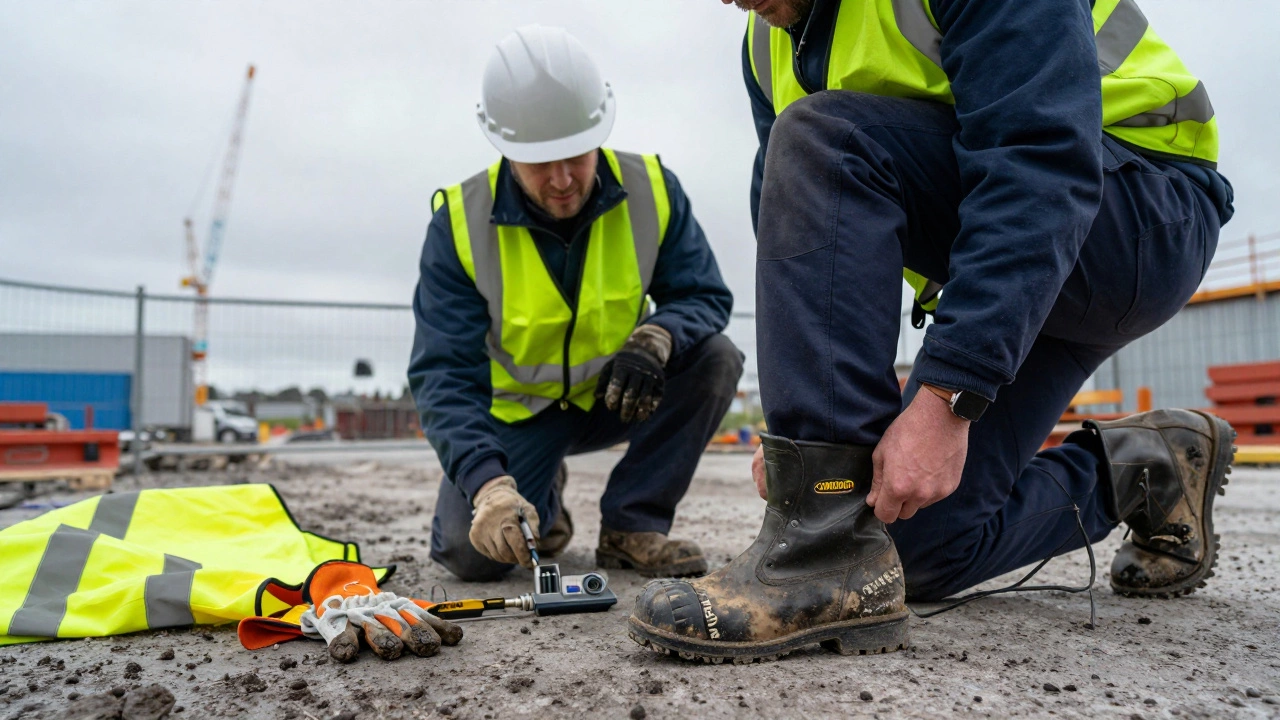
Outside the office, the rules are stricter - and for good reason. In construction sites around Shannon or the M50, you need to wear safety boots meeting Irish and EU standards (EN ISO 20345). That means steel toes, slip-resistant soles, and ankle support. Brands like Blundstone, Red Wing, and Worx are common. You’ll see them in every warehouse in Louth, every factory in Kildare, and every farm supply store in Tipperary. These aren’t fashion choices. A slip on a wet floor in a meat plant in Monaghan can mean weeks off work. A dropped tool on an unprotected toe in a Cork engineering yard can mean surgery. So employers don’t mess around. If your boots don’t have the safety stamp, you don’t get on site.What’s Never Allowed - Even in ‘Casual’ Ireland
There are still hard lines:- Sandals - even the fancy ones - are a no-go in almost every workplace. Not because they’re ‘unprofessional,’ but because they’re dangerous on wet floors and uneven pavements.
- Flip-flops - never. Not even on a Friday. You’ll be asked to leave or change.
- Worn-out trainers - if they’re stained, scuffed, or look like they’ve been used for a hike in the Wicklow Mountains, they’re out.
- High heels over 3 inches - unless you’re in a very formal role (like a hotel receptionist in a five-star Dublin hotel), they’re discouraged. Many workplaces now offer heel-height limits in their dress code handbooks.
What Irish Workers Actually Wear - Real Examples
Let’s get specific. In a Galway marketing agency, the team wears dark grey sneakers with white soles - clean, quiet, and easy to wipe. At the Irish Stock Exchange in Dublin, employees wear black leather slip-ons with a slight heel - stylish but safe on polished marble floors. In Belfast (yes, Northern Ireland is part of the same cultural conversation), nurses at the Royal Victoria Hospital wear Sanita clogs with a non-slip sole - the same ones used in Dublin’s Beaumont Hospital. In rural clinics across Kerry and Mayo, staff wear waterproof boots from Blundstone - because the walk from the car park to the clinic is often muddy. And here’s a quiet Irish tradition: many people keep a pair of indoor shoes at their desk. Not slippers. Just clean, low-profile shoes - like Ecco soft-soled loafers - to swap into after a wet commute. It’s not odd. It’s smart.Where to Buy Work Shoes in Ireland
You don’t need to order online. Ireland has solid local options:- Clarks - found in every major town. Their Shoreline and Comfort lines are popular for women.
- Ecco - available in Brown Thomas, Arnotts, and online. Their leather loafers are a quiet status symbol in Dublin.
- Blundstone - sold at outdoor stores like Mountain Equipment in Galway and Decathlon in Tallaght. Great for casual offices and outdoor jobs.
- Dr. Scholl’s - stocked in Boots and SuperValu pharmacies. Perfect for retail workers needing cushioning.
- Sanita - available through medical supply stores like MediCare in Limerick and Healthcare Direct in Cork.
Final Rule: When in Doubt, Ask
There’s no national handbook for work shoes in Ireland. But there’s a strong cultural code: Be practical. Be clean. Be safe. If you’re unsure, look around. What are the senior staff wearing? What shoes are on the floor near the door? If everyone’s in loafers and you’re in sandals, you’ll stand out - not because you’re trendy, but because you’re risky. Ireland doesn’t care if your shoes are expensive. It cares if they keep you dry, safe, and able to do your job - whether you’re filing reports in a Cork office or unloading pallets in a warehouse in Louth. The right pair of shoes isn’t about fashion. It’s about respect - for your body, your coworkers, and the Irish weather.Can I wear sneakers to work in Ireland?
Yes - but only if they’re clean, dark-colored, and look intentional. Minimalist sneakers from brands like Ecco, Allbirds, or Clarks are widely accepted in Dublin, Galway, and Cork offices. Avoid running shoes with bright logos or worn-out soles. If your sneakers have been on a hike in the Wicklow Hills, leave them at home.
Are open-toe shoes allowed in Irish workplaces?
Almost never. Even in summer, most offices - including those in tourism-heavy areas like Killarney or Doolin - ban open-toe shoes for safety reasons. Wet floors, heavy doors, and uneven pavement make them a hazard. Some creative agencies might make exceptions for sandals on Fridays, but it’s rare. When in doubt, keep your toes covered.
Do Irish companies give money for work shoes?
Many do - especially in healthcare, retail, and manual jobs. It’s common for employers to offer €100-€200 annually for safety or comfort footwear. Check your contract or ask HR. Some companies even partner with local shoe stores for discounts. If you’re on your feet all day, this allowance is worth claiming.
What’s the best shoe for walking to work in Ireland?
A waterproof, slip-resistant loafer or low-heeled boot. Brands like Ecco and Clarks make models with GORE-TEX linings and rubber soles that grip wet pavement. Avoid leather soles - they’re slick when it rains. Many Dublin commuters carry a second pair of shoes in their bag to swap into once they arrive.
Are steel-toe boots required for all manual jobs in Ireland?
Yes - if you’re working in construction, manufacturing, warehousing, or any environment where heavy objects are moved or machinery is used. Irish law follows EU standard EN ISO 20345, which mandates protective footwear in these roles. Employers must provide them or reimburse you. You’ll see these boots everywhere - from the docks in Waterford to the factories in Limerick.