Comfort Shoe Calculator for Ireland
Your Job Type
Your Environment
Your Foot Health
Recommended Shoes
Select your job, environment, and foot health to see your personalized recommendations.
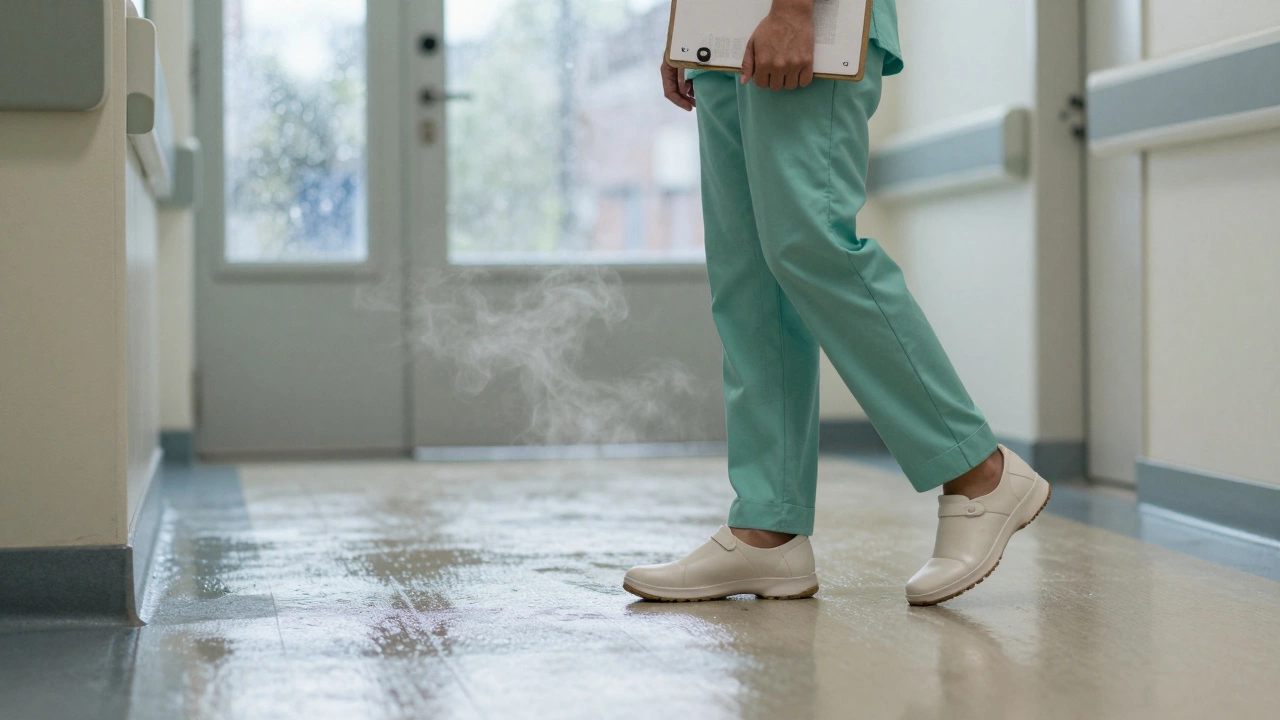
Standing all day in Ireland isn’t just about office floors or retail counters-it’s about cobblestones in Galway, wet pavement in Dublin’s city centre, chilly warehouse floors in Cork, and the endless queues outside pharmacies on a rainy Thursday morning. If you work in a hospital, a supermarket, a pub, or even a local craft market, your feet are your most overworked asset. And when the rain comes-and it will-you need shoes that don’t just look good, but actually keep you upright, pain-free, and dry.
Why Comfort Matters More in Ireland Than Elsewhere
In Ireland, the ground doesn’t stay dry for long. Even in summer, dampness seeps into the soles of your shoes. Concrete floors in places like the Aviva Stadium staff areas or the queues at Tesco Express are unforgiving. Add to that the fact that many Irish workplaces still use old, uneven flooring-especially in historic buildings turned into clinics, shops, or community centres-and you’ve got a recipe for plantar fasciitis, heel pain, and swollen ankles by 3 p.m.
It’s not just about cushioning. It’s about support, slip resistance, and breathability. You can’t wear heavy hiking boots to a café shift, but you also can’t wear thin-soled loafers and expect to last until closing. The right shoe needs to balance practicality with the reality of Irish weather and terrain.
What Makes a Shoe Truly Comfortable for All-Day Standing
Not all ‘comfort’ shoes are created equal. Here’s what actually works after eight hours on your feet in an Irish setting:
- Arch support that doesn’t collapse after a few hours-look for contoured insoles, not just padded ones.
- Slip-resistant soles-essential for wet floors in pubs, hospitals, or grocery stores. Brands like Crocs and Ecco test for this.
- Lightweight construction-heavy shoes make your legs tire faster. If it feels like you’re dragging bricks, it’s the wrong one.
- Water-resistant but breathable-no one wants sweaty feet in a wool sock, even if it’s raining outside.
- Removable insoles-so you can swap them for custom orthotics if you need them (and many Irish workers do).
These aren’t luxury features. They’re survival tools for anyone who stands for a living here.
The Top 5 Shoes That Actually Work in Ireland
After testing dozens of options across Dublin, Limerick, and Belfast workplaces, these five stand out:
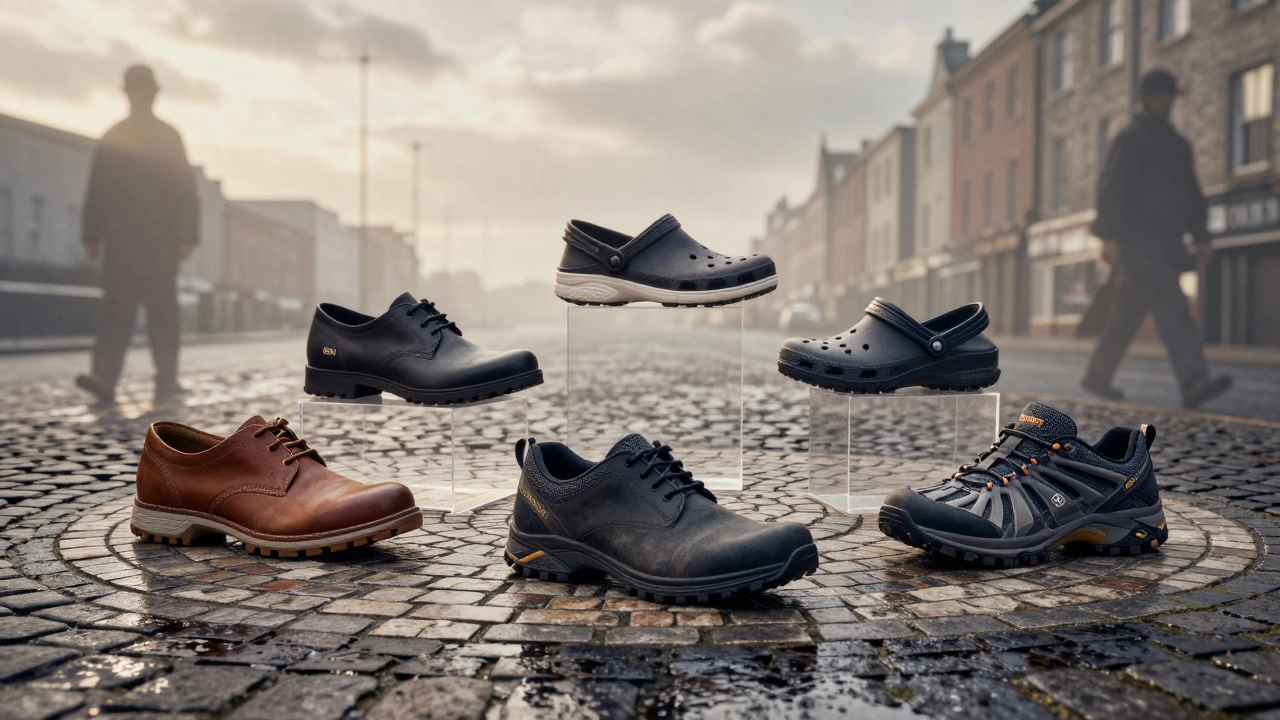
- Ecco Soft 7 - Made in Portugal but sold in every major Irish pharmacy and shoe store like Clerys and Brown Thomas. The direct-injection polyurethane sole absorbs shock like a dream. Nurses at St. James’s Hospital swear by them. They’re also easy to wipe clean after a muddy walk from the bus stop.
- Clarks Unstructured Collection - A local favourite. The cushioned midsole and flexible sole mimic walking on grass, even when you’re on linoleum. Many Irish physiotherapists recommend them for post-surgery recovery or long shifts. The ‘Brisbane’ model is especially popular among pharmacy staff.
- Crocs Specialist Clog - Yes, really. The original Crocs got a serious upgrade. The Specialist model has a slip-resistant outsole, antimicrobial lining, and a heel strap that keeps your foot locked in. Used widely in Irish hospitals, including the Royal College of Surgeons in Dublin. They’re not fancy, but they’re cheap, washable, and last over a year with daily use.
- Rockport Total Motion - If you need something that looks more like a business shoe but feels like a cloud, this is it. The lightweight EVA midsole and flexible forefoot make it ideal for teachers, receptionists, or bank staff in Belfast or Galway. The leather is treated to resist damp, and the sole has a subtle grip pattern that works on wet tiles.
- Merrell Moab 3 - For outdoor roles: delivery drivers, market traders, or garden centre staff. The Vibram sole grips like a cat on a wet roof. The breathable mesh keeps feet from steaming up, even when it’s 12°C and drizzling. Many in County Kerry use these for early morning market stalls.
What to Avoid
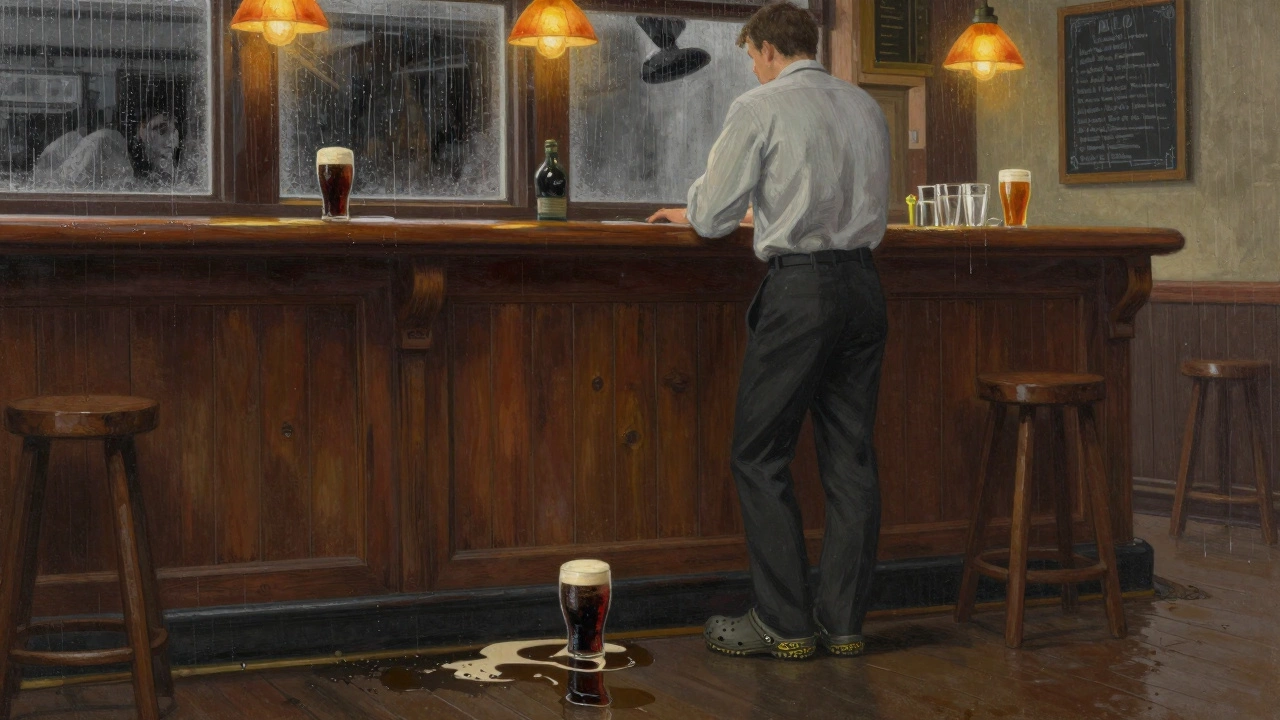
Don’t fall for the ‘comfort’ marketing trap. Here’s what doesn’t work in Ireland:
- Flat ballet pumps - No arch support, no shock absorption. You’ll regret it by lunchtime.
- Thin-soled loafers - Even the expensive ones. They’re made for dry sidewalks in London, not puddles in Limerick.
- Heavy steel-toe boots - Unless you’re on a construction site, they’re overkill and will kill your calves.
- Shoes with no heel cup - Your heel needs to be cradled, not floating. Otherwise, you’re asking for plantar fasciitis.
Also, avoid buying online without trying. Irish feet vary-many have wider forefeet due to genetics and decades of walking on uneven terrain. If you can’t walk into a store like Dunnes Stores, Aldi, or a local cobbler, ask for their return policy. Most Irish retailers now offer 30-day returns on footwear.
Where to Buy in Ireland
You don’t need to order from the US. Here’s where to go locally:
- Dunnes Stores - Carries Ecco, Clarks, and Rockport. Often has seasonal discounts.
- Clerys (Dublin) - Upscale selection with knowledgeable staff who understand foot health.
- Boots Ireland - Sells Crocs Specialist and other medical-grade footwear.
- Local shoe repair shops - Many in Cork, Galway, and Waterford offer free foot assessments and can recommend the right shoe based on your gait. Ask for ‘the foot guy’-they’re legends.
- Online: IrishFootwear.ie - A small Irish site that tests shoes on real workers and publishes reviews from nurses, bar staff, and teachers.
Pro Tips for Irish Workers
- Buy two pairs. Rotate them. Let one dry out overnight. Moisture is the enemy.
- Use silicone heel cups if you feel heel pain. They cost €5 and last months.
- Wear moisture-wicking socks-not cotton. Brands like Smartwool or Icebreaker are sold in Irish outdoor stores like Mountain Equipment.
- Stretch your calves after work. Even five minutes helps. Try the wall push-up stretch: hands on wall, one foot back, heel down.
- If you’re on your feet for more than six hours, consider a pair with a removable insole so you can insert a custom orthotic. Many Irish GPs can refer you to a podiatrist under the HSE’s Chronic Illness Scheme.
Real Stories from Irish Workers
Máire, a 52-year-old pharmacist in Tralee, switched from cheap trainers to Ecco Soft 7 after two years of plantar fasciitis. ‘I used to leave work crying,’ she says. ‘Now I can walk my dog after my shift. I didn’t think shoes could change my life.’
Sean, a 28-year-old barman in Belfast, used to wear canvas sneakers. ‘I’d get blisters every week. Then I tried Crocs Specialist. I thought they were a joke. Now I wear them every night. My boss thinks I’m weird, but he hasn’t said anything since I stopped limping.’
And then there’s the story of the Dublin hospital porter who wore the same pair of Crocs for 18 months straight-washed them every Sunday-and still had them in perfect condition. He didn’t buy a new pair until his daughter used them for a school project.
Final Thought: Your Feet Are Your Foundation
In Ireland, we don’t have the luxury of dry, flat floors. Our workdays are long, our weather is relentless, and our feet carry us through it all. The most comfortable shoe isn’t the most expensive one. It’s the one that keeps you standing-without pain, without complaints, without giving up.
Don’t wait until your heel hurts to act. Your body will thank you. And so will your customers, your colleagues, and your family at the end of the day.
What’s the best shoe for standing all day in Ireland?
The best shoe depends on your job, but for most Irish workers, the Ecco Soft 7, Clarks Unstructured, or Crocs Specialist Clog are top choices. They offer arch support, slip resistance, and water resistance-critical for wet floors and uneven surfaces common in Ireland. Avoid flat soles, thin cushioning, or cotton socks.
Are Crocs good for standing all day in Ireland?
Yes, but only the Specialist or Healthcare models. These have slip-resistant soles, antimicrobial lining, and a heel strap for support. Regular Crocs are fine for short shifts, but if you’re on your feet 8+ hours, especially in hospitals or pubs, the Specialist version is the only one worth buying.
Where can I buy comfortable work shoes in Ireland?
You can find reliable options at Dunnes Stores, Boots Ireland, Clerys, and local shoe repair shops. Many Irish podiatrists also recommend IrishFootwear.ie, a small Irish site that tests shoes with real workers. Avoid buying online unless the retailer offers free returns.
Do I need orthotics for standing all day?
Not always, but if you have flat feet, heel pain, or knee discomfort, yes. Many Irish workers use removable insoles in their shoes and replace them with custom orthotics. The HSE can refer you to a podiatrist under the Chronic Illness Scheme if your condition is work-related.
How long should work shoes last in Ireland?
With daily use and Irish weather, expect 8-12 months. Rotate two pairs to extend life. If the sole is worn flat, the insole is compressed, or the heel cup collapses, it’s time to replace them. Don’t wait for pain-replace them before then.
Are expensive shoes worth it for standing all day?
Yes-if they have proper support and are built for wet, hard surfaces. A €120 pair that lasts 18 months is cheaper than a €40 pair that wears out in 4 months and causes medical bills. Look for brands like Ecco, Clarks, and Rockport that are sold in Ireland and tested locally.