
Irish Safety Shoe Checker
Determine if your footwear meets Irish safety regulations (EN ISO 20345) for high-risk work environments. This tool checks the essential features required for legal compliance under Irish law.
Check Your Shoe Features
Your Results
In Ireland, where wet weather, uneven terrain, and demanding industries like construction, farming, and manufacturing are part of daily life, choosing the right footwear isn’t just about comfort-it’s about survival. Many people assume safety shoes and work shoes are the same thing. But if you’re working on a Dublin construction site, managing livestock on a Cork farm, or handling machinery in a Galway factory, mixing them up could cost you more than just sore feet. Understanding the real difference between safety shoes and work shoes can keep you compliant, protected, and on the job.
Work Shoes: Built for the Day, Not Just the Danger
Work shoes are designed for general job site use. They’re tough, durable, and often slip-resistant-perfect for the Irish climate. Think of them as upgraded everyday shoes for people who spend hours on their feet. Brands like Clarks a British footwear brand with strong presence in Ireland and ECCO a Danish brand widely sold in Irish retail chains like Dunnes Stores and Pallas offer work shoes that prioritize comfort, breathability, and traction on wet pavement or muddy fields.In Ireland, you’ll see these worn by delivery drivers in Limerick, retail staff in Belfast, warehouse workers in Drogheda, and even teachers walking school grounds after rain. They usually have reinforced toes and cushioned soles, but they don’t meet formal safety standards. You won’t find a steel toe cap or a puncture-resistant midsole unless it’s added as a bonus feature.
For example, a typical Irish work shoe might have a rubber outsole rated for slip resistance on oily or wet surfaces-ideal for Ireland’s frequent drizzle and indoor spills. But if you’re lifting heavy pallets or working near heavy machinery, this isn’t enough. That’s where safety shoes come in.
Safety Shoes: Mandatory Protection Under Irish Law
Safety shoes aren’t just tough-they’re certified. In Ireland, safety footwear must meet the Personal Protective Equipment (PPE) Regulation (EU) 2016/425 and carry the CE mark with the specific code for footwear: EN ISO 20345. This standard defines what counts as real safety footwear. It’s not optional in high-risk jobs. If you’re employed in construction, warehousing, or industrial manufacturing, your employer is legally required to provide or approve your safety shoes.What makes them different? Five key features:
- Steel or composite toe cap-protects against falling objects (common on Irish building sites).
- Puncture-resistant midsole-defends against nails, glass, or metal shards (critical on renovation sites or farmyards).
- Energy absorption in the heel-reduces impact from jumping or stepping off ladders.
- Slip-resistant outsole-tested on steel and ceramic tiles with oil, matching Ireland’s wet conditions.
- Water resistance-often combined with breathable membranes like Gore-Tex for long shifts in rain.
Brands like Dr. Martens Workwear a popular choice among Irish tradespeople for durability and style, Ariat used by Irish farmers for fieldwork and stable duties, and Puma Safety commonly supplied through Irish PPE distributors like Workwear Ireland dominate the Irish market. You’ll find these in stores across Dublin’s Inchicore, Cork’s Grand Parade, and Limerick’s Shannon Industrial Estate.
Real-World Irish Scenarios: When One Shoe Isn’t Enough
Let’s say you’re a carpenter in Wexford. You spend mornings on a job site, afternoons on a farm helping out. Your work shoes keep your feet dry during the commute, but they won’t stop a 5kg timber beam from crushing your toes. That’s why many Irish workers own two pairs: one for general tasks, one for high-risk zones.Or imagine you’re a kitchen porter in a Galway pub. You’re on wet tiles all night. A good work shoe with a deep tread will prevent slips-but if you’re also moving heavy kegs, you need a safety shoe with a steel toe. Many pubs in Ireland now require staff to wear certified footwear during busy shifts, especially after incidents reported by the Health and Safety Authority (HSA) Ireland’s national body for workplace safety.
Even farmers in Donegal or Mayo aren’t exempt. While traditional wellies are common for mucking out, many now switch to safety boots with steel toes and puncture resistance when operating tractors or handling heavy feed sacks. The HSA has seen a 34% rise in foot injuries on small farms since 2020-and most were preventable with proper footwear.

How to Tell Them Apart in Ireland
You don’t need to be an expert to spot the difference. Look for these signs:- Label check: Safety shoes always have the EN ISO 20345 logo printed on the insole or side. Work shoes might say "work boot" or "industrial" but never show the full standard code.
- Weight: Safety shoes are heavier-often 1.2kg per pair. Work shoes are lighter, closer to 0.8kg.
- Price: In Ireland, a decent work shoe costs €60-€90. A certified safety shoe starts at €110 and can go up to €180.
- Where you buy: Work shoes are sold in general shoe stores like Clarks, ECCO, or Dunnes. Safety shoes are found in specialist PPE suppliers: Workwear Ireland Dublin-based distributor serving over 500 Irish businesses, Safety Gear Ireland Cork-based supplier with online delivery to all counties, or through your employer’s safety officer.
What Happens If You Skip the Safety Shoe?
In Ireland, ignoring PPE rules isn’t just risky-it’s illegal. The HSA can issue fines up to €3,000 for employers who don’t provide proper footwear. Workers can be sent home without pay if they refuse to wear certified boots on site. And if you get injured? Insurance may not cover you if you weren’t wearing approved safety gear.There’s also the social side. In towns like Athlone or Sligo, where tradespeople know each other, wearing the right gear shows professionalism. A builder in Kerry who shows up in regular work shoes won’t be taken seriously-especially when the job involves scaffolding or power tools.
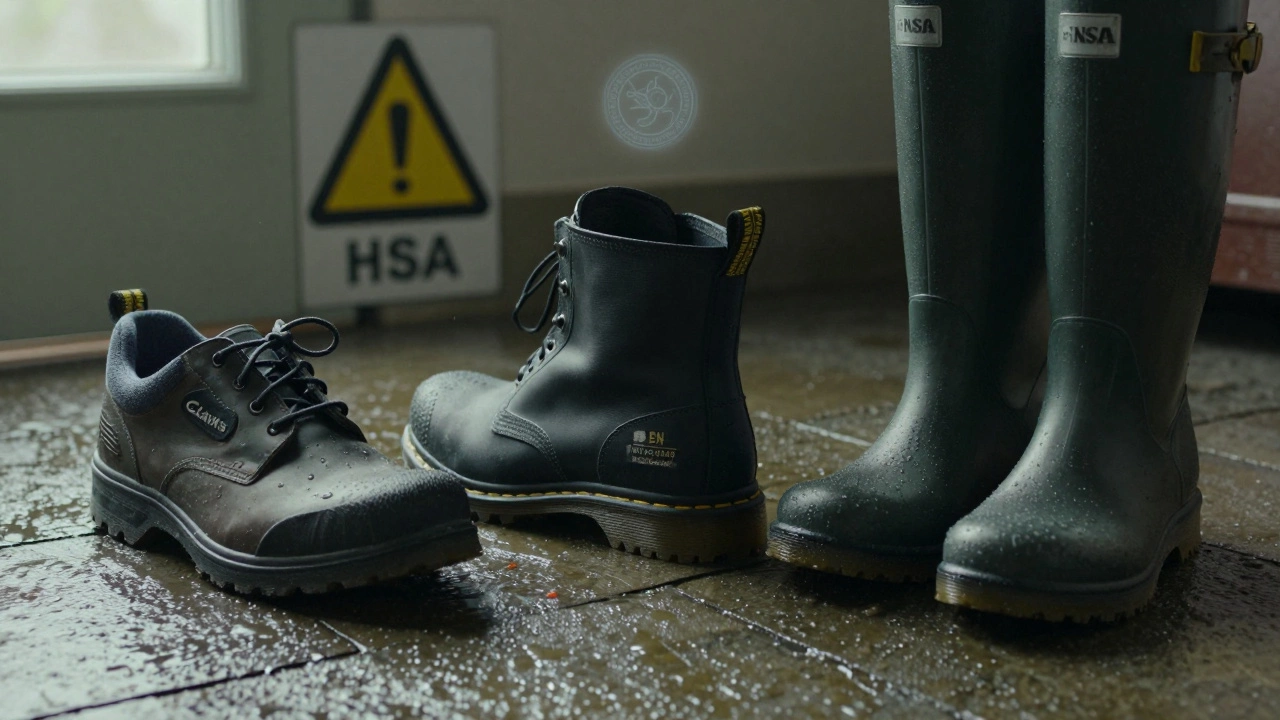
What to Look for When Buying in Ireland
If you’re buying for yourself or your team, here’s what works in the Irish context:- Always check for the EN ISO 20345 stamp. No stamp? Not safety footwear.
- Choose waterproof with breathable lining-Irish weather demands it.
- Look for slip resistance rated SRA, SRB, or SRC-these are tested on real Irish conditions (wet tiles, oil, steel).
- Try them on in the afternoon-feet swell after work. Irish workers know this.
- Buy from Irish suppliers. They stock sizes that fit local foot shapes (wider forefoot, lower arch than continental brands).
Many employers in Ireland now offer a €50 annual footwear allowance under the Workwear Scheme-check with your HR department. Some unions, like SIPTU and Unite, even run discounted bulk-buy programs for members.
Final Takeaway: Don’t Guess, Check the Label
In Ireland, where rain, rough ground, and hard work are everyday realities, your feet deserve more than a guess. Work shoes are for general duty. Safety shoes are for when your life could be on the line. If you’re in construction, logistics, agriculture, or any trade where heavy objects, sharp tools, or slippery surfaces are present-go certified. It’s not just about compliance. It’s about coming home at the end of the day with both feet intact.Can I wear work shoes on a construction site in Ireland?
No. Irish law under the Safety, Health and Welfare at Work Act 2005 requires certified safety footwear (EN ISO 20345) on construction sites. Work shoes without a steel toe and puncture-resistant sole do not meet legal standards and can result in fines for both employer and worker.
Are safety shoes worth the extra cost in Ireland?
Absolutely. A pair of safety shoes costs €110-€180, but they last 12-24 months with proper care. In contrast, a €70 work shoe might wear out in 6 months on a rough job site. More importantly, they prevent injuries that could cost you weeks off work, medical bills, or even your job. Many Irish employers cover the cost or offer subsidies.
Do I need safety shoes if I work in an office but sometimes go to the warehouse?
Yes. If you enter any area designated as a "controlled zone" under HSA guidelines-including warehouses, loading bays, or workshops-you must wear certified safety footwear. Many Irish companies issue a pair of safety shoes to all staff who enter these zones, even if they’re primarily office-based.
Can I buy safety shoes online in Ireland?
Yes, but be careful. Stick to Irish-based suppliers like Workwear Ireland, Safety Gear Ireland, or PPE Direct. These suppliers stock certified products, offer size guides tailored to Irish foot shapes, and handle returns easily. Avoid generic Amazon or eBay sellers-many fake the EN ISO 20345 label.
What’s the most common mistake Irish workers make with their footwear?
Wearing work shoes that look like safety shoes. Many brands make boots with a rugged design, steel toe cap, and dark colour-making them seem certified. But if the inner label doesn’t say EN ISO 20345, they’re not. This is the top reason for HSA warnings in Dublin and Cork factories.