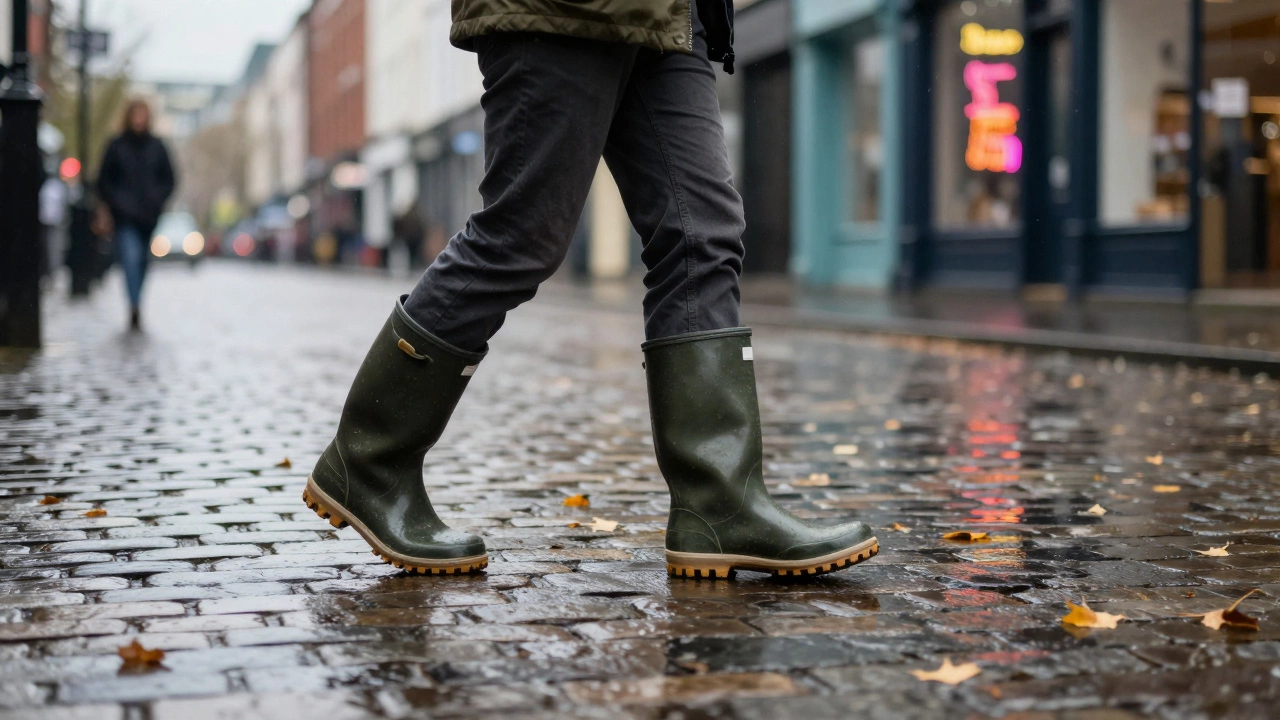
In Ireland, where the weather shifts from drizzle to downpour between breakfast and lunch, your shoes aren’t just fashion-they’re survival gear. You’ve probably heard someone say, ‘Grab your boots’ before heading out to Galway’s Latin Quarter, or ‘Wear your trainers’ for a walk along the Dingle Peninsula. But if you’ve ever wondered what the British call the same pair of shoes you’ve got on, you’re not alone. The truth? It’s messy, regional, and full of local quirks that even Irish people get confused by.
What’s the Difference Between Boots and Shoes in the UK?
British people don’t use the term boots shoes-it’s not a phrase you’ll hear on the streets of Manchester or Edinburgh. Instead, they break footwear into clear categories: boots, trainers, shoes, and wellies. If you’re holding a pair of high-top, rubber-soled, lace-up footwear designed for walking on wet pavement or muddy trails, the British will call it a boot if it covers your ankle. If it’s lightweight, made for the gym or a city stroll, and has no shaft above the ankle? That’s a trainer.
Here’s the catch: in Ireland, we often blur those lines. You might call your waterproof Nike Air Max a boot because it keeps your feet dry in Limerick’s puddles. But a Londoner would call it a trainer-and they’d be right by their own rules. It’s not about the function; it’s about the cut.
Why Irish People Use Different Words
Ireland’s footwear vocabulary is a hybrid. We borrow from the British, yes-but we also mix in American terms and our own local twists. In Cork, you’ll hear trainers more than sneakers. In Dublin, you might hear runners-a term used across Ireland and Northern Ireland that the British rarely use. That’s right: if you walk into a Dunnes Stores or a Decathlon in Blanchardstown, you’ll find aisles labeled Runners, not Trainers.
And then there’s the welly. Short for Wellington boot, this is the go-to in rural Ireland. From the bogs of County Clare to the sheep farms of Donegal, when it rains, you don’t reach for your boots-you grab your wellies. British people say the same word, but in cities like Bristol or Leeds, they’re more likely to wear waterproof trainers instead. In Ireland, if you’re not wearing wellies in November, you’re either very brave or very foolish.
What Do the British Call What We Call ‘Runners’?
When an Irish person says, ‘I’m off to the park in my runners,’ a British person will say, ‘I’m off to the park in my trainers.’ Same item. Different name. It’s like calling a carbonated drink a soda in the US versus a fizzy in the UK. In Ireland, we’re somewhere in between-we say runners, but we understand trainers because of UK TV, ads, and online shopping.
Brands like Adidas, Nike, and New Balance don’t help. Their Irish websites label products as Runners. Their UK sites say Trainers. So if you order from Amazon UK and your package says ‘Black Trainers’, but your local shop in Galway calls them runners, you’re not wrong-you’re just in a linguistic gray zone.

When British Terms Confuse Irish Shoppers
Let’s say you’re browsing a UK-based online store like ASOS or Zara. You see a product titled: ‘Waterproof Hiking Boots for Men’. You click it. It looks perfect-water-resistant, grippy sole, ankle support. You buy it. You get it. It’s a mid-calf boot with a lace-up front. You’re thrilled. But your British friend looks at it and says, ‘That’s not a boot, that’s a shoe.’ What?
That’s because in the UK, boot usually means something that goes above the ankle. A low-cut, lace-up, waterproof shoe? That’s a shoe-even if it’s designed for hiking. In Ireland, we call anything that keeps your feet dry and supports your ankle a boot, whether it’s 4 inches high or 8. This is why Irish people often get confused when UK retailers list ‘low-top boots’-we think they mean something taller.
And then there’s the Chelsea boot. In the UK, it’s a sleek, elastic-sided ankle boot worn with suits. In Ireland, you’ll see them in Dublin’s Temple Bar-but you’ll also see them in Clonakilty with jeans and a wool coat, because they’re waterproof and stylish. We don’t care about the British fashion rules-we care about staying dry.
What Should You Call Them in Ireland?
Here’s the simple answer: say what works for you. If you’re in a shop in Kilkenny and ask for trainers, the assistant will understand you. If you say runners, they’ll hand you the same pair. If you say boots, they’ll assume you mean something taller. Context matters.
For everyday use-walking the canals of Liffey, running to the bus stop in Waterford, hiking the Wicklow Way-runners is the most Irish term. It’s local, it’s natural, and it’s understood from Donegal to Cork. If you’re buying online from a UK site, search for trainers. If you’re in an Irish store, ask for runners. And if you’re heading into the hills after rain? Grab your wellies. No one in Ireland will question that.
Brands Irish People Actually Buy
You won’t find many Irish people wearing expensive UK-brand hiking boots unless they’re going to the Scottish Highlands. Instead, you’ll see:
- Clarks-popular for casual wear in Dublin offices
- Geox-loved for breathable soles in damp weather
- Decathlon-the go-to for budget-friendly runners
- Bally-Irish-made leather boots, worn by locals who want quality
- Dr. Martens-a staple in Galway’s music scene, even in rain
- Merrell-hiking runners used on the Beara Way
These aren’t just brands-they’re part of Irish life. You’ll see a Clarks loafer on a teacher in Sligo, a pair of Decathlon runners on a student biking to UCD, and a pair of Bally boots on a farmer in Mayo. The British might call them shoes or trainers. We call them what they are: essential gear.
Why This Matters for Tourists and Expats
If you’re visiting Ireland from the UK or elsewhere, don’t stress about getting the terminology right. But do pay attention to what people are wearing. If you’re planning to hike the Wicklow Mountains or walk the Wild Atlantic Way, you need waterproof footwear. Don’t rely on a British friend’s advice to just wear trainers-those won’t cut it in a Kerry downpour.
When shopping in Ireland, look for:
- Waterproof lining (Gore-Tex or similar)
- Deep tread soles for slippery cobbles
- Ankle support if you’re walking hills
- Quick-dry materials-no leather if it’s winter
And if you’re unsure, ask: ‘Will these keep my feet dry in the rain?’ That’s the only question that matters here.
Final Thought: Language Changes With the Weather
In Ireland, words shift with the seasons. In summer, we wear runners. In autumn, we pull out the wellies. In winter, we trade them for waterproof boots. The British have their terms. We have ours. And in the end, it doesn’t matter what you call them-if they keep your feet dry on the way to the pub in Kilkenny, you’ve got the right pair.
Do British people say ‘runners’ or ‘trainers’?
British people almost always say ‘trainers’. The word ‘runners’ is mostly used in Ireland and Canada. If you say ‘runners’ in London, you might get a confused look-but they’ll still know what you mean.
Is a ‘boot’ in the UK the same as a ‘boot’ in Ireland?
Not always. In the UK, a boot must cover the ankle and usually go higher. In Ireland, any waterproof, supportive shoe-even if it’s low-cut-is often called a boot. So a UK-style ‘low-top boot’ might be called a ‘trainer’ here.
What’s the best footwear for Irish weather?
Waterproof runners with good grip and a quick-dry upper. Brands like Decathlon, Geox, or Merrell are popular. For heavy rain or muddy fields, wellies are still the top choice across rural Ireland.
Why do Irish people avoid leather shoes in winter?
Leather soaks up water in Ireland’s constant rain. Once wet, it takes days to dry and can lead to cold, uncomfortable feet. Most Irish people switch to synthetic, waterproof materials from October to April.
Are ‘wellies’ only for farmers in Ireland?
No. While wellies are common on farms, they’re also worn by students, tourists, and city dwellers. You’ll see them at the Dublin Food Market, on the DART train after a storm, and even at music festivals like Electric Picnic. They’re practical, not just rural.