Irish Work Shoe Matchmaker
Answer three quick questions to find the best shoe type and essential accessories for your job.
Recommended Footwear Strategy
Top Shoe Pick
Essential Accessories
Pro Tip for Your Profile
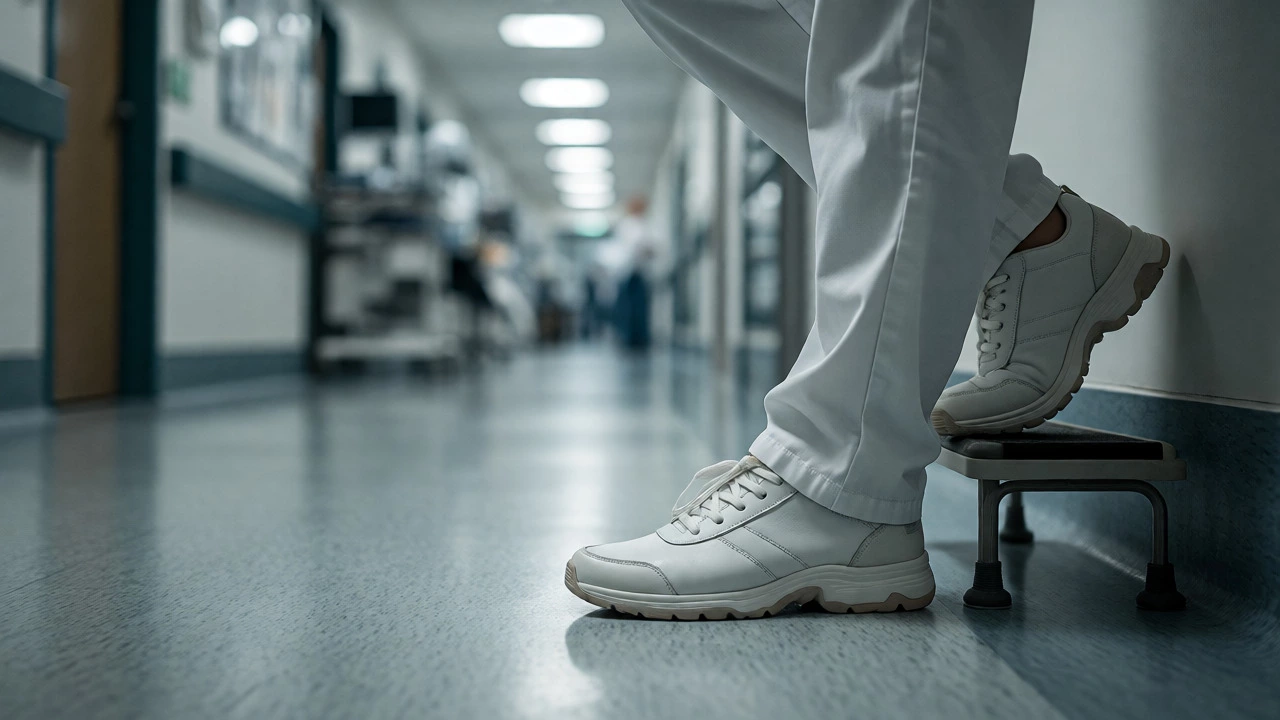
If you have ever spent a double shift on the floor of a busy Dublin pub or walked the aisles of a sprawling supermarket in Cork, you know the specific kind of pain that settles into your lower back after ten hours on hard concrete. It is not just tiredness; it is a deep, throbbing ache that makes the commute home feel like a punishment. For millions of workers across Ireland-from healthcare professionals in our public hospitals to retail staff in Grafton Street boutiques-standing for long periods is simply part of the job description. But it does not have to be this painful.
The secret isn't just "comfortable" shoes; it's about engineering your support system correctly. In Ireland, where the weather can turn from sunny to torrential rain in minutes, your choice of footwear has to balance orthopedic support with practical durability. This guide breaks down exactly how to survive those marathon shifts, focusing on the specific needs of the Irish workforce and the local market realities.
Why Your Current Shoes Are Failing You
Most people make the mistake of buying what looks good or what feels soft out of the box. Softness is deceptive. A shoe that feels like a marshmallow when you try it on for thirty seconds in a fitting room will collapse under eight hours of weight-bearing activity. When the midsole compresses, your arch loses support, your knees twist slightly inward (a condition called overpronation), and your hips compensate. Before you know it, your neck hurts because your body is trying to keep your head level.
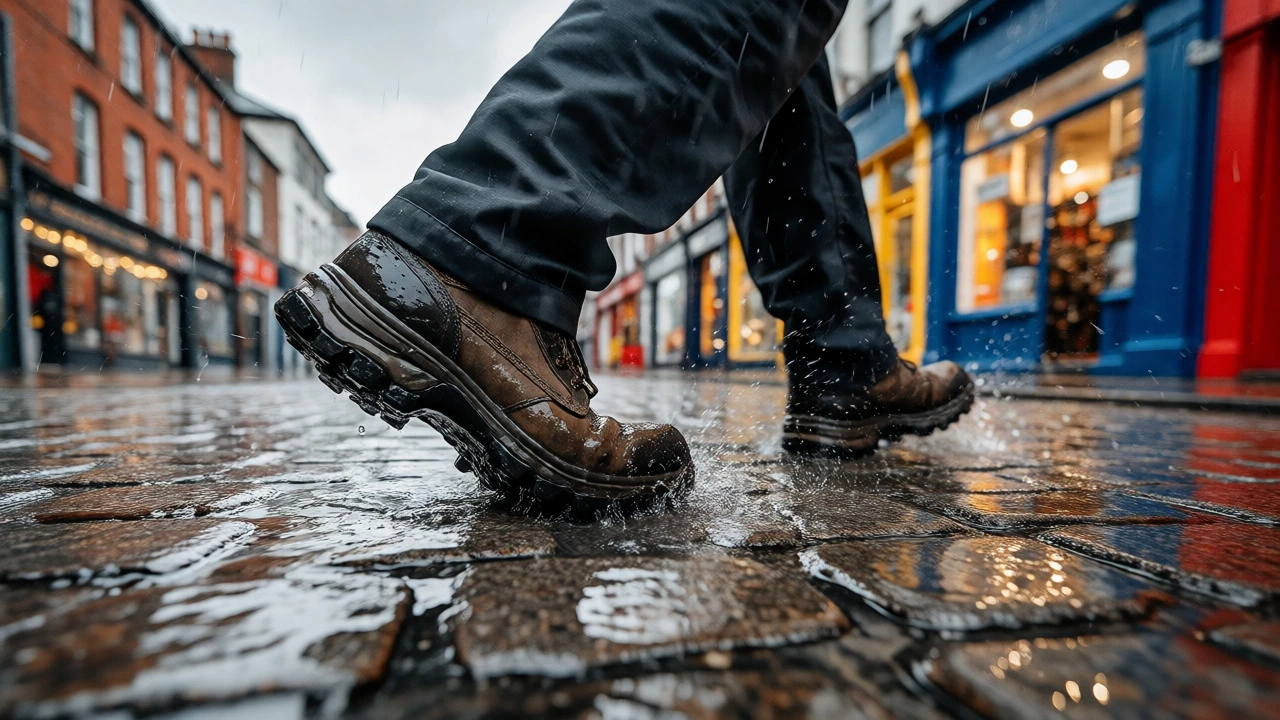
In the Irish context, we also deal with unique environmental factors. Many workplaces here, particularly in hospitality and logistics, involve moving between cold, damp outdoor areas and heated indoor spaces. Standard trainers often lack the structural integrity to handle this thermal cycling, leading to faster degradation of the foam. If you are working in a wet environment, like a fishmonger's stall at the English Market in Cork or a construction site in Galway, water ingress kills cushioning faster than any amount of walking.
The Anatomy of a Perfect Work Shoe
To last a full ten-hour shift, your footwear needs three specific components. First, you need a firm heel counter. This is the stiff cup at the back of the shoe that holds your heel in place. If you squeeze the back of the shoe and it collapses easily, put it back on the shelf. You need structure, not squishiness.
Second, look for a wide toe box. Irish feet, statistically speaking, tend to be wider than the narrow lasts used by many high-street fashion brands. If your toes are cramped, circulation drops, leading to numbness and swelling by hour six. Brands like Keen and Skechers have gained massive popularity in Ireland specifically because they offer wider fits that accommodate natural foot splay.
Third, consider the drop. The "drop" is the height difference between your heel and your forefoot. Traditional running shoes often have a high drop (8-12mm), which pushes your weight forward. For standing still, a zero-drop or low-drop shoe encourages better posture and engages your calf muscles more naturally, preventing blood from pooling in your ankles.
Top Contenders in the Irish Market
You do not need to fly to America for these brands. Most major Irish retailers stock them, and several specialize in occupational health footwear. Here is a breakdown of what works best for different industries.
| Brand/Model | Best For | Key Feature | Average Price (EUR) |
|---|---|---|---|
| Hoka Bondi | Nurses & Healthcare | Maximum cushioning, rocker sole reduces strain | €160 - €190 |
| Brooks Ghost | Retail & Hospitality | Balanced support, breathable mesh | €140 - €170 |
| Merrell MQM | Outdoor & Construction | Water-resistant, rugged traction | €130 - €160 |
| Clarks Unstructured | Office & Light Retail | Cushion Plus technology, stylish enough for office | €90 - €120 |
| Timberland PRO | Industrial & Safety | Steel toe options, anti-fatigue insoles | €150 - €200 |
Note that prices fluctuate based on sales at stores like Jack Neill, Shoezone, or online giants like ASOS. Always check if your employer offers a uniform allowance; many large Irish chains provide a stipend specifically for safety footwear.
The Hidden Cost of Bad Socks
You could buy the most expensive shoes in Dublin, but if you are wearing cheap cotton socks, you are wasting your money. Cotton absorbs sweat and stays wet. Wet skin against fabric causes friction, and friction causes blisters. After four hours, your feet swell. If your sock has a tight elastic band around the ankle, it acts like a tourniquet, restricting blood flow and causing that heavy, leaden feeling in your legs.
Switch to merino wool blends. They regulate temperature, wick moisture away, and resist odor-a crucial factor if you are wearing the same boots for twelve days straight during a festival season rush. Look for socks with reinforced heels and toes. Brands available in Irish sports shops, such as Falke or Darn Tough, come with lifetime guarantees. Yes, they cost €15-€20 per pair, but they last years, making them cheaper than replacing ruined shoes.
Strategies Beyond Footwear
Shoes are only half the battle. How you move matters just as much. If your job allows, use a sit-stand stool. These are common in modern Irish pharmacies and tech support desks. Shifting your weight frequently prevents static loading on your spine.
Another critical tactic is compression socks. In Ireland, where venous insufficiency is a known issue due to genetics and lifestyle, graduated compression stockings help pump blood back up to your heart. They prevent varicose veins and reduce evening swelling. You can find medical-grade compression socks in any Boots pharmacy or independent chemist across the country. Start with a mild compression level (15-20 mmHg) unless advised otherwise by a GP.
Finally, take micro-breaks. Every two hours, spend five minutes elevating your feet above heart level if possible. Even sitting on a breakroom chair and putting your feet on another chair helps drain fluid from your ankles. Do not skip lunch. Sitting down for twenty minutes gives your plantar fascia-the thick band of tissue running along the bottom of your foot-a chance to relax.
Local Insights: Where to Get Checked
If you are experiencing persistent pain, do not just guess. Visit a podiatrist. There are excellent private clinics in cities like Limerick, Waterford, and Belfast, as well as numerous practices in Dublin suburbs. A gait analysis can tell you exactly why your current shoes are failing. Some employers' health insurance plans cover podiatry visits, so check your benefits package.
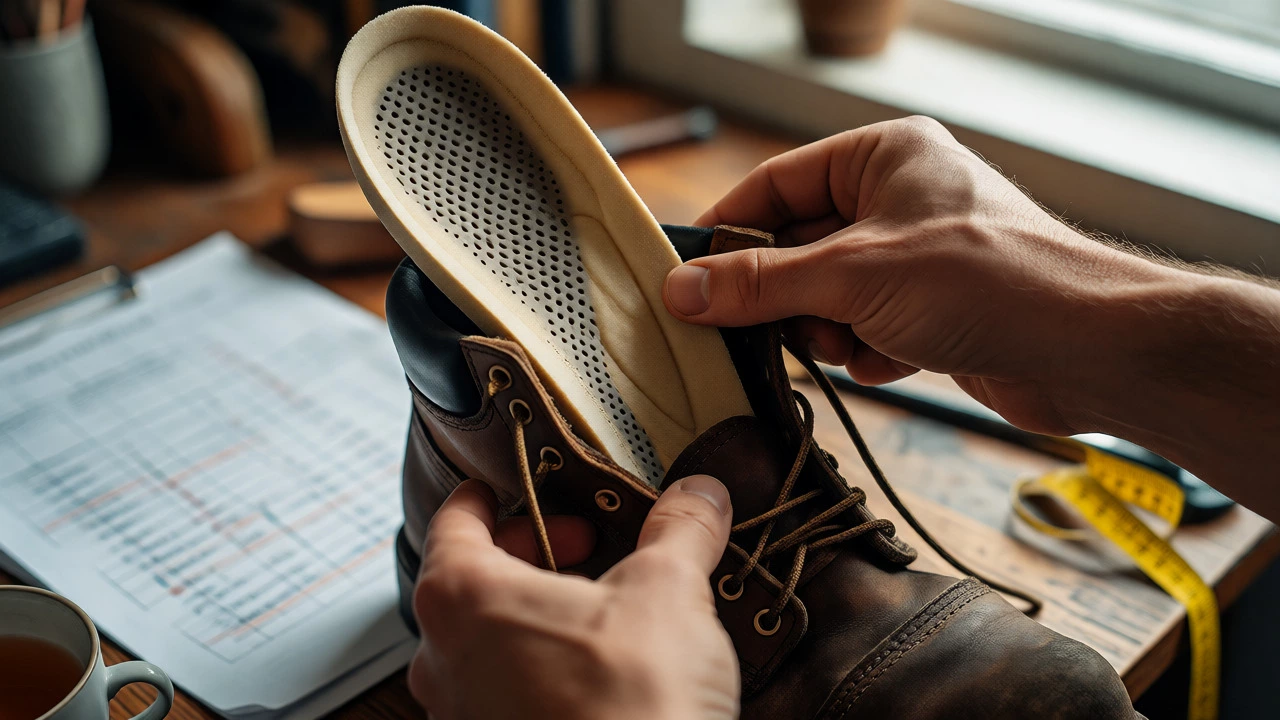
For custom insoles, consider seeing an orthotist. While off-the-shelf inserts like Superfeet are great for mild issues, severe flat feet or high arches may require molded supports. This is an investment, often costing between €200 and €300, but it can save you thousands in physiotherapy bills later.
How often should I replace my work shoes?
If you are on your feet for 8-10 hours daily, expect to replace your shoes every 3 to 6 months. The midsole foam compresses permanently over time. A good rule of thumb is to rotate two pairs of shoes. This allows the foam to recover its shape overnight, extending the life of both pairs and reducing odor.
Are running shoes okay for standing all day?
Not always. Running shoes are designed for forward motion, not static standing. They often have unstable bases that cause you to micro-adjust constantly, tiring your leg muscles. Look for shoes labeled as "walking" or "lifestyle" with a wider base and firmer midsole instead.
What is the best shoe for wet Irish winters?
Look for Gore-Tex lined shoes or boots. Materials like leather treated with waterproof wax are also effective. Ensure the sole has deep lugs for grip on wet pavement and mossy cobblestones, which are common in older parts of Dublin and Cork.
Can I wear slippers or Crocs to work?
Crocs offer some arch support and are easy to clean, making them popular in healthcare. However, they lack heel stability. If you must wear them, add a supportive insole. Avoid backless slippers for long shifts as they force your toes to grip, leading to cramping.
Do compression socks really work?
Yes, clinical studies show they significantly reduce leg fatigue and swelling. They work by applying external pressure that assists the venous return of blood to the heart. For best results, put them on first thing in the morning before your feet swell.
Next Steps for Pain-Free Shifts
Start by auditing your current setup. Check the wear pattern on your old shoes. If the inside edge is worn down, you likely overpronate and need stability shoes. If the outer edge is worn, you might need neutral cushioning. Next, invest in quality socks immediately-they are the cheapest upgrade you can make. Finally, visit a specialist retailer rather than a general department store. Ask for a gait analysis. Your future self, standing tall after a 10-hour shift, will thank you.