Boot Fit & Sizing Decision Tool
Select your options and click "Analyze Fit" to see our recommendation.
Picture this: you’re standing in line at Dunnes Stores in Dublin or browsing the racks in a local clog shop in Galway. You slide your feet into a pair of stylish women’s boots. They look great. But as you walk out onto the wet pavement, that nagging question pops up-should your toes touch the end of your boots? If they do, you’re likely heading for blisters before you even reach the bus stop.
In Ireland, where the weather can shift from sunny to soaking rain in minutes and our terrain often involves uneven cobblestones or muddy country lanes, getting the right fit isn’t just about comfort. It’s about practicality. Whether you’re commuting through Cork city center or hiking the cliffs of Moher, your footwear needs to work with you, not against you.
The Golden Rule: The Thumb Width Test
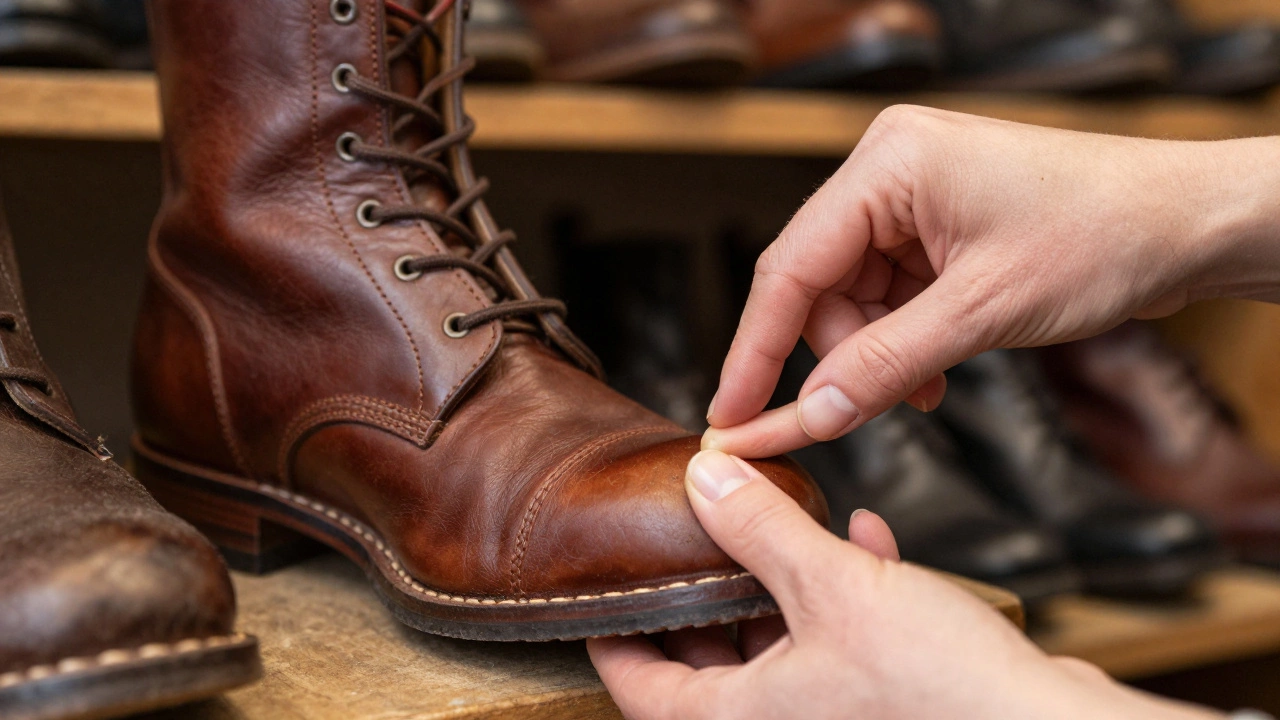
Here is the simple truth: your toes should never touch the front of your boots. Not even slightly. When you buy new women’s boots, there should be a small gap between your longest toe and the end of the shoe. This space is crucial for several reasons.
First, your feet swell throughout the day. After a long shift at work in Belfast or a busy weekend shopping trip in Limerick, your feet can expand by up to half a size. If your boots are tight now, they will become painful later. Second, when you walk downhill-which happens constantly if you’re exploring the hilly streets of Kilkenny or taking a hike in the Wicklow Mountains-your foot slides forward. Without that extra room, your toes jam into the front, causing bruising, black toenails, and ingrown nails.
To check this yourself, use the thumb test. Stand up with your heel firmly against the back of the boot. Press your thumb into the space in front of your longest toe. You should be able to fit your thumbnail comfortably. If your thumb hits your toe immediately, the boot is too short. If you have more than an inch of space, it might be too big, leading to slipping and blisters on your heel.
Why Material Matters in the Irish Climate
The type of material your boots are made from changes how much room you need. Leather boots, which are popular here due to their durability against damp weather, stretch over time. A high-quality leather ankle boot from a brand like Clarks or a local Irish cobbler’s creation will mold to your foot after a few wears. This means you can afford a snugger initial fit, but still leave that essential thumb-width gap.
Synthetic materials, however, do not stretch. Many budget-friendly options found in fast-fashion stores across the country are made from faux leather or plastic blends. These materials stay rigid. If your toes touch the end in a synthetic boot, they will continue to touch the end forever. For these types of shoes, you might even want to go up a full size to ensure comfort.
Consider also the lining. Many winter boots designed for Irish winters come with thermal fleece or wool linings. These add bulk inside the shoe. If you try on a boot in July when it’s warm and dry, it might feel spacious. But once you add thick socks for November’s chill, that same boot could become cramped. Always try on boots with the socks you plan to wear them in.
Navigating Sizing Differences Across Brands
One of the biggest headaches for shoppers in Ireland is inconsistent sizing. European sizes (EU) are standard here, but different brands interpret them differently. A size 38 in one brand might fit like a 39 in another. This is especially true for international brands sold alongside local favorites.
If you shop online-a growing trend post-lockdown-check the return policy carefully. Look for retailers that offer free returns, as trying on multiple pairs is often necessary. Some brands run narrow, while others run wide. If you have wider feet, common among many Irish women, you may need to size up even if the length feels right. Narrowing the width without adding length can cause your toes to press against the sides and front simultaneously.
Local shoe shops in towns like Ennis or Waterford often provide better fitting advice than generic online algorithms. They understand the local foot shape and the demands of walking on Irish surfaces. Don’t hesitate to ask for a professional fitting. It saves you money in the long run by avoiding damaged goods and wasted returns.
Common Mistakes When Trying On Boots
We’ve all been guilty of these errors. Avoid them to ensure your next pair of boots lasts through the seasons.
- Sitting down to try them on: Gravity affects your feet. When you sit, your feet shrink slightly. Always stand up and walk around the store. Put weight on both feet to see how the boot flexes.
- Ignoring the heel: While we focus on the toes, a loose heel causes friction. Your heel should be secure, sliding only minimally. If it slips more than a quarter-inch, the boot is too big or the wrong shape for your foot.
- Buying based on style alone: That trendy pointed-toe boot might look sleek, but pointed shapes compress your toes. Unless you have very narrow feet, opt for round or almond toe boxes. They provide natural room for your toes to splay, improving balance and reducing pressure.
- Not testing on hard surfaces: Store floors are often carpeted. Ask to step onto a hard tile or concrete area if possible. This mimics real-world conditions and reveals any pressure points you wouldn’t feel on soft flooring.
Breaking In New Boots Without Pain
Even with the perfect fit, new boots need breaking in. Don’t wear them straight out of the box for a full day’s work or a long hike. Start small. Wear them around the house for an hour or two. Then take them for short walks outside. Gradually increase the time. This allows the materials to soften and your feet to adjust.
If you’re dealing with stiff leather, you can speed up the process. Stuff the toes with rolled-up newspaper or use a shoe stretcher overnight. Apply a leather conditioner to keep the material supple. Avoid using heat sources like hairdryers, as this can damage the leather and cause cracking.
For those with sensitive feet, consider gel toe caps or moleskin pads during the break-in period. These protect against rubbing without altering the overall fit. Once the boots are broken in, remove the pads to maintain the proper internal space.
When to Size Up or Down
There are specific scenarios where deviating from your usual size makes sense. Here’s a quick guide:
| Scenario | Action | Reason |
|---|---|---|
| Wide Feet | Size Up | More length provides more width; prevents toe compression |
| High Arches | Stick to True Size | Focus on arch support inserts rather than changing size |
| Thick Winter Socks | Size Up Half | Accommodates extra bulk without squeezing toes |
| Pregnancy | Size Up | Feet swell significantly; prioritize comfort and circulation |
| Narrow Feet | True Size or Down | Prevents heel slip; use insoles for volume if needed |
Remember, no pain should be normal. A little tightness initially is okay, but sharp pain or numbness is a red flag. If your toes curl or cramp inside the boot, it’s too small. Your toes should lie flat and relaxed.
Maintaining Fit Over Time
Boots change shape as they age. Leather stretches, soles wear down, and linings compress. Check your fit every few months. If your boots suddenly feel loose, it might be time for new insoles or professional repair. Local cobblers in Ireland are skilled at adding heel lifts or replacing worn soles, extending the life of your favorite pair.
Keep them clean and conditioned. Dirt and moisture degrade materials faster. Wipe off mud after rainy days and apply a protective spray suitable for the material. This keeps the structure intact, ensuring the fit remains consistent.
Finally, listen to your body. If you’re experiencing foot pain, knee issues, or back discomfort, re-evaluate your footwear. Properly fitted boots support your entire posture. Ignoring poor fit can lead to long-term health problems. Invest in quality and correct sizing-it pays off in comfort and durability.
How much space should I have in my boots?
You should have about a thumb’s width (roughly 1/2 to 3/4 inch) of space between your longest toe and the end of the boot. This allows for foot swelling and movement while walking.
Can I stretch boots that are too tight in the toe box?
Leather boots can be stretched slightly using a shoe stretcher or by wearing them with thick socks. However, synthetic materials do not stretch effectively. If the toe box is too small, it’s best to size up instead.
Do my toes need to touch the end when sitting down?
No. Even when sitting, your toes should not touch the end. Standing up shifts your foot forward, so if they touch while seated, they will jam painfully when you stand and walk.
What if my heels slip but my toes don’t touch?
This indicates the boot is too large in length or volume. Use heel grips, thicker socks, or a full-size insole to fill the gap. If slipping persists, consider a smaller size or a different brand with a narrower fit.
Are pointed-toe boots bad for foot health?
Pointed-toe boots can compress toes, leading to bunions, hammertoes, and nerve pain over time. For daily wear, especially in active environments like Ireland’s varied terrain, round or almond toe boxes are healthier choices.
How do I know if my boots are too narrow?
Signs include bulging material on the sides, red marks or blisters on the outer edges of your feet, and a feeling of constriction. If your toes feel squeezed together, the boot is too narrow.
Should I buy boots in the morning or evening?
Buy boots in the late afternoon or evening. Your feet swell during the day, so fitting them when they are at their largest ensures comfort throughout the day and prevents buying shoes that are too tight later.