Leather Shoe Lifespan Calculator
Your Shoe Care Profile
Tell us about your shoe usage and care habits in Ireland's climate
Results & Recommendations
Key Findings
Wearing leather shoes every day in Ireland might seem like a smart move-after all, they look sharp, feel sturdy, and fit right into the country’s mix of city offices, country pubs, and weekend market visits. But here’s the truth: leather shoes in Ireland aren’t just footwear. They’re a test of endurance against rain, mud, and unpredictable weather that changes by the hour.
Why Leather Shoes Struggle in Irish Conditions
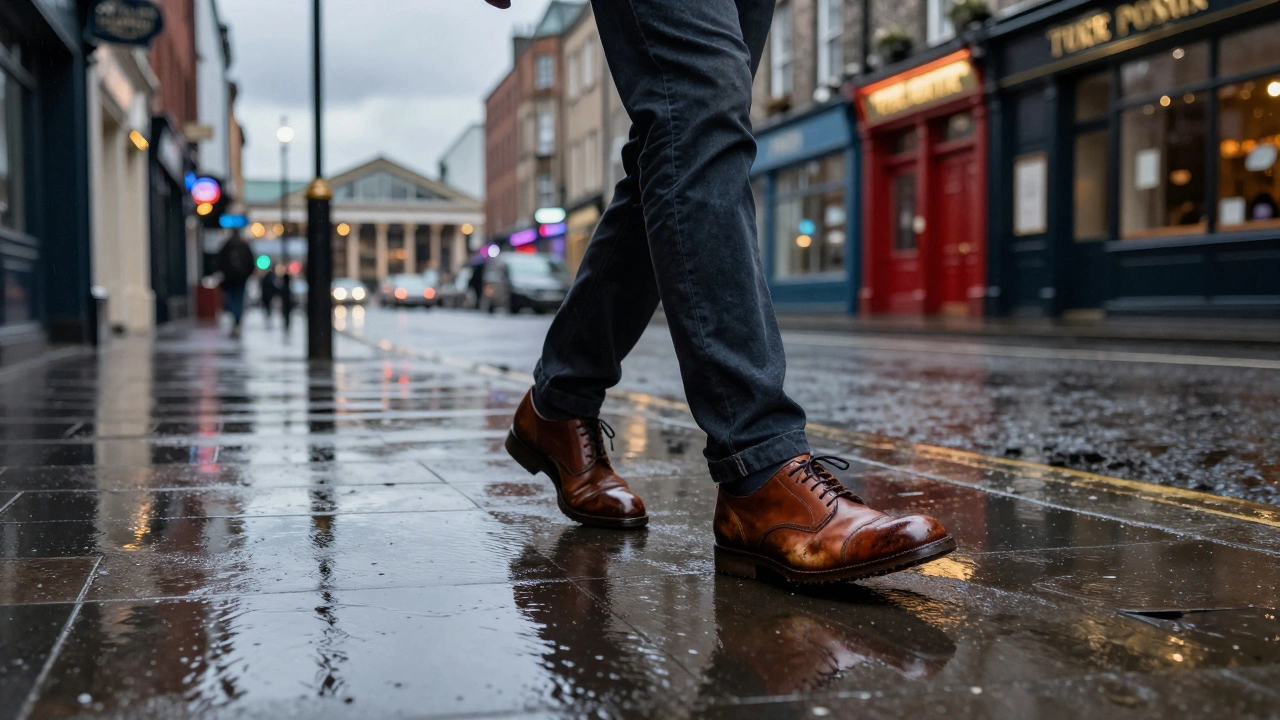
Ireland’s climate isn’t just damp-it’s relentless. Average annual rainfall hits over 1,000mm in places like Galway and Donegal, and even Dublin sees rain on 180+ days a year. That’s not a light drizzle. That’s soaking through soles, staining uppers, and turning polished oxfords into soggy, warped messes by mid-afternoon.
Think about your daily commute: walking from Pearse Station to a job in Temple Bar, or stepping off the bus in Cork city center after a downpour. Leather absorbs water like a sponge. Without proper treatment, it cracks, stiffens, and loses shape. And once it does? Repairing a pair in Ireland isn’t cheap. Cobblers in Dublin’s Temple Bar or Limerick’s Oliver Plunkett Street charge €40-€70 just to resole and recondition a pair.
Then there’s the salt. Winter roads in Ireland aren’t just wet-they’re salted. Road grit from towns like Sligo, Derry, or Waterford eats into leather’s surface. Over time, it leaves behind white streaks, rough patches, and a smell that lingers like wet wool.
What Happens When You Wear Them Daily
Let’s say you wear the same pair of brown cap-toe shoes every day for a month. Here’s what you’ll likely see:
- By day 7: The leather starts to darken unevenly where water pooled.
- By day 14: The sole begins to separate slightly near the heel-a sign of moisture damage.
- By day 21: The toe cap loses its shine, and the insole smells like a damp basement.
- By day 30: Cracks form along the stitching. You’re one storm away from a full break.
And don’t think you can just wipe them down. A quick towel-off does nothing. Water gets trapped between the leather and the lining. Mold sets in. You end up with a pair that looks like it survived a flood in Kilkenny.
The Irish Way: Alternatives That Actually Work
Most locals who’ve been through years of Irish weather don’t wear leather shoes daily. They rotate. They adapt.
Take the Irish market for footwear. Brands like Clarks and Geox are everywhere-not because they’re trendy, but because they have breathable membranes and waterproof linings that handle wet pavements without sacrificing style. You’ll see them in Dunnes Stores, in Galway’s Eyre Square, and in small shops along Belfast’s Royal Avenue.
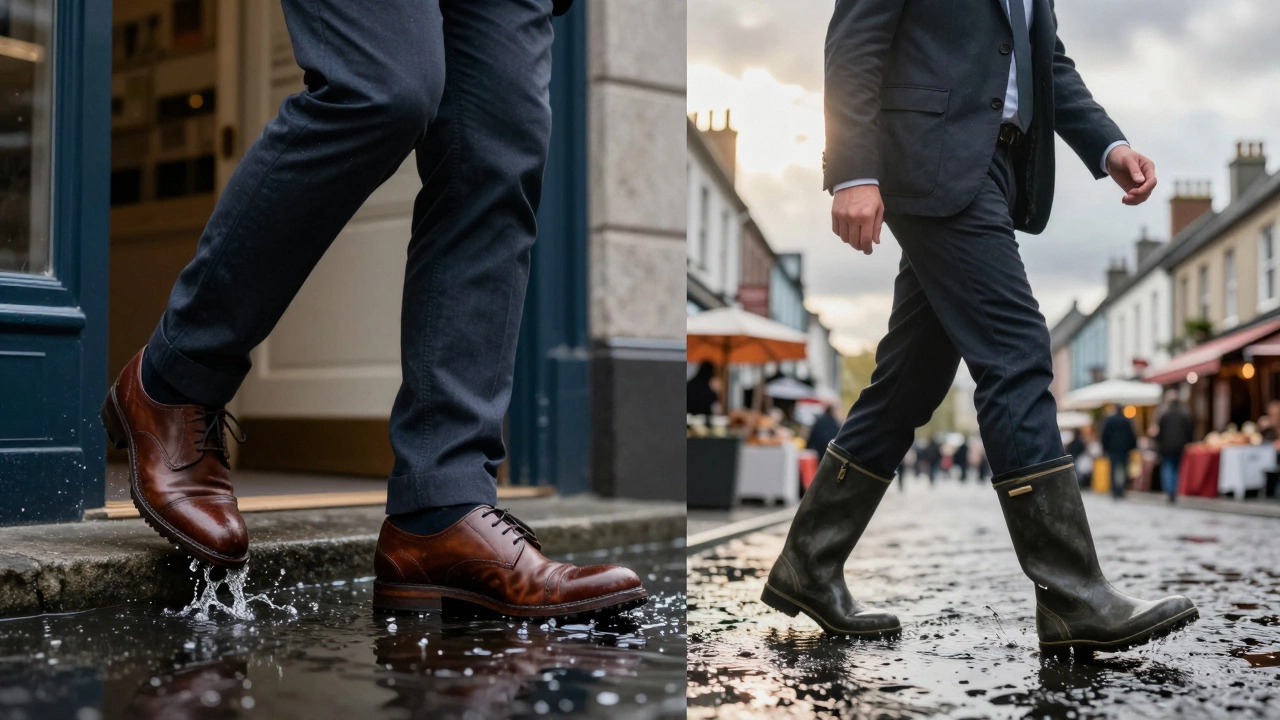
For work, many professionals wear water-resistant derbies made with synthetic uppers-like those from Clarks Unstructured or Red Tape-that look like leather but dry in hours, not days. On weekends, you’ll find people in Wellington boots from Hunter or Le Chameau walking through the markets in Kinsale or the Dingle Peninsula.
Even the Irish military and emergency services use rubber-soled, non-leather boots. Why? Because leather fails under pressure. And in Ireland, pressure comes daily.
How to Care for Leather Shoes in Ireland (If You Must Wear Them)
Still want to wear your best leather shoes? Fine. But do it right.
- Use a waterproofing spray designed for leather-like Obenauf’s LP or Collonil Carbon Pro-before the first wear. Do it outdoors, away from damp walls.
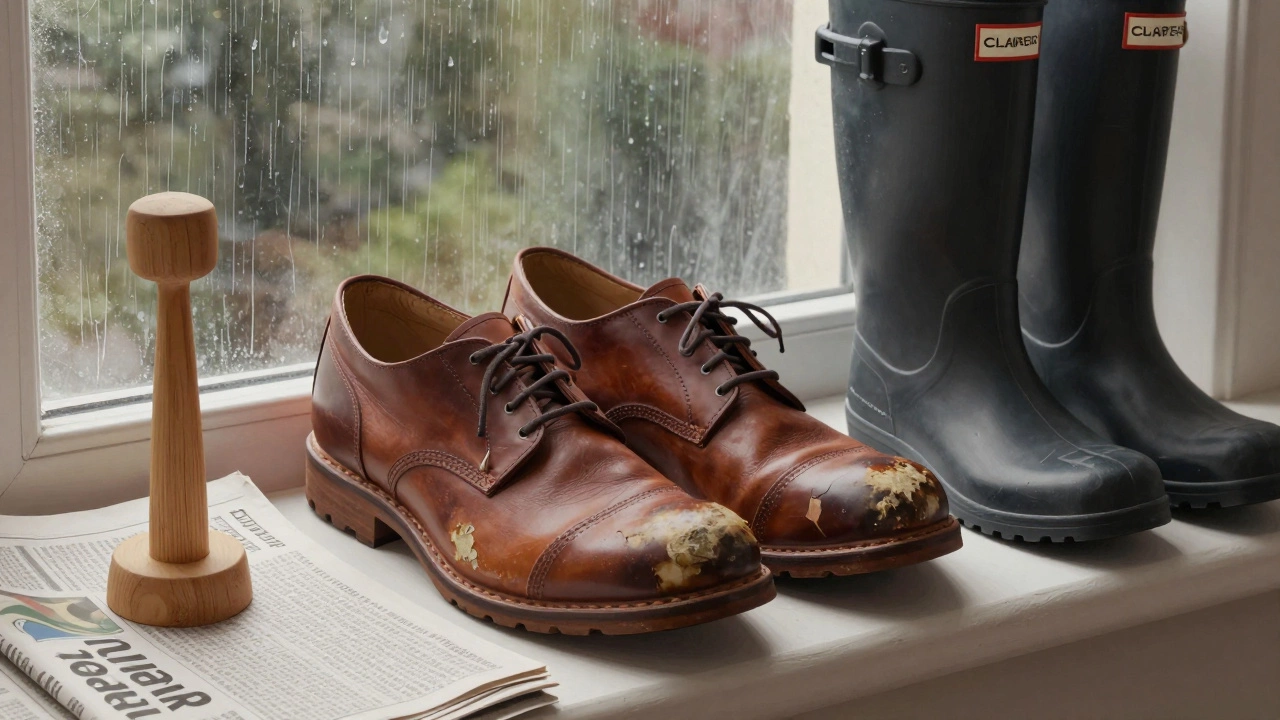
- Never leave them by a radiator. Heat dries leather too fast. Let them air-dry slowly near a window, preferably with newspaper stuffed inside to hold shape.
- Use a cedar shoe tree every night. It pulls moisture and keeps the last from collapsing. You can buy them at Shoe Care Ireland in Bray or The Boot Doctor in Louth.
- Condition every 3 weeks with a beeswax-based balm. Avoid silicone. It seals in moisture.
- Rotate. Never wear the same pair two days in a row. Let them rest. Ireland’s humidity means leather needs 48 hours to recover.
And if you’re heading out for a wedding in Kildare or a business meeting in Dublin’s Convention Centre? Wear them. But change into something else as soon as you can.
When Leather Shoes Work in Ireland
There are times when leather shoes make sense. A formal event. A job interview. A Sunday roast in a country inn near Ennis. But even then, most Irish people carry a spare pair of shoes in their bag. Or they wear them only for the event and walk back in waterproof boots.
The real Irish secret? Respect the weather. Don’t fight it. Adapt to it. Your feet-and your wallet-will thank you.
What to Do If Your Leather Shoes Are Already Damaged
Don’t throw them out. Irish cobblers are experts at resurrection.
In Dublin, Shoe Repair Dublin on South King Street can re-heel, re-stitch, and re-waterproof a pair for under €60. In Galway, The Last Stitch on Shop Street does the same and even offers a 6-month guarantee. And in Cork, Shoe Doctor Cork will restore vintage brogues you’ve had since college.
But if the leather is cracked, the sole is warped, or the smell won’t go away? It’s time to let go. A new pair of waterproof, breathable shoes will cost less than three repairs.
Final Verdict: Should You Wear Leather Shoes Every Day in Ireland?
No. Not if you want them to last.
Leather shoes are for special moments in Ireland-not daily routines. The weather is too harsh, the roads too salty, the damp too deep. Rotate them. Protect them. But don’t rely on them.
Instead, invest in quality waterproof footwear that can handle the Irish grind. Your feet will stay dry. Your shoes will last. And you’ll look just as sharp-without the constant battle against the elements.