Leather Shoe Sizing Advisor for Irish Feet
Your Foot Profile
Quick Reference Guide
Tip: Always try shoes in late afternoon when feet are at their largest.
Your Personalized Recommendation
Based on Irish ConditionsWhy This Size?
Key Considerations
Break-In Tip
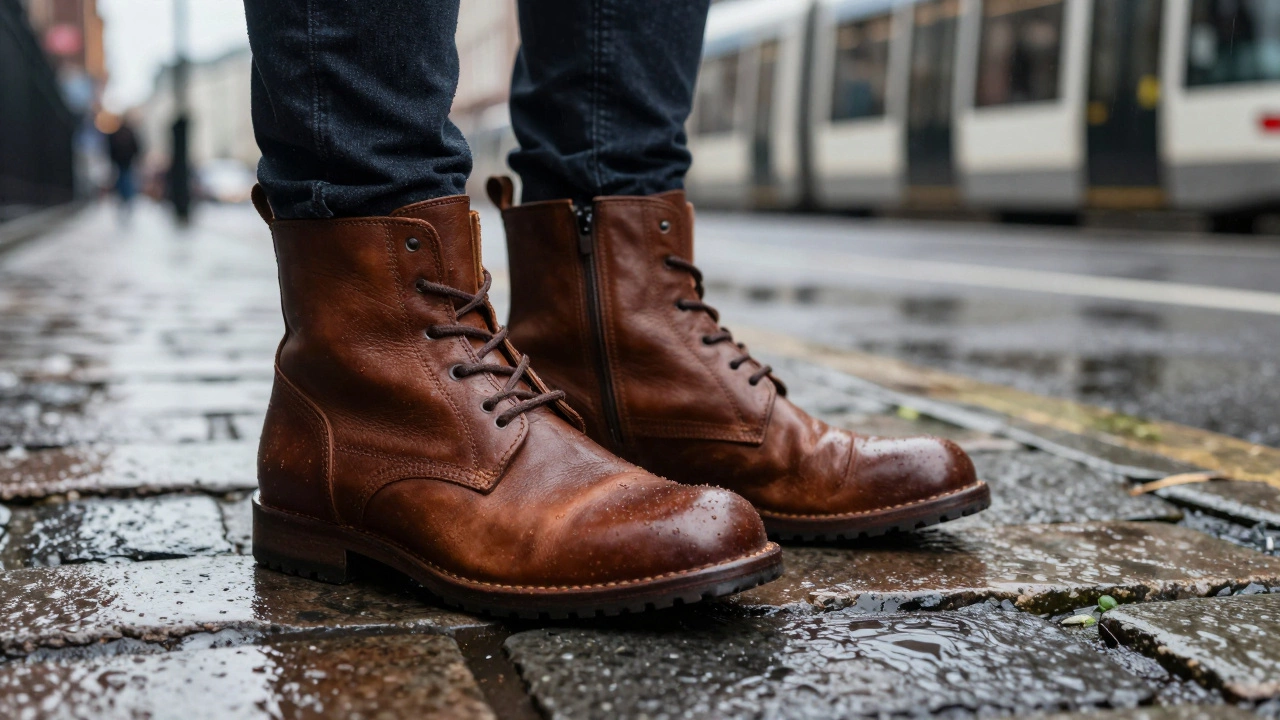
Walking from a pub on Grafton Street to the Luas stop during a sudden summer downpour is a rite of passage for anyone living in Dublin. But if your leather shoes are pinching your toes or rubbing blisters onto your heels, that walk becomes a punishment rather than a stroll. The question isn't just about style; it's about survival in a climate where dry feet are a luxury. So, should you size up or down in leather shoes? The short answer is: usually up, but not by much.
In Ireland, we deal with unpredictable weather and uneven cobblestones daily. Your footwear needs to accommodate not just your foot’s shape, but also the socks you’ll wear to keep out the damp chill. Getting this wrong means painful evenings at festivals like Electric Picnic or miserable commutes on the DART. Let’s look at why leather behaves differently than synthetic materials and how to get the fit right without spending hours in a queue at Brown Thomas.
The Nature of Leather: It Stretches, It Doesn’t Shrink
To understand sizing, you have to understand the material. Leather is a durable material made from animal hides, primarily cowhide, known for its ability to mold to the wearer's foot over time. Unlike canvas sneakers or plastic rain boots, leather is alive in a sense. It breathes, it softens, and most importantly, it stretches.
If you buy a pair of leather shoes that feel "just right" when you try them on, they will likely become too tight after two weeks of wear. Leather expands laterally (width) more than it does lengthwise. This means if the shoe feels snug across the ball of your foot, it’s going to squeeze harder as the material breaks in. Conversely, if there is a little extra room, the leather will stretch to fill that gap, creating a custom fit that feels like a glove.
Think of it like breaking in a new pair of jeans. You don’t want them so tight you can’t sit down comfortably in a cozy café in Temple Bar. You want them to feel slightly firm initially, knowing they will relax into place. For leather shoes, "slightly firm" translates to having about a thumb’s width of space between your longest toe and the end of the shoe.
The Irish Weather Factor: Socks and Swelling
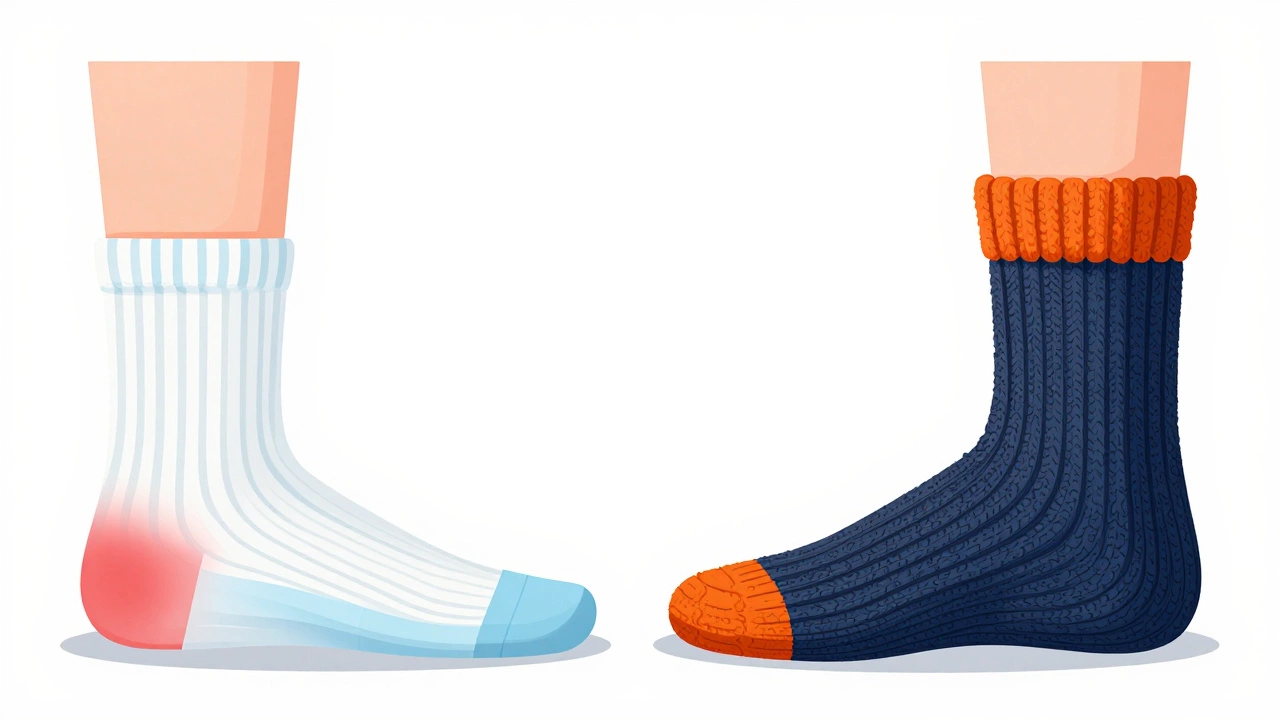
You cannot talk about shoe sizing in Ireland without talking about socks. We aren’t wearing thin athletic liners here. To combat the damp cold, especially from October through April, most people opt for wool blends or thicker cotton socks. Brands like Irish Linen Company or local knitwear shops in Galway often stock thick, warm options that add significant bulk to your foot volume.
If you size your shoes based on bare feet or thin socks, you are setting yourself up for failure. When the temperature drops, your feet also swell slightly due to blood vessel dilation-a natural physiological response to cold. Add in the thickness of a winter sock, and a shoe that was perfect in July becomes a vice in January.
- Summer: Thin socks. Fit should be snug but not tight. Half a size up is often enough.
- Winter: Thick wool socks. You may need a full size up to accommodate the extra layer without cutting off circulation.
Also, consider the time of day. Your feet swell throughout the day as gravity pulls fluids downward. If you try on shoes in the morning at a mall in Dundrum, they might feel spacious. By the time you’re walking home from work in the evening, they could be digging into your instep. Always shop for shoes in the late afternoon or early evening when your feet are at their largest.
Sizing Up vs. Sizing Down: The Rules of Thumb
Here is the practical breakdown for different scenarios. Remember, European sizing (EU) is standard in Ireland, but US and UK sizes still appear on tags. Be careful-US women’s sizes are typically one number higher than UK sizes, which can cause confusion if you’re buying online from international retailers.
| Scenario | Action | Reasoning |
|---|---|---|
| New stiff leather boots | Size up 0.5 - 1 size | Stiff leather takes longer to stretch and needs room for thick socks. |
| Soft suede loafers | True to size or 0.5 up | Suede is softer and stretches faster than smooth leather. |
| Wide feet | Size up 0.5 or buy Wide (W) fit | Lengthening the shoe gives more width automatically in many lasts. |
| Narrow feet | True to size or use insoles | Sizing down makes the shoe too short, causing toe damage. Use inserts instead. |
| High arches | True to size, check arch support | Fit depends on the shoe’s internal structure, not just length. |
A common mistake is sizing down because the heel slips. A slight heel slip is normal in new leather shoes. As the heel counter (the back part of the shoe) molds to your skin, the slip disappears. However, if your toes are jammed against the front, no amount of molding will fix that. You will develop bunions or black toenails. Prioritize toe room over heel grip.
Local Brands and Where to Shop in Ireland
Ireland has a rich tradition of shoemaking, particularly in Cork and Dublin. Supporting local brands often means getting better advice on fit because these cobblers understand the local terrain and foot shapes.
Clarks Originals, while now global, started in the UK but has deep roots in Irish retail culture. Their desert boots are a staple in Dublin wardrobes. They tend to run true to size, but the suede stretches significantly. Many locals recommend starting half a size down if you plan to wear them with thin socks only, but for all-year-round wear, stick to your regular size.
For more formal or durable options, look at Grenson or Loake, both available in major Irish department stores like Brown Thomas in Dublin or Dunnes Stores in larger towns. These British heritage brands often use narrower lasts. If you have wider feet, common among many Irish demographics, you might need to size up or seek out their "wide" fittings.
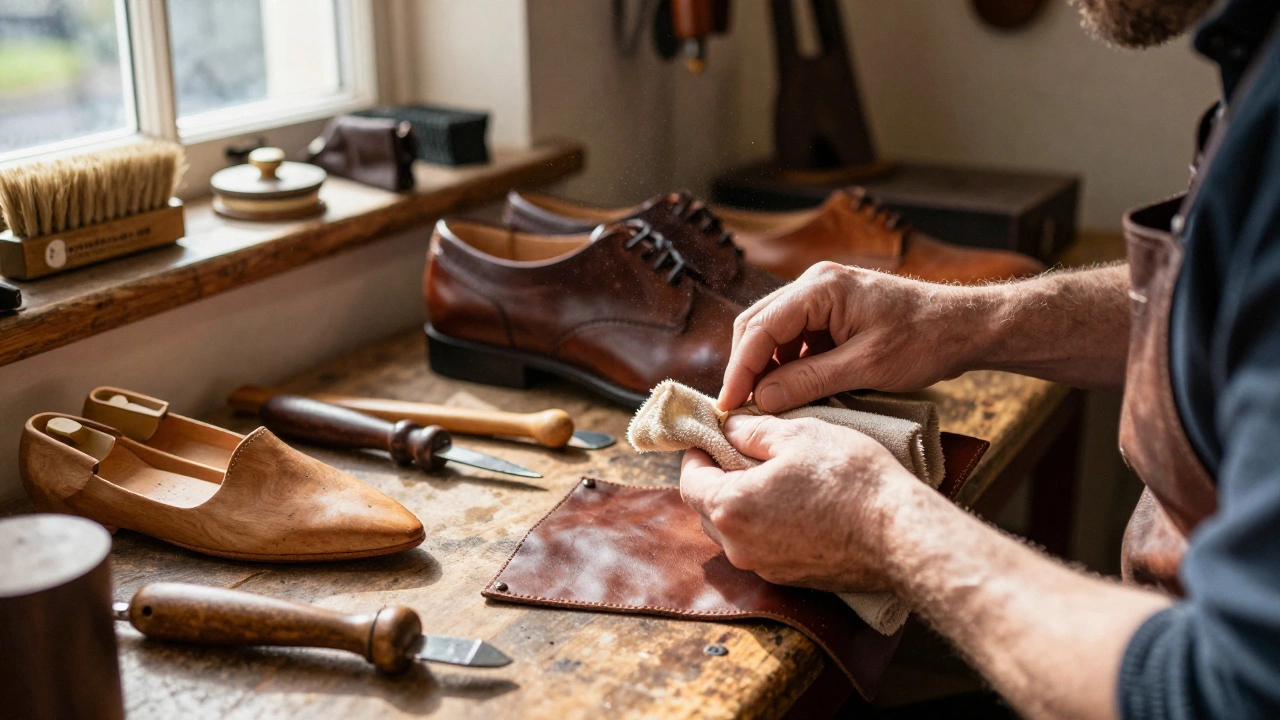
Don’t overlook independent cobblers. In cities like Cork, Limerick, and Galway, there are family-run shoe repair shops that can stretch specific areas of a shoe for you. If you love a pair but they pinch on the sides, a professional stretcher can expand the leather by up to a half-size without damaging the material. This is a cost-effective alternative to buying a whole new pair.
Break-In Period: Making Them Work for You
Even if you size correctly, leather shoes require a break-in period. This is the phase where the material softens and conforms to your unique foot shape. In Ireland, where we value practicality, we don’t want to spend three months suffering through this process.
Here is how to speed up the break-in safely:
- The Thick Sock Method: Wear your thickest wool socks and walk around your house for an hour. The heat from your feet and the friction will help soften the leather. Do this for several days before taking them out for a long walk.
- Leather Conditioner: Apply a quality leather conditioner or cream. Products like Saphir Medaille d'Or are popular among enthusiasts. Conditioning keeps the leather supple and prevents cracking, which is crucial in our dry indoor heating environments during winter.
- Gradual Wear: Don’t wear new leather shoes for a 12-hour shift or a long hike in the Wicklow Mountains on day one. Start with short trips. Let your feet adjust to the new pressure points.
If you hear a cracking sound, stop immediately. That means the leather is drying out and becoming brittle. Re-apply conditioner and let the shoes rest.
Common Pitfalls to Avoid
One major error is assuming all leather is the same. Full-grain leather, used in high-quality shoes, retains its strength while stretching. Split leather or bonded leather, often found in cheaper fast-fashion stores, does not breathe well and may tear if stretched too much. If you’re buying budget-friendly options from outlets in Bray or Malahide, check the label. If it says "genuine leather" without specifying full-grain, expect less durability and less predictable stretching.
Another pitfall is ignoring the "last"-the foot-shaped form around which the shoe is built. Some brands, like Dr. Martens, are known for running large. Others, like certain Italian designer brands sold in Dublin boutiques, run small. Research the specific brand’s sizing reputation before purchasing. Reading reviews from other Irish customers on platforms like LoveWithColors or Zalando can provide real-world insights into how a shoe fits on local feet.
Finally, don’t force a square peg into a round hole. If a shoe feels wrong in the store, it won’t magically become comfortable at home. Pain is a signal, not a challenge. Walk around the store, go up and down stairs, and mimic the movements you’ll make in daily life. If it hurts then, it will hurt later.
FAQ
How much do leather shoes stretch?
Leather shoes typically stretch about half a size to a full size in width, but very little in length. The material expands laterally to accommodate the ball of your foot and your toes spreading. If you need more length, sizing up is necessary, as stretching won't add significant inches to the sole.
Should I size up for leather boots in winter?
Yes, generally. In Ireland, winter requires thick socks for warmth. A leather boot that fits perfectly with thin socks will be too tight with wool socks. Sizing up by half or a full size ensures you have enough room for insulation without restricting blood flow, which is essential for keeping your feet warm in damp conditions.
What is the best time of day to buy shoes in Ireland?
Late afternoon or early evening is ideal. Your feet naturally swell throughout the day due to activity and gravity. Trying on shoes when your feet are at their largest ensures that the fit remains comfortable even after a long day of walking, such as touring Dublin’s historic sites or commuting via public transport.
Can I stretch leather shoes at home?
Yes, you can use methods like wearing thick socks and using a hairdryer to warm the tight spots, or inserting a shoe stretcher. However, be cautious with heat as it can dry out the leather. For expensive pairs, visiting a local cobbler in cities like Cork or Galway is safer and more effective for precise adjustments.
Do Dr. Martens run big or small?
Dr. Martens are known to run large. Most Irish shoppers find they need to size down by half a size for a snug fit. However, because the leather is stiff initially, some prefer staying true to size to allow for the break-in period. If you have narrow feet, sizing down is definitely recommended.
Is it better to have a little heel slip in new leather shoes?
A slight heel slip is normal and expected in new leather shoes. As the heel counter molds to your foot, the slip will reduce. However, if the slip is excessive or causes blisters, the shoe may be too wide or large. Focus on ensuring your toes have plenty of room first, as length cannot be adjusted easily.