T-Shirt Quality Checker
Assess your t-shirt's quality based on the key factors discussed in the article. Select options to get your quality score and personalized advice.
Quality Score
0/15Irish Quality Tip: High-quality t-shirts in Ireland should survive Dublin rain, Wicklow mountains, and repeated washes without shrinking or losing shape.
When you’re buying a t-shirt in Ireland, you’re not just picking out something to wear to the pub or a hike in the Wicklow Mountains-you’re choosing a piece that has to survive damp mornings in Galway, windy afternoons in Donegal, and washes after washes in a cramped Dublin apartment laundry. Not every t-shirt holds up. In fact, most cheap ones fall apart after three washes, fade to grey, or stretch out like old jumper sleeves. So how do you tell if a t-shirt is truly high-quality in Ireland’s unpredictable climate and everyday wear-and-tear? It’s not about brand names. It’s about the details.
Feel the Fabric
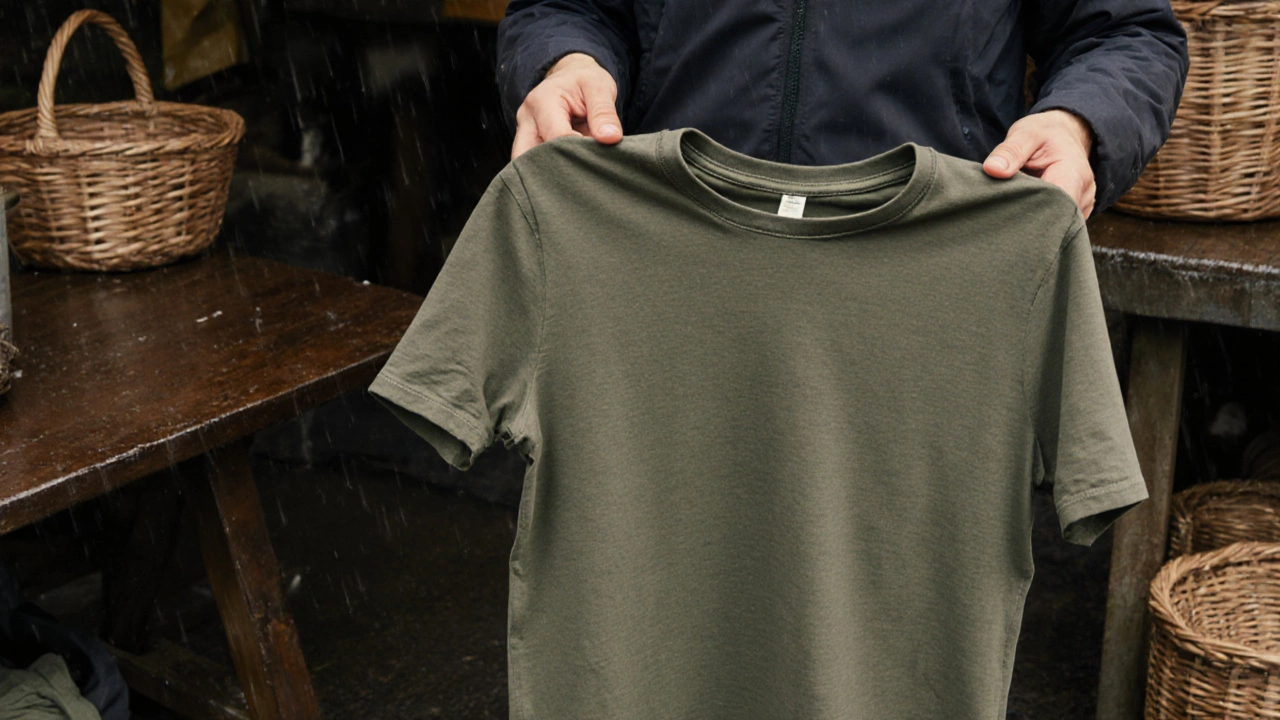
The first thing you should do is hold the t-shirt in your hands. A high-quality t-shirt feels substantial-not thin, not flimsy, not see-through when held up to the light. In Ireland, where rain is a daily possibility and layering is routine, you need fabric that doesn’t turn into a soggy mess. Look for 100% cotton, preferably single-knit or ring-spun cotton. Ring-spun cotton is twisted as it’s spun, making the fibers smoother and stronger. Brands like Irish Linen Co. and Claddagh Wear use this in their core range, and you can feel the difference. Avoid blends with polyester unless it’s under 10%. Polyester doesn’t breathe, traps moisture, and smells after a day out in the Dublin rain.Test the weight. A good t-shirt should feel like it has some heft-around 180g/m² or higher. Lightweight tees (under 150g/m²) are for summer festivals, not for layering under a wool coat in October. If you’re shopping in Cork’s English Market or Belfast’s St. George’s Market, pick up a few tees and compare their weight side by side. The heavier one? That’s the one you want.
Check the Stitching
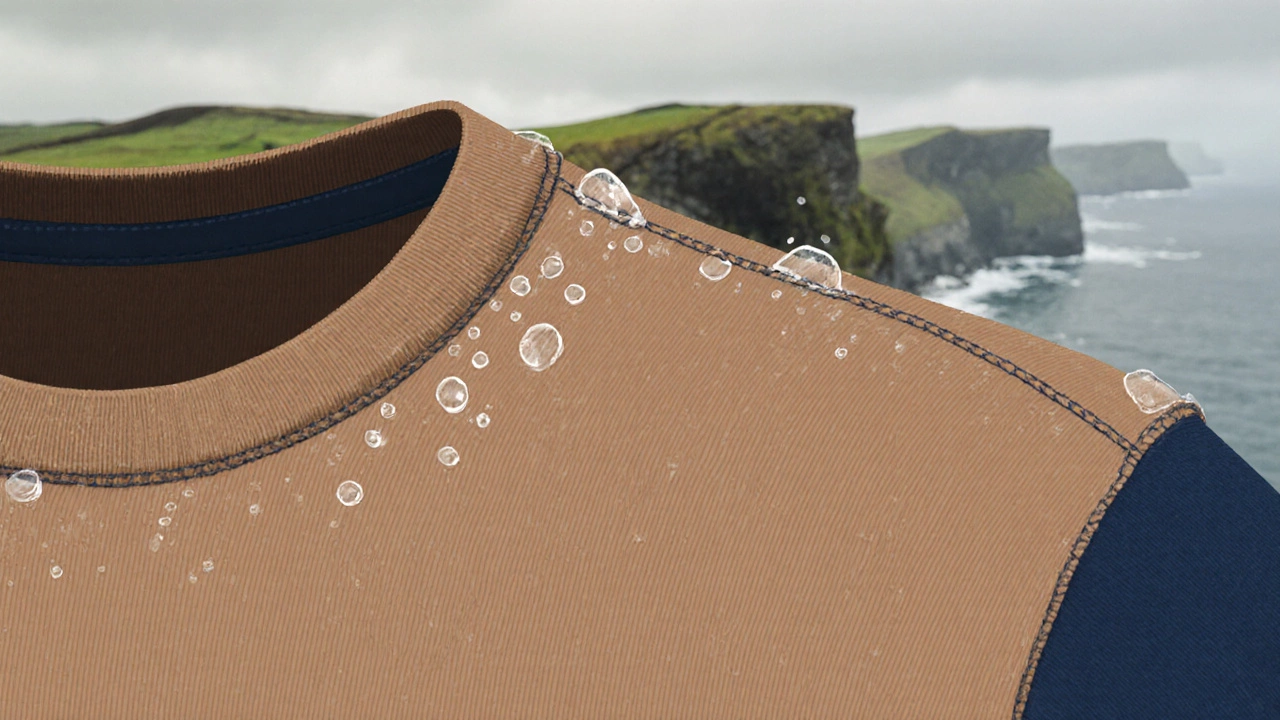
Look at the seams. High-quality t-shirts have double or even triple stitching along the shoulders, neckline, and hem. This isn’t just for looks-it’s for durability. In Ireland, where people wear their t-shirts for everything from farm work in Tipperary to walking the cliffs of Moher, seams get stretched, pulled, and washed constantly. If you see loose threads or single-stitched hems, walk away. Even a small tear at the shoulder seam can turn into a full rip after a few months.Check the neckline. A good neckline stays true. If you tug it gently, it shouldn’t stretch out more than a centimeter. The collar should have a ribbed knit-usually made from the same cotton as the body-and it should lie flat when laid down. Cheap tees often have flimsy ribbing that turns into a wavy, stretched-out mess after one wash. You’ll know you’ve got a good one if, after washing it at 30°C, the collar still looks neat.
Look at the Print (If There Is One)
If the t-shirt has a design-say, a Celtic knot, a map of Ireland, or a slogan like “Made in Dublin”-check how it’s applied. Screen-printed designs are better than heat transfers. Heat transfers crack and peel after a few washes, especially in Ireland’s cold water laundry cycles. Screen printing uses ink that soaks into the fabric, so it lasts. Ask the seller: “Is this screen-printed or heat-pressed?” Reputable Irish brands like Wicklow Wear and Galway Threads always specify this. If they don’t know, it’s probably cheap.Also, check the print’s edges. High-quality prints have clean, sharp lines. No blurry edges. No peeling corners. If you’re buying online, zoom in on product photos. If the print looks fuzzy, skip it. You’ll regret it by February.
Examine the Hem and Cuffs
The bottom hem and sleeve cuffs are where most t-shirts fail. A good one has a clean, narrow double-fold hem that’s stitched down with a coverstitch machine. This prevents curling and gives a professional finish. Cheap tees often have a single-fold hem that rolls up after a few washes. If you’re wearing it tucked in, you’ll notice it pulling out by lunchtime.Try the sleeve cuff. Stretch it gently. It should snap back without losing shape. If it feels loose or baggy, the fabric’s been stretched during manufacturing or is made from low-grade yarn. That’s a sign the manufacturer cut corners. In Ireland, where people wear t-shirts year-round under jackets and jumpers, sleeves need to stay put.
Check the Label and Brand Transparency
High-quality Irish t-shirts often come with clear, honest labels. Look for details like “100% Organic Cotton,” “Made in Ireland,” or “Certified by GOTS” (Global Organic Textile Standard). Brands like Boho & Co. and Clare Knitwear list their factories and cotton sources. If the label just says “Made in China” with no other info, that’s a red flag. It doesn’t mean everything made overseas is bad-but without transparency, you’re guessing.Irish consumers are getting smarter. More people are asking: “Who made this?” and “Is it fair trade?” Supporting brands that pay fair wages and use sustainable dyes isn’t just ethical-it’s practical. Natural dyes fade more gracefully, and organic cotton lasts longer because it’s grown without harsh chemicals that weaken fibers over time.
Wash Test: The Real Litmus Test
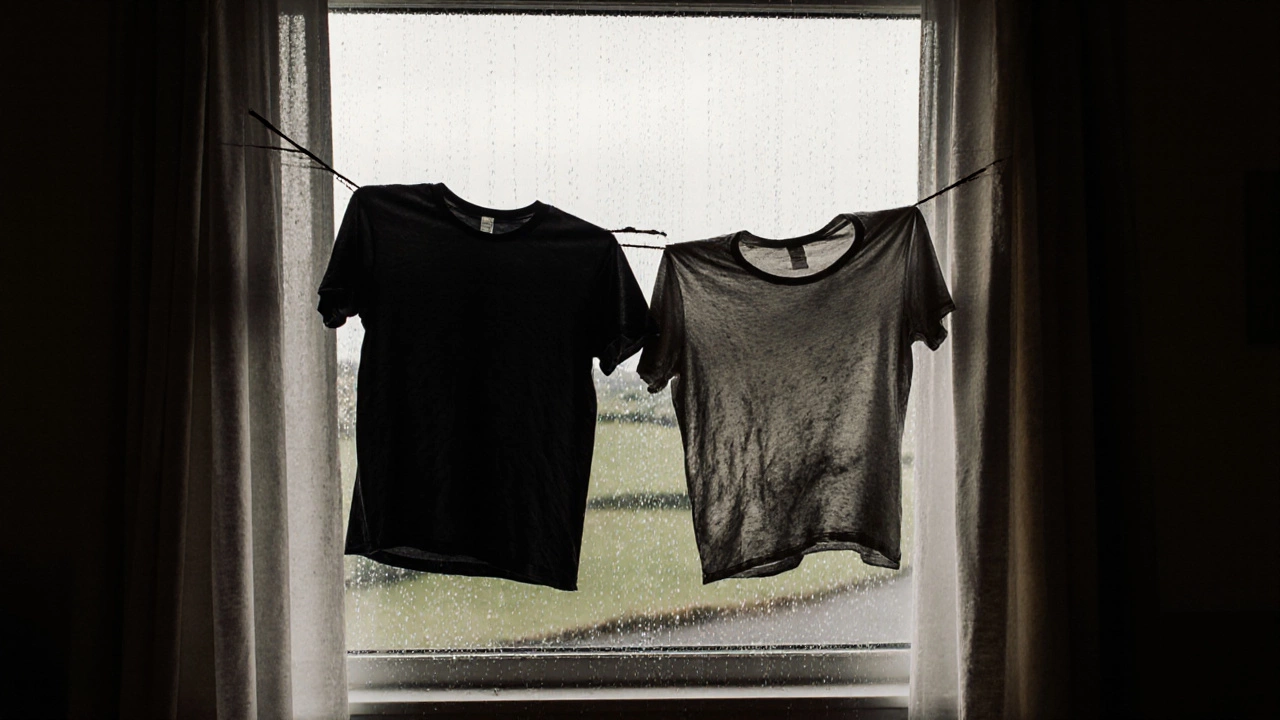
The best way to know if a t-shirt is high-quality? Wash it. And not just once. After three washes, you’ll see the truth. High-quality tees hold their shape. Their color stays true. The fabric doesn’t pill or thin out. Cheap ones? They’ll look like they’ve been through a tumble dryer on high for a week. If you’re in Dublin, test it at home. Use cold water, no fabric softener (it coats the fibers and weakens them), and air-dry flat. No tumble drying. That’s the Irish way-energy-saving, gentle, and kind to your clothes.One real-world test: buy two tees-one cheap from a supermarket, one from a local Irish brand. Wash both the same way for six weeks. Compare them side by side. You’ll see why people in Limerick and Waterford swear by investing in one good t-shirt instead of five cheap ones.
Where to Buy High-Quality T-Shirts in Ireland
You don’t have to go to Dublin to find good t-shirts. Check out:- Claddagh Wear (Galway) - Organic cotton, Irish-designed prints, made in Cork
- Irish Linen Co. (Dublin) - Premium ring-spun cotton, classic fits, durable stitching
- Wicklow Wear (Wicklow Town) - Screen-printed with plant-based inks, GOTS certified
- Boho & Co. (Belfast) - Ethical production, fair wages, slow fashion
- St. George’s Market (Belfast) - Local artisans sell handmade, small-batch tees
- English Market (Cork) - Look for stalls with “Made in Ireland” tags
Avoid big chain stores if you’re looking for longevity. Their t-shirts are made for one season. Irish winters are long. Your t-shirt should last.
What to Avoid
Don’t fall for these traps:- “Super soft” claims without fabric details-softness doesn’t equal durability
- Teas with logos of Irish landmarks that look printed on paper, not fabric
- Teas priced under €10 that claim to be “premium”
- Teas with no care instructions or labels
- Teas that shrink more than 5% after the first wash
If it sounds too good to be true, it is. In Ireland, we’ve learned the hard way that cheap clothes cost more in the long run.
Final Rule of Thumb
Ask yourself: “Would I wear this for a day in the rain, then wash it, and wear it again next week?” If the answer is yes, you’ve got a quality t-shirt. If you’re already imagining it unraveling by Tuesday, walk away.High-quality t-shirts in Ireland aren’t about fashion trends. They’re about resilience. About making something that lasts through the seasons, the washes, the wind, and the wet. And when you find one that fits right, feels right, and lasts-hold onto it. You won’t need another for a long time.
What’s the best fabric for a t-shirt in Ireland’s climate?
100% ring-spun cotton is the best choice. It’s breathable, absorbs moisture, and holds up to frequent washing. Avoid polyester blends-they trap sweat and smell in damp weather. Organic cotton is even better because it’s grown without chemicals that weaken fibers over time.
Can I machine wash a high-quality t-shirt?
Yes, but use cold water (30°C or lower) and skip fabric softener. Softener coats the fibers and reduces absorbency. Always air-dry flat-never tumble dry. Irish winters are long, and drying indoors is normal. Heat from dryers shrinks cotton and weakens seams.
Are Irish-made t-shirts worth the extra cost?
Absolutely. Irish-made t-shirts from brands like Claddagh Wear or Wicklow Wear use better materials, ethical labor, and durable stitching. They cost more upfront-€25-€35-but last 3-5 years. Cheap tees from supermarkets cost €10 but fall apart in 6 months. That’s more expensive over time.
How do I know if a t-shirt is truly organic?
Look for the GOTS (Global Organic Textile Standard) label. It means the cotton is grown without pesticides and the dyeing process is eco-friendly. Brands like Boho & Co. and Irish Linen Co. display this clearly. If it’s not on the label, don’t assume it’s organic.
Why do some t-shirts shrink after washing?
Cheap t-shirts are made from low-grade cotton that hasn’t been pre-shrunk. High-quality tees are pre-washed during manufacturing so they won’t shrink. Always check the care label-if it doesn’t say “pre-shrunk,” assume it will. Wash in cold water and air dry to minimize shrinkage.