
Suit Quality Analyzer
Use this checklist to evaluate a suit before you buy. Select the options that best describe the jacket you are considering.
Quality Score
Select Options
Fill out the form to analyze the suit's construction and materials.
Analysis Breakdown
Buying a suit in Ireland can feel like navigating a minefield. You walk into a shop on Grafton Street or browse an online retailer shipping from Dublin, and the price tags vary wildly. One jacket looks sharp but costs less than a weekend dinner at The Docklands; another is three times the price but feels heavier, richer, and more substantial. How do you know which one is actually worth your money? More importantly, how do you spot a cheap suit before it ends up looking wrinkled and tired after just one wedding in Galway?
The difference between a cheap suit and a quality investment isn't just about brand name. It’s about construction, fabric, and the small details that most people overlook until it’s too late. In this guide, we’ll break down exactly what to look for when shopping for men's suits in the Irish market, helping you avoid the pitfalls of fast fashion while finding something that lasts.
The Fabric Test: Wool vs. Polyester
The single biggest indicator of a cheap suit is the material. If you pick up a jacket and it feels slick, slightly plastic-like, or unnaturally smooth, put it back. That’s likely polyester or a low-quality synthetic blend. While pure polyester isn’t always bad for casual wear, in a suit, it breathes poorly. Imagine wearing that through a humid summer day in Cork or a crowded train carriage on the DART during rush hour. You’ll be sweating, and the fabric won’t let your skin breathe.
Wool is the gold standard for suit fabrics because it regulates temperature, resists wrinkles, and drapes naturally over the body. Even a lightweight tropical wool suit will perform better in Ireland’s unpredictable weather than a heavy polyester alternative. Look for labels that say "100% Wool" or "Super 100s" to "Super 150s." These numbers refer to the fineness of the wool fiber. Higher numbers mean softer, finer yarn, but they also require more careful handling. For everyday wear in Dublin or Belfast, a Super 110s to 130s wool is ideal-it’s durable enough for regular use but still looks refined.
If you’re on a tighter budget, look for a wool-polyester blend, but ensure wool is the dominant ingredient (at least 70%). Anything less, and you’re buying a costume, not a suit. Always check the care label. If it says "Dry Clean Only" and the fabric feels stiff, it’s likely heavily treated synthetics trying to mimic wool. Real wool has a slight nap and a natural texture you can feel with your fingertips.
Construction: Fused vs. Canvas
This is where the real cost difference lies, and it’s invisible unless you know what to look for. Most cheap suits are "fused." This means the outer fabric is glued to an inner layer using heat and adhesive. Over time, especially with the humidity changes common in Ireland, that glue breaks down. You’ll see bubbling under the lapels, and the chest area will lose its shape. It looks cheap, and there’s no fixing it.
Quality suits use a canvas construction. Instead of glue, a layer of haircloth canvas is stitched between the outer fabric and the lining. This allows the jacket to move with your body and maintain its structure for years. You can tell the difference by pinching the front of the jacket near the button. If it feels thick, stiff, and layered, it’s likely fused. If it feels soft, flexible, and you can detect separate layers moving independently, it’s probably canvassed. Brands like Hickey Freeman or even higher-end lines from Marks & Spencer often use half-canvassed constructions that offer a middle ground between affordability and longevity.
The Lapel and Collar Check
Look closely at the lapel roll. On a well-made suit, the lapel rolls naturally from the chest to the edge. It doesn’t lay flat against the chest like a piece of paper. On a cheap suit, the lapel might flip out awkwardly or sit too tightly against the body because the internal structure is rigid due to fusing.
Check the collar stand-the part of the collar that sits against your neck. It should curve gently around your neck. If it stands up straight or gaps away from your shirt collar, the cut is poor. In Ireland, where we value understated elegance, a suit that fits cleanly without gaping collars makes a significant statement. Also, inspect the stitching along the lapel edge. Hand-stitched edges have a slight irregularity that shows craftsmanship. Machine-stitched edges are perfectly uniform but can look robotic and stiff.
Buttons and Buttonholes
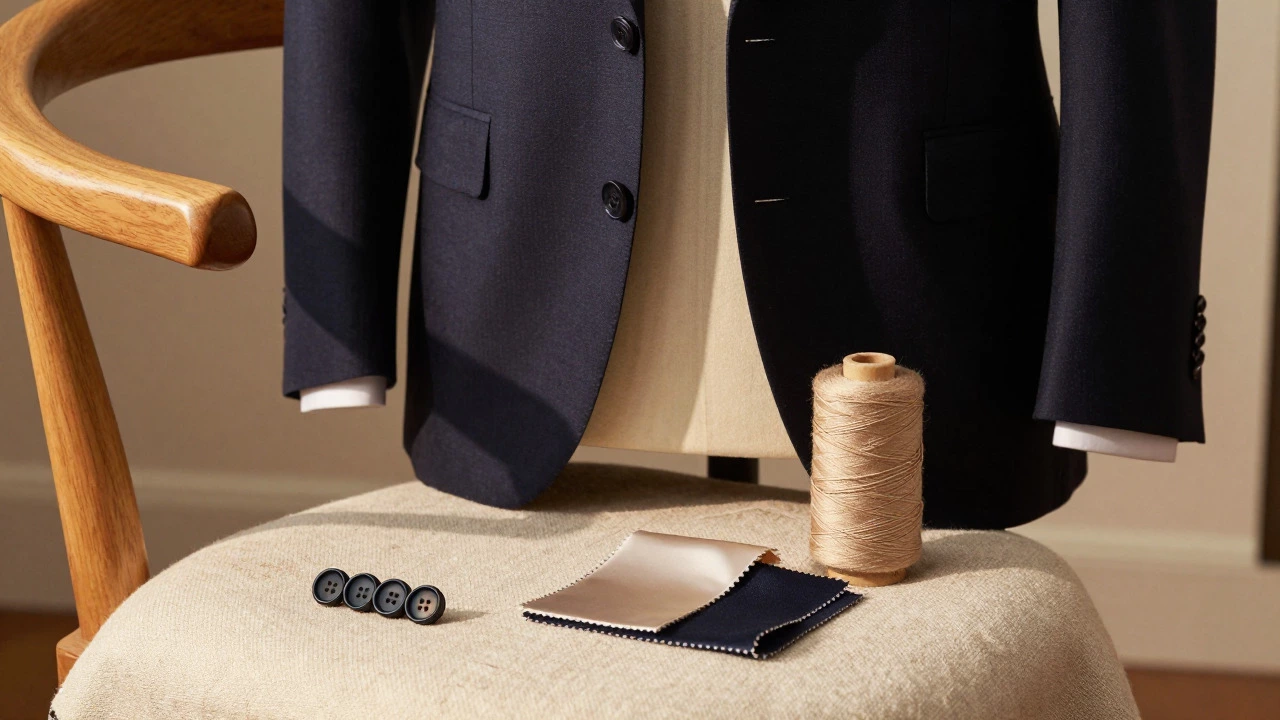
Small details reveal big truths. Examine the buttons on the jacket. Are they made of horn, corozo nut, or high-quality plastic? Cheap suits use shiny, hollow plastic buttons that scratch easily and look dull after a few wears. Quality buttons have depth and a matte finish.
Now look at the buttonholes. On the sleeve cuffs, are they functional or fake? Many cheap suits have sewn-shut sleeve buttons with decorative, non-functional holes. While this isn’t always a dealbreaker, a truly quality suit will have working buttonholes on the cuffs, allowing you to adjust the fit slightly or show off a bit of cufflink if desired. More importantly, check the main buttonhole on the jacket front. Is it hand-stitched? Hand-stitched buttonholes have a slight loopiness and flexibility. Machine-made ones are tight and rigid. If the buttonhole tears when you button the jacket, you’ve bought a liability.
Lining and Vent Design
Reach inside the jacket. The lining should be made of Bemberg (a cupra rayon) or silk, not cheap acetate that squeaks when you move. Acetate linings trap heat and static electricity, which is frustrating enough in dry climates, but in Ireland’s damp air, it can lead to mildew smells if not aired properly. Bemberg is breathable and cool against the skin.
Check the vents at the back. Single, double, or ventless? Double vents are practical for putting your hands in your pockets without distorting the jacket’s shape-a useful feature if you’re carrying a briefcase or navigating narrow pub doors in Derry. But regardless of style, the vents should be reinforced with tape or stitching. Cheap suits often have vents that gape open or fray quickly because the internal reinforcement is missing.
Pricing and Where to Shop in Ireland
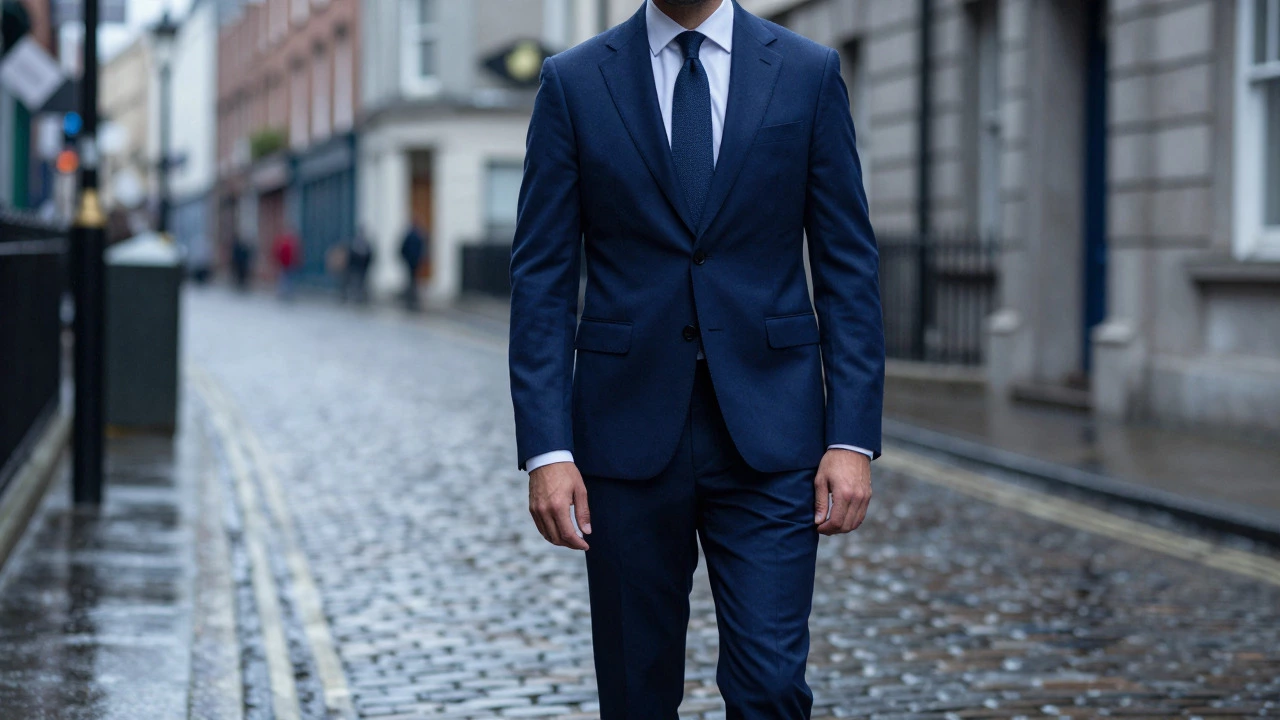
In the Irish market, a decent entry-level suit from retailers like Jack Wills, Ted Baker, or mid-range options at Brown Thomas usually starts around €300-€400. If you’re seeing suits for €150 or less, scrutinize them heavily. They are almost certainly fully fused, polyester-heavy, and designed to last only a season or two.
For better value, consider off-the-rack suits from established brands available in Dublin, Cork, or online with good return policies. Look for sales during January or end-of-season clearances. Alternatively, explore local tailors in areas like Smithfield or Merrion Square who can alter a cheaper suit to fit perfectly. A great fit can mask some construction flaws, but it won’t fix bad fabric.
| Feature | Cheap Suit | Quality Suit |
|---|---|---|
| Fabric | Polyester or low-wool blend (<70%) | 100% Wool or high-wool blend (>70%) |
| Construction | Fused (glued layers) | Half or Full Canvas (stitched layers) |
| Lining | Acetate (squeaky, traps heat) | Bemberg or Silk (breathable, smooth) |
| Buttons | Hollow plastic, shiny | Horn, Corozo, or high-grade matte plastic |
| Buttonholes | Machine-stitched, rigid | Hand-stitched or high-quality machine, flexible |
| Price Range (Ireland) | Under €200 | €300+ |
Final Thoughts on Investing Right
Buying a suit is an investment in your professional and social presence. In Ireland, where first impressions matter whether you’re closing a deal in Phoenix Park offices or attending a family gathering in Kerry, wearing a suit that holds its shape and looks polished signals respect and attention to detail. Don’t be fooled by a low price tag. Spend the extra time to touch, pinch, and inspect. Your future self will thank you when that suit still looks sharp five years later.
What is the best fabric for a suit in Ireland's climate?
Wool is the best choice. It regulates temperature well, keeping you warm in chilly winters and cool in humid summers. Avoid heavy tweeds for office wear as they can be too bulky, but lightweight tropical wools are excellent for year-round use in Ireland.
Can a cheap suit be altered to look expensive?
A good tailor can improve the fit, which is crucial for appearance. However, alterations cannot fix poor fabric quality or fused construction issues like bubbling lapels. Fit enhances a suit, but it doesn't change its inherent quality.
Where can I buy quality suits in Dublin?
Stores like Brown Thomas, Harvey Nichols, and dedicated menswear shops in Merrion Square or Grafton Street offer higher-quality options. For budget-friendly yet decent quality, check Marks & Spencer or John Lewis online with delivery to Ireland.
How do I know if a suit is fused or canvassed?
Pinch the front of the jacket near the button. If it feels stiff and layered like cardboard, it’s fused. If it feels soft and you can detect separate, movable layers, it’s likely canvassed. Also, check for bubbling under the lapels, a sign of failing fusion.
Is polyester ever acceptable in a suit?
Pure polyester is generally avoided for formal suits due to poor breathability and shine. However, a small percentage of polyester in a wool blend can add durability and wrinkle resistance. Ensure wool remains the primary component for a quality look.