Foot Pain & Shoe Selector Tool
Answer these questions to get personalized advice for managing foot pain from standing all day.
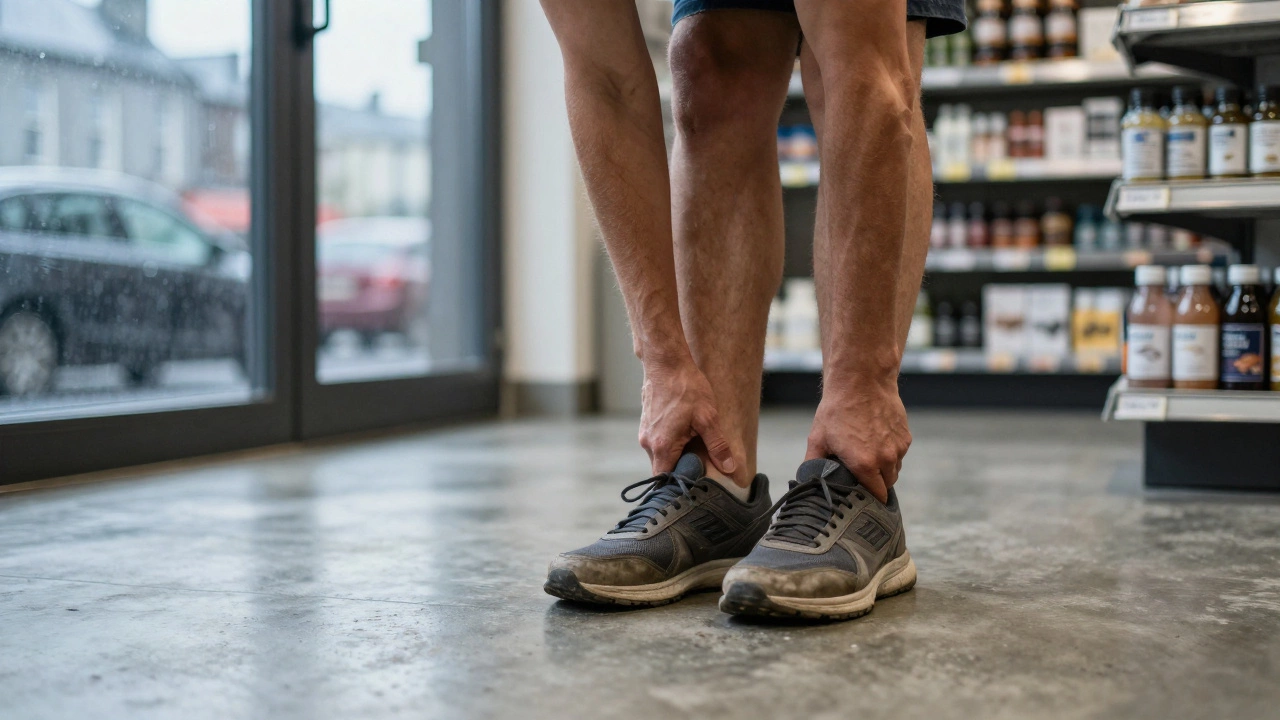
There is a specific kind of exhaustion that settles into your heels after a long shift on the shop floor in Dublin, a construction site in Cork, or a kitchen in Galway. It’s not just tiredness; it’s a deep, throbbing ache that radiates up your calves and makes you dread the walk home. If you are working in Ireland’s retail, hospitality, or healthcare sectors, this is likely your daily reality. The question isn’t just about surviving the shift, but how to get rid of foot pain from standing all day so you can actually enjoy your evening.
We often blame our bodies for giving out, but usually, the culprit is a combination of poor footwear, hard flooring, and a lack of proactive care. In Ireland, where we spend significant time indoors during the wetter months and navigate cobblestone streets or industrial floors, protecting your feet is essential. This guide breaks down exactly why your feet hurt, what gear works best in the Irish market, and practical steps to find relief immediately.
Why Your Feet Hurt: Understanding the Mechanics
To fix the problem, you first need to understand what is happening inside your foot. When you stand still for hours, your muscles fatigue and stop pumping blood back up to your heart effectively. This leads to swelling (edema) and pressure buildup. However, the real damage often comes from how weight is distributed.
Most people have an arch in their foot that acts as a shock absorber. If you have flat feet (fallen arches) or high arches, this natural spring mechanism fails. Instead of absorbing impact, the force travels straight up your skeletal structure. This puts excessive strain on the plantar fascia, which is a thick band of tissue that runs across the bottom of your foot and connects your heel bone to your toes. When this tissue gets overstretched, it causes micro-tears, leading to inflammation known as plantar fasciitis. This is the leading cause of heel pain among workers who stand for prolonged periods.
Additionally, consider the surface you are standing on. Many older shops in cities like Limerick or Kilkenny still have stone or concrete floors. These surfaces offer zero give. Without proper cushioning in your shoes, every minute adds cumulative stress to your joints. You aren't just standing; you are essentially dropping your body weight onto your feet thousands of times a day without adequate recovery.
The Right Work Shoes: More Than Just Comfort
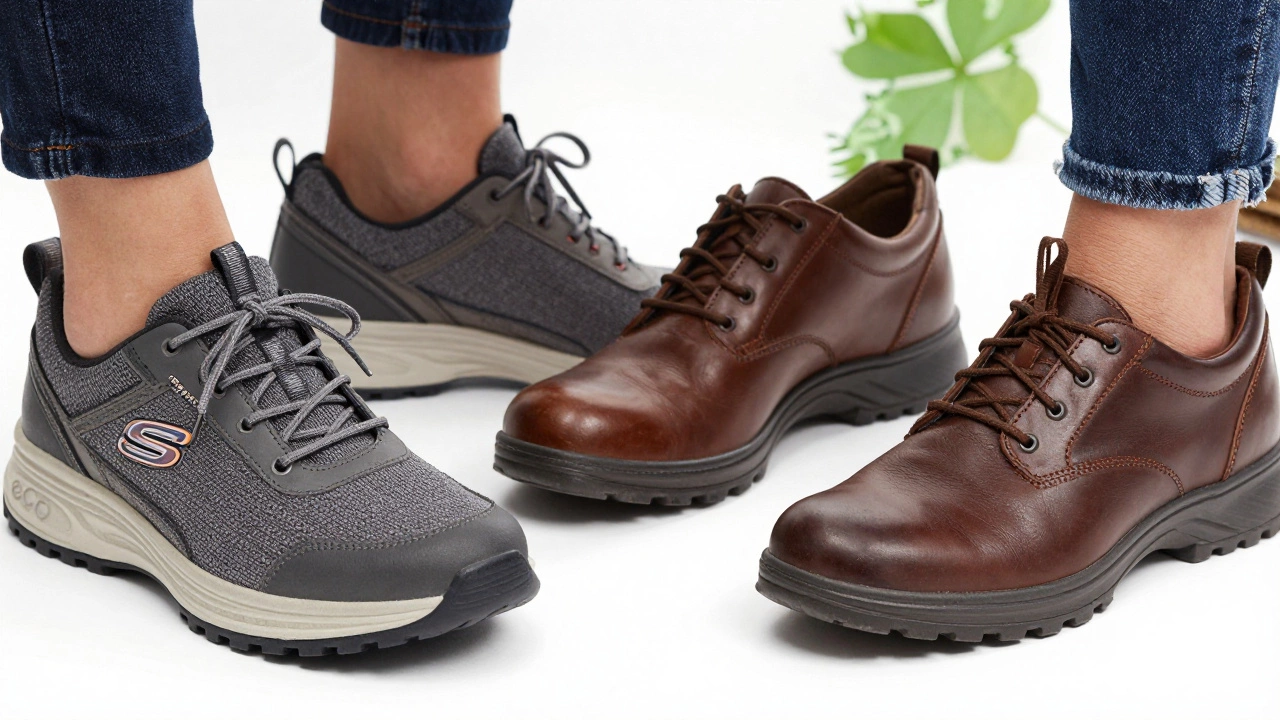
If you are wearing cheap fashion sneakers or worn-out trainers, you are setting yourself up for failure. The right pair of work shoes is your primary defense against chronic pain. In Ireland, several brands cater specifically to professionals who need durability and support.
You should look for shoes with three key features:
- Arch Support: Look for built-in arch support that matches your foot type. If you have flat feet, you need stability; if you have high arches, you need cushioning.
- Heel Cushioning: Materials like memory foam or gel inserts help absorb the initial impact when your heel strikes the ground.
- Rocker Soles: Some modern work shoes feature a curved sole that helps roll your foot forward, reducing the effort required by your calf muscles.
In the Irish market, brands like Skechers, which is a footwear company known for its comfortable, casual styles featuring memory foam insoles. are popular for their 'Work' line, which offers slip-resistant soles ideal for kitchens in Dublin's busy restaurants. For more robust protection, ECCO, which is a Danish brand renowned for high-quality leather shoes with ergonomic design and superior comfort. has a strong presence in stores across Belfast and Dublin, offering shoes that balance professional aesthetics with all-day wearability. Local retailers like Clarks also provide excellent options with their 'Unstructured' range, designed specifically for softness and flexibility.
| Brand | Best For | Key Feature | Approximate Price (EUR) |
|---|---|---|---|
| Skechers | Hospitality & Retail | Memory Foam Insoles | €60 - €90 |
| ECCO | Office & Light Industrial | Direct Injection Technology | €150 - €250 |
| Clarks | General Use | Cushion Plus Technology | €80 - €120 |
| New Balance | Wide Feet & High Impact | ABZORB Midsole | €90 - €130 |
Orthotics: The Game Changer
Sometimes, even the best shoe isn't enough if your foot structure needs extra help. This is where orthotics come in. Over-the-counter insoles are a great starting point. Stores like Boots or SuperValu carry brands such as Superfeet, which is a manufacturer of premium orthotic insoles designed to improve foot alignment and reduce pain. These can be cut to size and fit into most athletic-style work shoes.
However, if your pain persists, you might benefit from custom orthotics. In Ireland, you can visit a podiatrist or chiropodist. Many private practices in Dublin, Cork, and Galway offer gait analysis. They will create a mold of your foot and craft insoles that correct your specific biomechanical issues. While this is an investment (often €200-€400), it can save you years of pain and potential surgery. Check if your employer contributes to health expenses, as some companies cover part of this cost for roles requiring extensive standing.
Immediate Relief Strategies During Your Shift
You can’t always change your shoes mid-shift, but you can change how you move. Static standing is worse than dynamic standing. Try these simple techniques:
- Shift Your Weight: Don’t lock your knees. Keep them slightly bent. Shift your weight from one foot to the other every few minutes.
- Use an Anti-Fatigue Mat: If you work at a fixed station, ask your manager if an anti-fatigue mat can be provided. These mats compress slightly underfoot, encouraging subtle muscle movements that keep blood flowing. They are widely available from safety suppliers in Ireland.
- Take Micro-Breaks: Every hour, take two minutes to sit down if possible. Elevate your feet above heart level to help drain fluid and reduce swelling.
Evening Recovery Routine
Your job doesn’t end when you clock off; your recovery begins. Ignoring pain after work allows inflammation to set in overnight. Here is a routine that works well for many Irish workers:
1. The Epsom Salt Soak
Fill a basin with warm water and add two cups of Epsom salts. Soak your feet for 15-20 minutes. Magnesium sulfate in Epsom salts may help reduce inflammation and relax muscles. You can buy Epsom salts at any pharmacy like Boots or Watsons across Ireland.
2. Calf Stretches
Tight calves pull on the Achilles tendon, which aggravates the plantar fascia. Stand facing a wall, place your hands on it, and step one foot back. Keep the heel on the ground and lean forward until you feel a stretch in the calf. Hold for 30 seconds. Repeat three times per leg.
3. Ice Roll
Freeze a bottle of water. Roll your bare foot over it for 10 minutes. This provides cold therapy to reduce inflammation while simultaneously massaging the arch. It’s simple, cheap, and highly effective.
4. Compression Socks
If you suffer from significant swelling, try wearing compression socks during your shift. Brands like ComforSocks or medical-grade options available at pharmacies can help push blood back up your legs, reducing the heavy, achy feeling.

When to See a Professional
Pain is a signal. If you experience sharp, stabbing pain in the heel, especially in the morning when you first step out of bed, you likely have plantar fasciitis. If you notice numbness, tingling, or burning sensations, you might have nerve compression (tarsal tunnel syndrome). In these cases, self-care isn’t enough.
In Ireland, you can see a GP for a referral to a physiotherapist or podiatrist. Alternatively, you can self-refer to private practitioners. Organizations like the Society of Chiropodists and Podiatrists of Ireland, which is the professional body representing chiropodists and podiatrists in Ireland, ensuring high standards of practice. provide directories of qualified professionals. Early intervention can prevent chronic conditions that might sideline you for months.
Prevention for the Future
Think of foot care like dental hygiene. It requires consistent, daily attention. Rotate your shoes if possible, allowing them to air out and regain their shape. Replace insoles every six months, even if the shoes themselves are fine. Stay hydrated, as dehydration can lead to muscle cramps. And finally, listen to your body. If a certain pair of shoes hurts, don’t “break them in” through pain. Find a different pair. Your feet carry you through life-treat them with respect.
What is the best shoe for standing all day in Ireland?
The best shoe depends on your foot type, but brands like Skechers, ECCO, and New Balance are highly rated in Ireland for their cushioning and arch support. Look for models with memory foam or specialized midsole technology designed for long shifts.
Can orthotics really help with foot pain?
Yes, orthotics can significantly reduce pain by correcting your foot's alignment and distributing pressure more evenly. Over-the-counter options are a good start, but custom orthotics from a podiatrist offer the best results for severe pain.
How do I treat plantar fasciitis at home?
Home treatments include resting, applying ice, stretching your calves and plantar fascia, wearing supportive shoes, and using over-the-counter anti-inflammatory medication. If pain persists, consult a healthcare professional.
Where can I buy anti-fatigue mats in Ireland?
Anti-fatigue mats are available from safety equipment suppliers, online retailers like Amazon.ie, and some larger hardware stores such as Wickes or B&Q. They are particularly useful for stationary workstations.
Should I see a podiatrist if my feet hurt?
If home remedies and new shoes don't relieve your pain within a few weeks, or if you have sharp, persistent pain, seeing a podiatrist is recommended. They can diagnose underlying issues like bunions, hammertoes, or nerve problems.