Vintage Jacket Dating Assistant
Select the features found on your jacket below to generate an estimated production era and confidence level.
Estimated Production Era
Select features from the left panel and click "Analyze Era" to see results.
Walking through the stalls at Bingoweb or rummaging through the bins at The Oxfam Shop in Dublin, you might spot a leather bomber or a wool trench that looks promising. But how do you know if it’s a genuine 1950s treasure or a well-made reproduction from the 1980s? Dating a vintage jacket is part detective work, part history lesson. In Ireland, where the weather demands practical outerwear, knowing the era of your coat helps you appreciate its craftsmanship and value.
You don’t need a degree in textile history to get started. Most clues are hiding in plain sight on the garment itself. From the type of zipper used to the font on the care label, every detail tells a story about when this piece was made. Here is how you can read those signs like a pro, specifically tailored for the types of jackets commonly found in Irish charity shops and online resale platforms like Daft.ie.
Check the Labels First
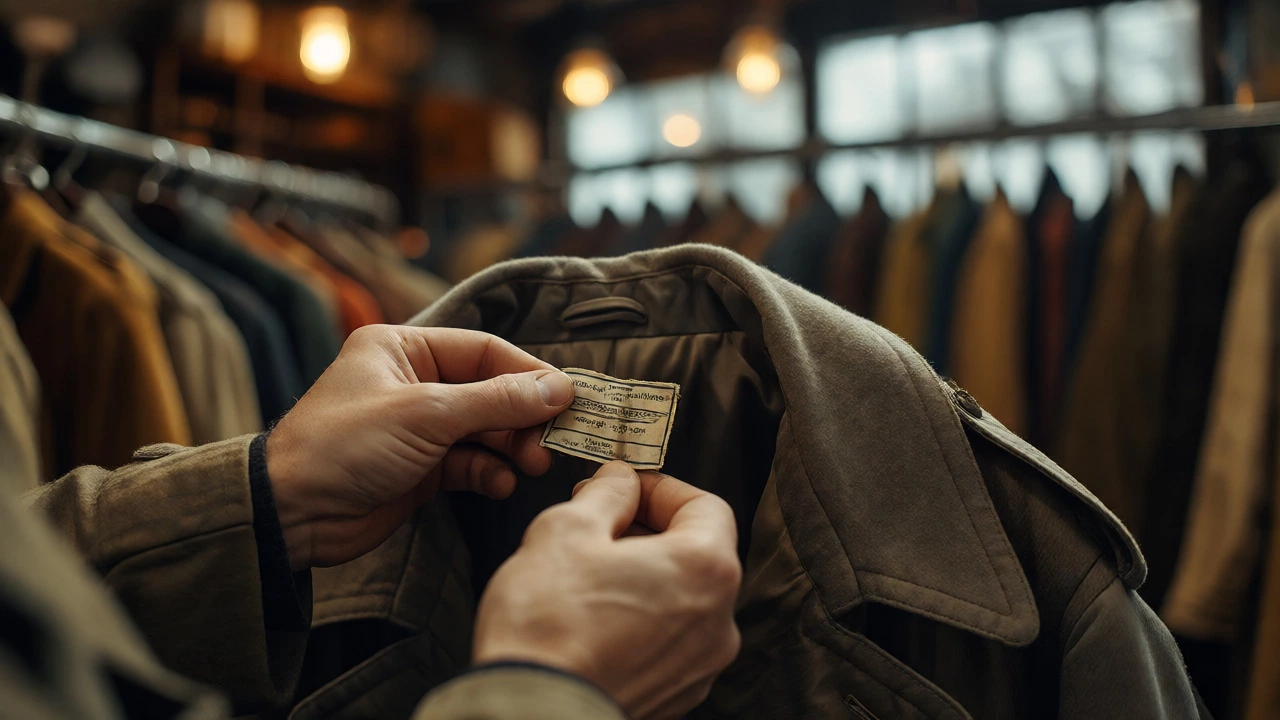
The first place any experienced buyer looks is the neck tag. This small rectangle of fabric holds the most direct evidence of origin. If you see a union label, such as the ILGWU (International Ladies' Garment Workers' Union), you have an immediate date range. The ILGWU existed until 1995, so any jacket with this logo predates that year. In Ireland, many vintage pieces were imported from the UK or USA, but domestic manufacturing also left its mark.
Look for specific brand names that had distinct eras. For example, Harrington jackets by Baracuta became iconic in the mid-20th century. If the label says "Made in Great Britain," check the style of the text. Early labels often featured serif fonts and gold lettering, while later ones moved to simpler sans-serif designs. Also, inspect the size labeling. Before standard sizing became universal in the 1970s, sizes were often irregular or listed as chest measurements only. A tag saying "Size 40" without a corresponding S/M/L designation often points to pre-1970s production.
| Feature | Likely Era | Notes |
|---|---|---|
| Union Label (ILGWU/AFL-CIO) | Pre-1995 | Strong indicator of US-made garments. |
| "Made in West Germany" | Pre-1990 | Indicates Cold War era importation. |
| Care Symbol Only (No Text) | Post-1971 | Standardized symbols introduced in early 70s. |
| Fabric Content % Listed | Post-1960 | Required by law in many Western countries. |
Analyze the Zipper Technology
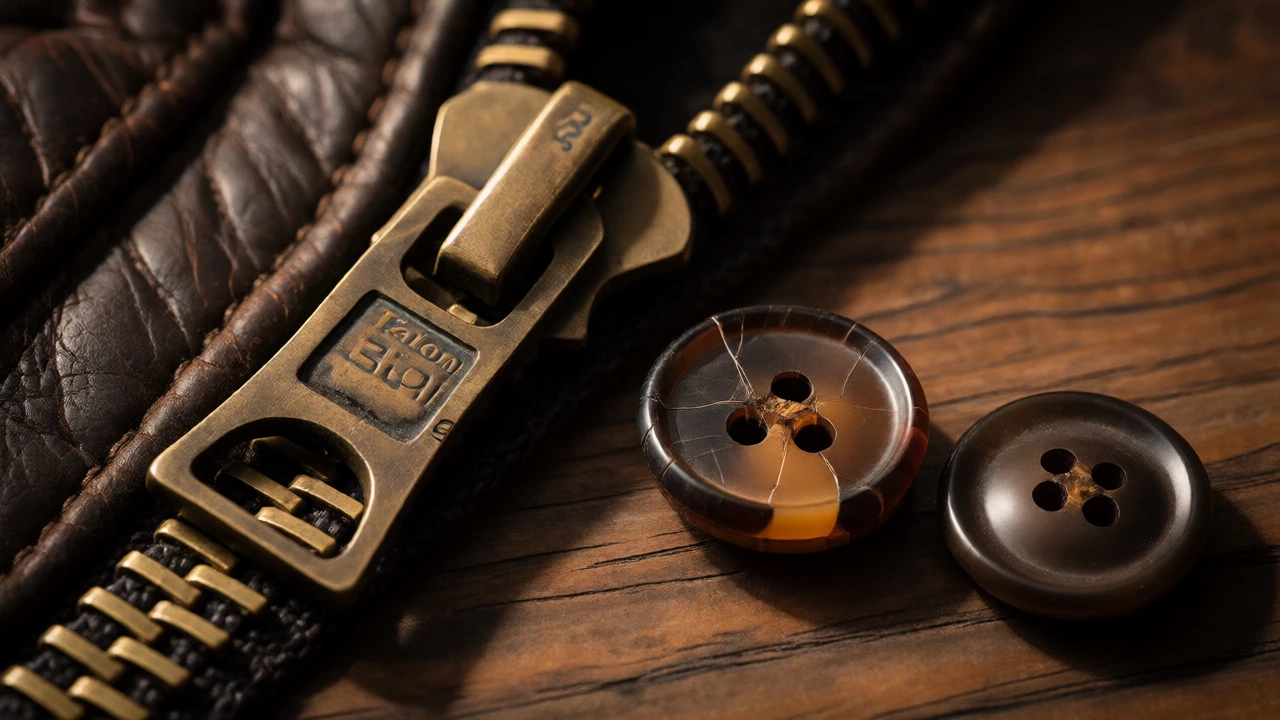
Zippers are one of the most reliable ways to date a jacket because their design changed drastically over time. Metal zippers dominate pre-1960s clothing. Look for brands like Talon or Conmar. Talon zippers, especially those with a triangular pull tab, are common in 1930s and 1940s military and civilian jackets. If you find a metal zipper with a box-shaped pull, it likely dates to the 1950s.
Nylon coil zippers appeared in the late 1950s but didn't become standard until the 1960s. These feel flexible and plastic-like compared to the rigid metal teeth. By the 1970s and 80s, plastic molded-tooth zippers took over. If you are looking at a Levi's trucker jacket or similar denim style, the zipper type will narrow down the decade instantly. Note that some high-end European brands continued using metal zippers longer than mass-market producers, so context matters.
Examine the Stitching and Construction
Hand-stitching versus machine-stitching offers another clue. While fully hand-sewn jackets are rare after the 1920s, certain details like buttonholes were often hand-finished until the 1960s. Hold the jacket up to the light. Are the stitches uneven? Do they vary in length? This suggests older manufacturing techniques or lower-quality mass production from earlier decades.
Check the lining. Silk linings were common in luxury coats up until the 1950s. After that, rayon and acetate became popular due to cost and durability. Polyester linings signal post-1970s production. In Ireland, damp climates mean linings often show wear. If the lining is original silk but damaged, it adds authenticity rather than detracting from value. Also, look at the seams. French seams (where raw edges are enclosed) indicate higher quality tailoring typical of mid-century bespoke or semi-bespoke items. Serged edges (overlocked) became standard with industrial sewing machines in the mid-20th century.
Identify Fabric Types and Patterns
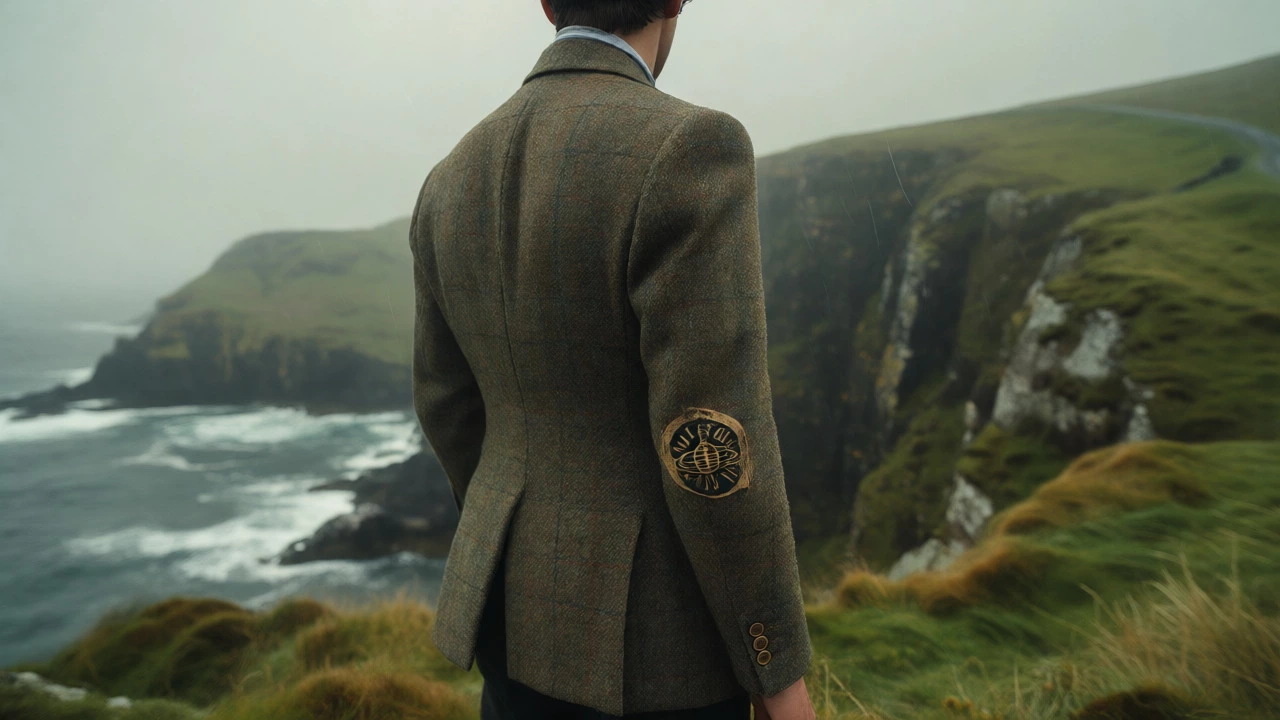
The material itself speaks volumes. Wool tweed, particularly Harris Tweed, has strict regulations and distinctive markings. If you find a jacket with a Harris Tweed orb stamp, it is guaranteed to be woven in the Outer Hebrides. While not Irish, these jackets are highly prized in Dublin and Cork for their warmth. Pre-1980s Harris Tweed had different certification marks than modern versions.
Synthetics tell a clear timeline. Rayon was popular in the 1940s and 50s. Nylon entered mainstream fashion in the late 50s. Polyester exploded in the 70s. If a jacket feels incredibly lightweight and crinkly, it is likely a polyester blend from the disco era. Natural fibers like cotton, wool, and linen dominate pre-1960s outerwear. Check the weave tightness; older fabrics often have a denser, heavier feel due to less chemical processing.
Look at Hardware and Buttons
Buttons and snaps are tiny time capsules. Bakelite buttons, known for their heavy weight and distinct smell when warmed, were prevalent before the 1950s. They are brittle and crack easily. Catalin, a successor to Bakelite, came into use in the 1940s and offered brighter colors. Plastic buttons became ubiquitous in the 1960s.
Metal hardware also shifts over time. Brass zippers and buttons tarnish differently than nickel or chrome-plated items. Chrome finishes suggest 1950s onwards, reflecting the automotive influence on design. Military surplus jackets, popular in Ireland for their ruggedness, often feature specific insignia or maker's stamps inside the collar. For instance, a G-1 Flight Jacket will have a contract number stamped inside, which can be cross-referenced with historical records to pinpoint the exact year of issue.
Consider the Cut and Silhouette
Fashion cycles leave distinct silhouettes. The 1940s favored broad shoulders and nipped waists, influenced by wartime utility cuts. The 1950s brought fuller skirts for women, impacting coat lengths, while men's jackets remained structured but slightly softer. The 1960s saw a shift towards slim fits and mod styles, with shorter hemlines for both genders.
In the 1970s, wide lapels and flared shapes dominated. If you see a jacket with massive lapels and a boxy fit, it is almost certainly 70s. The 1980s returned to power dressing with padded shoulders and sharp lines. Compare the jacket to photos from Irish fashion archives or local museum collections. The National Museum of Ireland sometimes displays historical dress, providing visual references for cut and proportion.
Irish-Specific Clues and Local Markets
Ireland has a unique relationship with vintage clothing, driven by a strong culture of reuse and charity shopping. Brands like Primark (founded in Dublin) started as Penneys in the 1960s. Finding a vintage Penneys jacket can be surprisingly tricky as they focused on affordable basics, but early tags differ significantly from modern ones.
Also, consider the climate impact. Irish winters demand waterproofing. Waxed cotton jackets, such as those from Barbour, were popular among rural communities in counties like Kerry and Clare. Original wax coatings degrade over time, requiring re-waxing. If the fabric feels dry and cracked, it needs restoration, but the underlying garment could be quite old. Check for repair patches. Hand-darned repairs are common in older Irish knitwear and jackets, indicating careful maintenance over decades.
Common Pitfalls When Dating Jackets
Beware of reproductions. Many modern brands recreate vintage styles. Check the stitching density. Modern machines sew faster and more evenly. Old jackets often have minor inconsistencies. Also, watch out for mixed parts. Someone might have replaced a broken zipper on a 1950s coat with a 1990s nylon one. Always assess multiple factors together-labels, zippers, fabric, and cut-to build a case for the date.
Finally, trust your instincts. If a jacket feels too perfect, it might be new. True vintage shows life: faded elbows, softened collars, and slight discoloration. These imperfections add character and confirm age. When shopping in places like Flamingo Vintage in Dublin or online via Vinted Ireland, ask sellers for close-ups of labels and zippers. Transparency is key.
Can I date a jacket without a label?
Yes. Focus on construction details like zipper type, button material, and seam finishing. Metal zippers suggest pre-1960s, while Bakelite buttons point to pre-1950s. The cut and silhouette also provide strong clues based on fashion trends of specific decades.
Are all vintage jackets worth money?
Not necessarily. Value depends on brand, condition, rarity, and desirability. Common mass-produced items from the 1980s may have little resale value despite being technically 'vintage'. However, unique pieces from reputable makers or military surplus can command higher prices in the Irish market.
How do I clean a vintage jacket safely?
Always test a hidden area first. For wool and tweed, professional dry cleaning is safest. For leather, use specialized cleaners and conditioners. Avoid washing machines unless the fabric is sturdy cotton or denim. In Ireland's damp climate, ensure the jacket is completely dry before storing to prevent mold.
What is the difference between vintage and retro?
Vintage refers to items made during the period they represent (typically 20+ years old). Retro describes new items designed to imitate styles from the past. A 1990s jacket is vintage today, but a new jacket bought in 2026 styled like a 1990s piece is retro.
Where can I find authentic vintage jackets in Ireland?
Popular spots include charity shops like Oxfam and St Vincent de Paul, dedicated vintage stores in Dublin (such as Flamingo or Beyond Retro), and online platforms like Daft.ie and Vinted. Flea markets in Limerick and Galway also offer good finds.