Suit Size Calculator for Ireland
Proper Measurement Guide
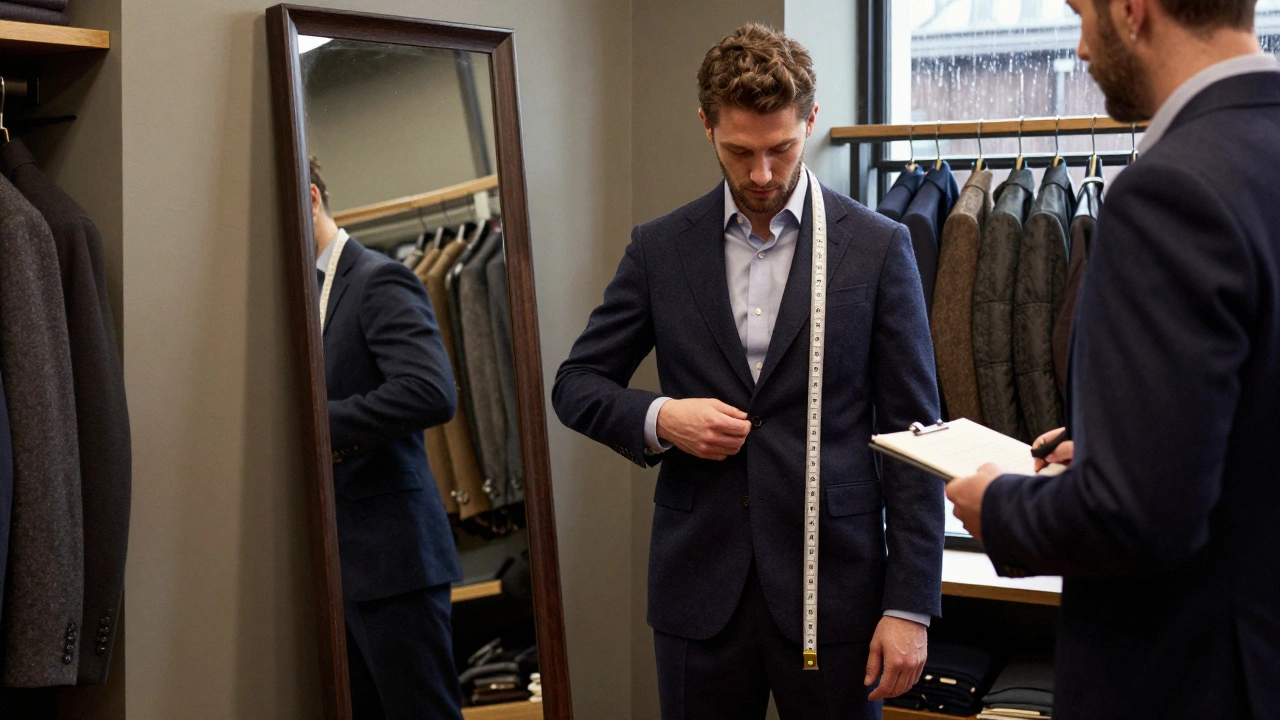
For Irish sizing, measure your chest at the fullest point under your armpits, waist at your natural waistline, sleeve length from neck to wrist bone, and jacket length from shoulder to where it ends.
Tip: Your suit size is primarily determined by your chest measurement in inches (e.g., 40 inches = size 40).
Fit Guide for Ireland
- Broader shoulders are common in Ireland - don't compromise on shoulder width
- Allow extra room for layers due to Irish weather
- 3.5-inch lapels work best for year-round Irish wear
- Avoid super-slim fits unless you're in Dublin tech industry
Your Fit Results
Enter your measurements to see your proper suit size
Knowing your suit size in Ireland isn’t just about picking a number off a tag-it’s about finding a fit that works for your body, your lifestyle, and the Irish weather. Whether you’re heading to a wedding in Galway, a business meeting in Cork, or a funeral in Limerick, a well-fitting suit makes a difference. Too tight, and you’ll be pulling at the shoulders during a pub quiz. Too loose, and you’ll look like you borrowed it from your uncle’s closet after his last St. Patrick’s Day parade.
Start with the Basics: What Your Measurements Really Mean
Your suit size isn’t just your chest measurement. It’s a combination of chest, waist, sleeve length, and jacket length-all of which vary depending on your build. In Ireland, where body types range from lean Dublin professionals to broader rural frames, one-size-fits-all doesn’t cut it.
Here’s how to measure yourself properly:
- Chest: Wrap a tape measure around the fullest part of your chest, just under your armpits. Breathe normally. This number is your suit size in inches-so if you measure 40 inches, you’re a size 40.
- Waist: Measure around your natural waistline, where your pants usually sit. This helps determine if you need a slim, regular, or relaxed fit. Many Irish men wear trousers lower than they used to, so don’t measure your hips unless you’re ordering a full suit set.
- Sleeve length: Stand with your arms relaxed at your sides. Measure from the center of the back of your neck, over your shoulder, and down to your wrist bone. A good fit means the sleeve ends at the base of your thumb when your arm is slightly bent.
- Jacket length: The bottom of the jacket should cover your backside but not go past your knuckles when your arms hang naturally. If you’re over 6 feet tall, you’ll likely need a long fit.
Most Irish men assume their off-the-rack suit size matches their shirt size. It doesn’t. A size 16 shirt doesn’t mean a size 40 suit. That’s a common mistake-and it’s why so many men in Belfast, Waterford, or Sligo end up with jackets that gap at the buttons.
Fit Matters More Than Size in Ireland’s Climate
Ireland’s weather doesn’t care about your size chart. Rain, wind, and damp air mean you’re often wearing layers-a wool sweater under your jacket, a scarf, maybe even a waterproof coat over the top. A suit that fits perfectly in summer will feel like a straitjacket in winter.
Look for suits with a bit of extra room in the chest and shoulders. Brands like Claddagh Tailoring in Galway and John Rocha in Dublin design for the Irish frame: broader shoulders, slightly fuller torsos, and a natural taper at the waist. Avoid super-slim fits unless you’re a model or work in tech in Dublin’s Silicon Docks. Even then, leave room for a cashmere layer.
Also, check the lapel width. Narrow lapels (under 3 inches) look out of place in a country where men still wear tweed jackets to county fairs. A classic 3.5-inch lapel works year-round-from the Galway Races to a christening in Kilkenny.
Where to Get Measured in Ireland
You can measure yourself at home, but if you’re serious about looking sharp, get measured by a professional. Here are a few trusted spots across Ireland:
- Claddagh Tailoring (Galway) - Specializes in traditional Irish cuts with modern tailoring. They’ve fitted judges, GAA officials, and even a few members of the Irish Senate.
- John Rocha Bespoke (Dublin) - Offers full measurements and fabric selection. Their wool blends are designed for damp weather.
- McKenna’s Suiting (Cork) - Known for quick turnaround and affordable alterations. Great if you need a suit fixed before a wedding.
- Debenhams (Belfast, Dublin, Limerick) - Offers free in-store tailoring with purchase. Not bespoke, but good for budget-conscious buyers.
- Online options like Suitsupply or Indochino - Send in your measurements, but only if you’ve been measured by a tailor before. Don’t guess.
Don’t trust a store assistant who just says, “You’re a 40.” Ask them to measure you properly. A good tailor will check how the jacket moves when you sit, reach, and turn. If they don’t, walk out.
Common Fit Problems Irish Men Face
Here are the top three mistakes Irish men make with suits-and how to fix them:
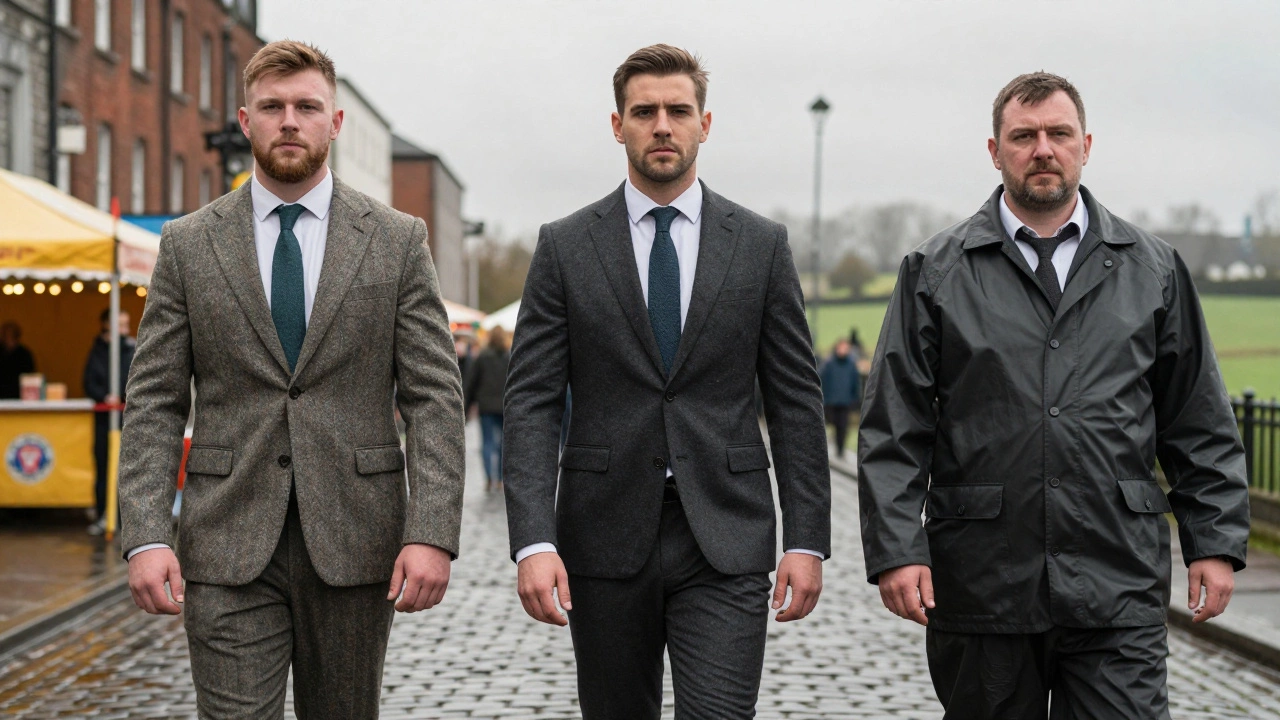
- Shoulders too tight: If the seam of the jacket sits on your shoulder instead of just past it, the suit is too small. This is the #1 sign of a bad fit. It’s not about chest size-it’s about shoulder width. In Ireland, many men have wider shoulders from manual work or sports like rugby. Don’t compromise here.
- Too much fabric around the waist: A suit shouldn’t bulge. If you see wrinkles pulling horizontally across your stomach when you stand, the jacket is too big. Tailoring can fix this. A good tailor in Dublin or Cork can take in the sides for €30-€50.
- Sleeves too long: If your shirt cuff disappears under the suit sleeve, it looks sloppy. The ideal is 1/4 to 1/2 inch of white cuff showing. This is especially important in professional settings like Dublin’s financial district or legal offices in Limerick.
And don’t ignore the trousers. In Ireland, many men wear trousers that are either too long (pooling at the ankle) or too short (showing socks). The break should be minimal-a slight fold at the top of the shoe, nothing more. If you’re wearing brogues (and you should, in Ireland), make sure the trousers don’t cover the lace holes.
What to Look for in Irish-Made Wool
Not all wool is created equal. In Ireland, you need fabric that breathes, resists moisture, and holds its shape after a long day in the rain. Avoid cheap polyester blends-they trap sweat and look shiny under pub lights.
Look for:
- 100% wool - Preferably from Irish mills like Ballinamore Wool in County Leitrim or Donegal Tweed from the northwest.
- Super 100s to Super 130s - This is the thread count. Higher numbers mean finer, lighter fabric. Super 100s are perfect for Irish winters.
- Water-repellent finish - Some brands add a light treatment that helps shed rain. Ask for it.
Donegal tweed is a classic Irish choice. It’s textured, durable, and looks great with a simple white shirt and brown brogues. It’s not just for farmers-it’s worn by professors at Trinity College and entrepreneurs in Cork’s Digital Hub.
When to Get a Bespoke Suit in Ireland
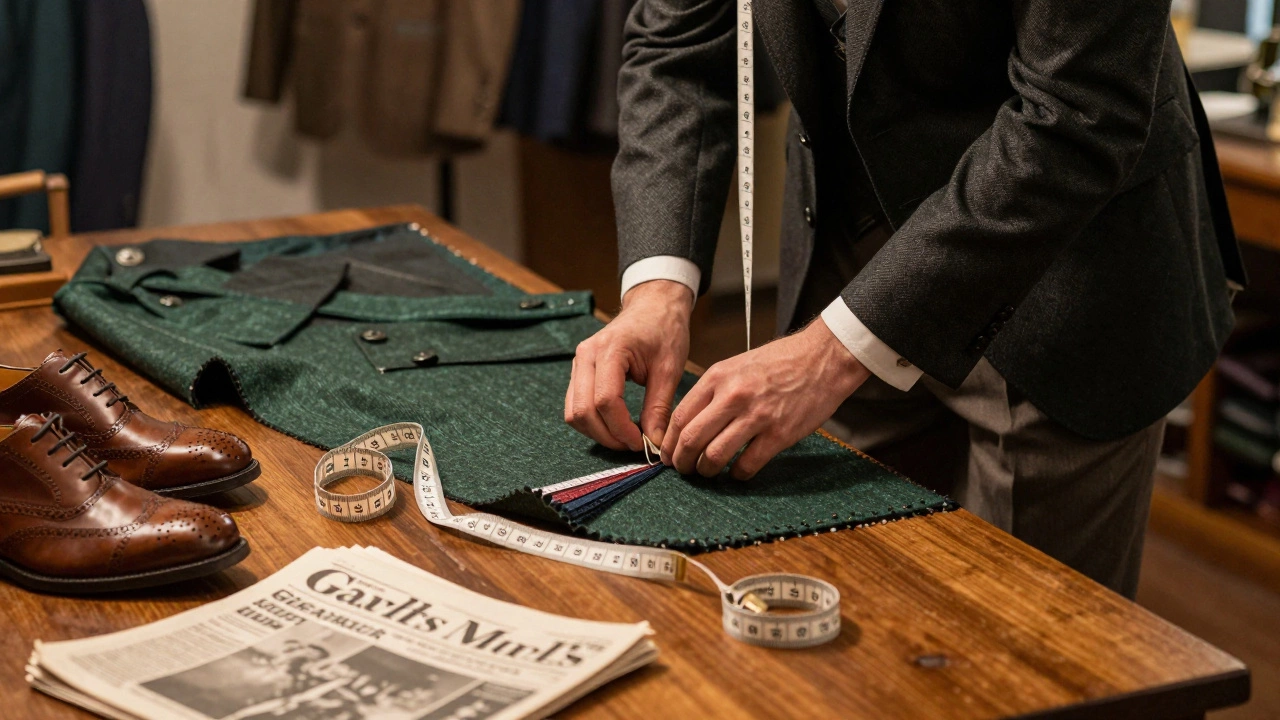
You don’t need a bespoke suit for every occasion. But if you’re attending multiple formal events-weddings, funerals, job interviews, or even a big business pitch-a custom suit is worth the investment. A bespoke suit from a Dublin tailor like Claddagh or John Rocha costs between €800-€1,500. It’s expensive, but it lasts 10-15 years with proper care.
Bespoke means:
- Every measurement is taken by hand
- You choose the fabric, lining, buttons, and lapel style
- At least three fittings, including a baste fitting where the suit is sewn loosely for adjustments
It’s not just about looking good-it’s about feeling confident. In Ireland, where appearances still matter in business and community life, a suit that fits like it was made for you says more than any handshake.
Final Tip: Try Before You Buy
Never buy a suit online without trying it on first-unless you’ve worn the exact same size from the same brand before. Even then, sizes change. A size 40 from Suitsupply might be different from a size 40 from Hugo Boss.
Go to a store. Try on at least three. Walk, sit, raise your arms. If you can’t move comfortably, it’s not the right suit. And if you’re in Dublin, Belfast, or Galway, ask if they offer free alterations. Most do.
Remember: A suit isn’t a costume. It’s part of your identity in Ireland-whether you’re a farmer heading to a county show, a teacher at a school gala, or a businessman in a boardroom. Get it right, and you’ll never have to worry about your suit size again.
How do I know if my suit jacket is too tight?
If you can’t comfortably button the jacket or if it pulls across your chest when you raise your arms, it’s too tight. The fabric should lie flat without wrinkles or strain. Also, if your shirt sleeves bunch up under the jacket, that’s another sign. In Ireland, where layers are common, you should have at least 1-2 inches of extra room in the chest for a sweater or vest.
Should I buy a suit online or in person in Ireland?
For your first suit, always buy in person. Online shopping works only if you already know your exact measurements and have worn that brand before. Many Irish men order suits online, only to return them because the sleeves are too long or the shoulders don’t fit. Stores like Debenhams, Claddagh Tailoring, and McKenna’s offer free alterations and in-person fittings-something online retailers can’t match.
Is a size 40 suit right for me if I’m 5’10"?
Not necessarily. Suit size is based on chest measurement, not height. A 5’10" man with a 38-inch chest wears a size 38. A 5’10" man with a 42-inch chest wears a size 42. Height affects jacket length-taller men need long fits, shorter men need regular or short. Always measure your chest, not your height.
What’s the best fabric for an Irish suit?
Wool is the best choice, especially from Irish mills like Donegal Tweed or Ballinamore Wool. Look for Super 100s to Super 130s-fine enough to be comfortable but durable enough for rain and wind. Avoid polyester blends; they look cheap and trap moisture. If you’re buying in winter, consider a wool blend with a touch of cashmere for warmth.
Can I alter a suit if it doesn’t fit right?
Yes, and you should. Most tailors in Ireland can take in the waist, shorten sleeves, or adjust the trouser length for under €50. Major changes like moving the shoulder seams are harder and cost more. If the shoulders are too tight, don’t try to alter it-get a new suit. The shoulders are the most important part of the fit.