School Uniform Cost Estimator
Uniform costs in Ireland can range from €150 to over €400 per year. Use this tool to estimate your family's potential expense.
Estimated Annual Cost:
Based on current Irish market averages.
- Base Uniform Cost: €0
- Accessories & Gear: €0
Tip: Check if your school offers a second-hand swap scheme or financial support through the Department of Social Protection to reduce these costs.
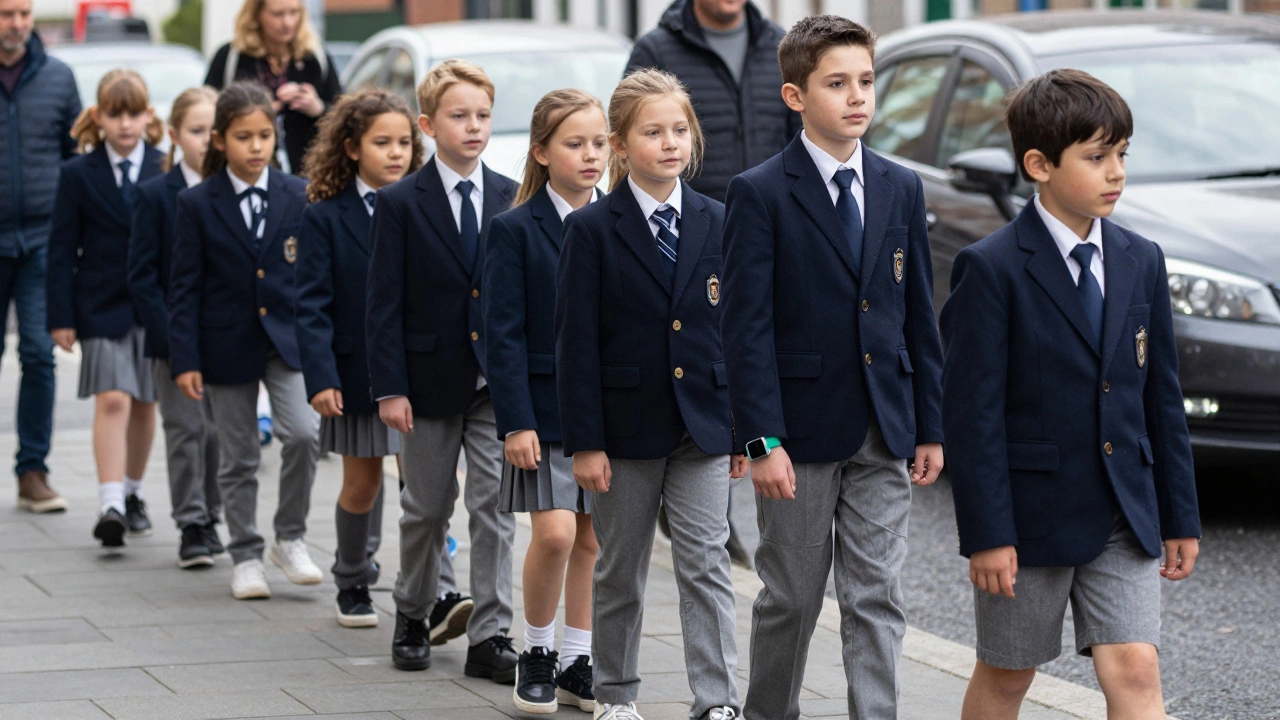
Walking past any primary or secondary school in Dublin, Cork, or Galway during drop-off time, you see a sea of navy blazers, grey trousers, and white shirts. It is a visual staple of Irish education. But beneath the polished shoes and creased collars lies a heated debate that parents, teachers, and policymakers argue over every year: do school uniforms prevent bullying? For many families in Ireland, the uniform is seen as a great equalizer, stripping away the flashy logos that signal wealth. Yet, for others, it feels like an outdated mandate that ignores the complex reality of how children treat one another.
The short answer is no. A piece of clothing cannot stop a child from being cruel. However, the relationship between dress codes and bullying in Ireland is nuanced. While uniforms might reduce one specific type of peer pressure-fashion-based exclusion-they often fail to address the root causes of harassment, such as social dynamics, family background, or personality clashes. In fact, some studies suggest that when fashion is removed, bullies simply find new targets.
The Myth of the Great Equalizer
The argument for mandatory uniforms in Irish schools usually centers on equality. The idea is simple: if everyone wears the same thing, no one can be bullied for wearing cheap trainers or last season’s jeans. This logic holds water in theory, particularly in areas with high economic disparity. In neighborhoods across West Belfast or the inner city of Dublin, where income levels vary wildly within a single street, the uniform acts as a buffer against immediate judgment based on brand names.
However, this "great equalizer" effect has limits. Children are remarkably adept at finding differences. Even when the main garments are identical, distinctions emerge through accessories. You might notice who has the latest Apple Watch versus a basic digital clock, who wears designer socks, or whose blazer fits perfectly while another’s looks borrowed. In secondary schools, particularly those in affluent suburbs like Dalkey or Sandyford, the subtle signaling of status continues through these minor details. The uniform removes the loud noise of branding, but it doesn’t silence the whisper of comparison.
| Without Uniforms | With Uniforms |
|---|---|
| Bullying based on expensive brands (Nike, Gucci) | Bullying shifts to accessories (watches, bags, shoes) |
| Judgment on personal style choices | Criticism of fit, cleanliness, or adherence to rules |
| Visible economic disparity through clothing | Economic disparity masked but not eliminated |
| Freedom of expression through fashion | Conformity enforced; rebellion becomes a target |
When Compliance Becomes a Target
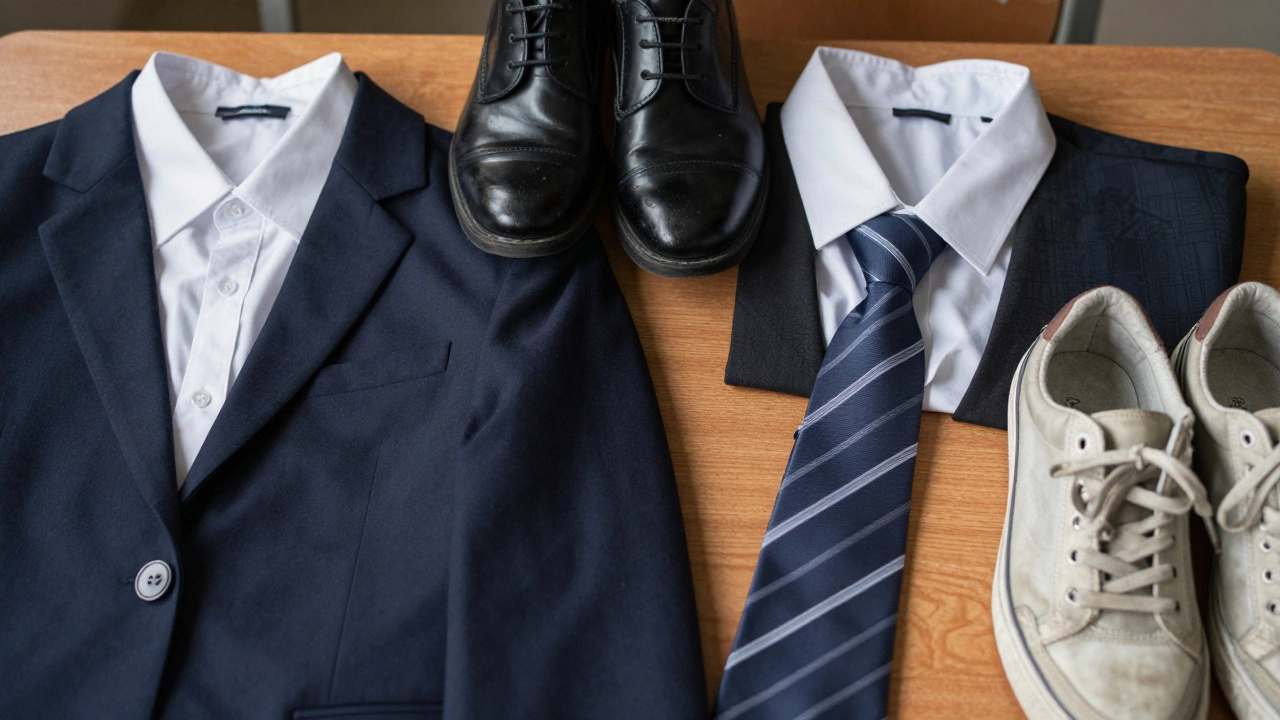
In Ireland, many schools have strict dress codes governed by their boards of management. These rules can extend beyond the standard blazer to include hair length, makeup, and even the shade of black for shoes. Paradoxically, these strict regulations can create new avenues for bullying. Students who struggle to afford the exact specified items, or who inadvertently break a rule-like wearing the wrong tie or having slightly unpinned hair-can become easy targets for both peers and staff.
This dynamic is particularly harsh for students from lower-income families. The cost of school uniforms in Ireland has risen significantly. A full set for a secondary school student can easily exceed €300-€400 annually. If a child’s uniform is visibly worn out, patched, or ill-fitting because the family couldn’t afford replacements, they may face ridicule. Instead of preventing bullying, the rigid enforcement of uniform policies can highlight socioeconomic differences in a more stigmatizing way. Teachers and principals in state-funded schools often grapple with this tension, trying to enforce order without shaming vulnerable students.
The Role of School Culture Over Clothing
If uniforms don’t stop bullying, what does? Research consistently points to school culture and proactive anti-bullying strategies as the decisive factors. The Department of Education in Ireland requires all schools to implement an Anti-Bullying Procedure under the Education (Welfare) Act. Schools that actively foster a culture of respect, empathy, and inclusion see lower rates of bullying, regardless of whether students wear uniforms or casual clothes.
Programs like SPARQ (Social Problem Solving for Adolescents) and the work of organizations like Pieta House show that emotional intelligence and conflict resolution skills are far more effective than dress codes. When students feel safe reporting incidents and know that staff will intervene fairly, bullying decreases. Conversely, in schools where the administration turns a blind eye to petty conflicts, bullying thrives-even if everyone is dressed identically. The presence of a supportive pastoral care team, regular class discussions on respect, and clear consequences for aggressive behavior matter infinitely more than the color of a shirt.
Regional Variations Across Ireland
The impact of uniforms also varies by region and school type. In urban centers like Dublin and Cork, there is a growing movement toward more relaxed dress codes, especially in post-primary schools. Some schools allow students to wear smart casual attire on certain days, reducing the financial burden and allowing for personal expression. This shift reflects a broader societal change in Ireland, where individuality is increasingly valued over conformity.
In rural areas, however, traditional values often run deeper. Smaller community schools in counties like Kerry or Mayo may view the uniform as a symbol of school pride and identity. Here, the uniform serves less as a tool against bullying and more as a marker of belonging. For students in these tight-knit communities, the uniform connects them to generations of alumni and local traditions. While this sense of community can protect against isolation, it doesn’t automatically shield students from interpersonal conflicts.
Additionally, the type of school plays a role. Voluntary Controlled (VC) schools, which are majority Catholic but open to all, often maintain stricter uniform policies rooted in their historical ethos. Community schools, managed directly by local authorities, tend to have more flexibility. Parents choosing between these options should consider not just the academic reputation, but also the school’s approach to discipline and student wellbeing.
Practical Advice for Irish Parents
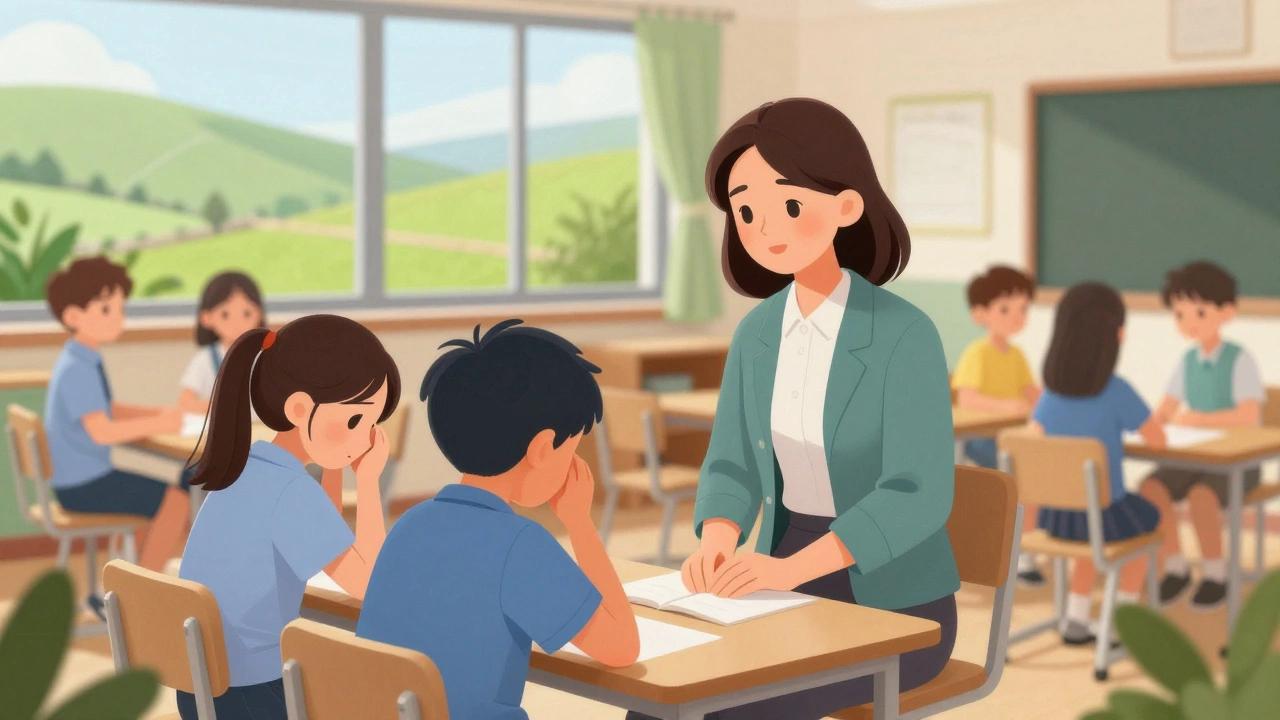
If you’re navigating the school system in Ireland, here are some practical steps to help your child avoid becoming a target, regardless of the dress code:
- Check the Policy Early: Review your school’s specific uniform guidelines before buying anything. Many schools in Ireland now offer second-hand uniform swaps or discounts for low-income families through schemes supported by the Department of Social Protection.
- Talk About More Than Clothes: Have open conversations with your child about what bullying looks like. Explain that kindness matters more than appearance. Encourage them to speak up if they see someone being treated unfairly.
- Focus on Fit and Comfort: Ensure your child’s uniform fits well. Ill-fitting clothes can affect confidence and posture, making a child seem more vulnerable. Tailoring minor adjustments can make a big difference.
- Monitor Online Behavior: Remember that bullying often moves online. Cyberbullying is unaffected by school uniforms. Teach your child digital citizenship and monitor their social media usage.
- Engage with the School: If your child reports bullying, document every incident and communicate clearly with the principal. Under Irish law, schools must investigate and respond to bullying complaints promptly.
The Future of Dress Codes in Irish Education
As society evolves, so do attitudes toward school uniforms. There is a growing consensus among educators and psychologists that forced conformity is not the solution to social problems. Instead, schools are focusing on creating environments where diversity is celebrated, and respect is non-negotiable. Some progressive schools in Ireland are experimenting with optional uniforms or flexible dress codes, aiming to balance tradition with modern values.
Ultimately, the question isn’t whether uniforms prevent bullying-they don’t. The real question is whether our schools are equipped to handle the human complexities of childhood. Uniforms are a visible symbol, but they are not a cure. Building resilient, empathetic communities requires effort, resources, and commitment from everyone involved-from the classroom teacher in Limerick to the parent in Letterkenny. Until we address the root causes of cruelty, changing the outfit won’t change the outcome.
Do school uniforms actually stop bullying in Ireland?
No, research shows that uniforms do not stop bullying. They may reduce fashion-based teasing, but bullies often find other reasons to target peers, such as social status, family background, or personality traits. Effective anti-bullying measures rely on school culture and intervention programs, not dress codes.
How much does a school uniform cost in Ireland?
The cost varies by school level. Primary school uniforms typically cost between €150 and €250 per year. Secondary school uniforms can range from €300 to €400 or more, depending on the number of items required and the retailer. Some schools offer financial assistance or second-hand options.
Can schools in Ireland force students to wear uniforms?
Yes, most schools in Ireland have mandatory uniform policies approved by their board of management. While attendance is compulsory, adherence to dress codes is also expected. However, schools must handle non-compliance sensitively, avoiding public shaming or exclusion, in line with Department of Education guidelines.
What should I do if my child is bullied for their uniform?
If your child is bullied for their uniform’s condition or fit, report it immediately to the school principal. Document the incidents and request a meeting. Schools are legally required to address bullying under the Education (Welfare) Act. Additionally, check if the school offers financial support or uniform subsidies for families in need.
Are there alternatives to traditional school uniforms in Ireland?
Some schools, particularly in urban areas, are adopting more flexible dress codes, such as smart casual attire or optional uniforms. Parents can inquire about these policies when selecting a school. Additionally, many communities organize uniform swap shops to reduce costs and promote sustainability.