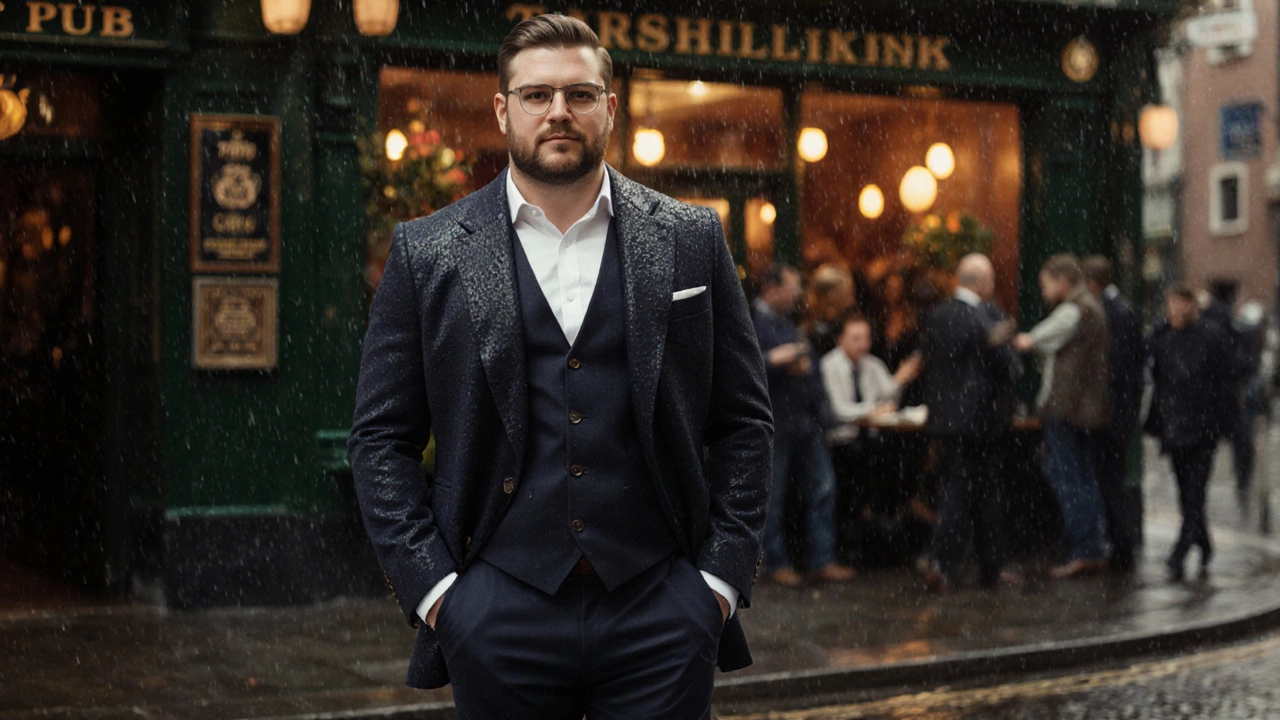
Slim-Fit Suit Fit Checker
Slim-Fit Suit Fit Checker
Find out if slim-fit suits work for your body type and get recommendations for the perfect fit in Ireland.
In Ireland, where the pub culture runs deep and weddings, funerals, and job interviews all demand a sharp look, the question isn’t whether big guys can wear slim-fit suits-it’s how to wear them right. Too many men assume that if they’re broad-shouldered, carry some weight around the middle, or have thicker legs, slim-fit suits are off-limits. That’s a myth built on outdated tailoring rules and ill-fitting off-the-rack suits from chain stores like Penneys or Dunnes Stores. The truth? A well-cut slim-fit suit doesn’t just flatter a larger frame-it elevates it. And in a country where first impressions matter just as much in a Galway pub as they do in a Dublin boardroom, getting this right changes everything.
What Slim-Fit Really Means (And What It Doesn’t)
Slim-fit isn’t skin-tight. It’s not the same as a ‘tuxedo fit’ you see in fashion magazines or on Irish TV presenters like Ryan Tubridy. A true slim-fit suit tapers gently from the shoulders to the waist, then continues down the leg with just enough room to move. Think of it like a well-made Aran sweater-it hugs the shape without squeezing. The key difference between a slim-fit and a regular-fit suit? The waist is nipped in just enough to define your torso, not flatten it. The sleeves end at the base of your thumb, not halfway up your hand. The pants break once, just above the shoe, not pool around your ankles.
Many Irish men still buy suits from big-box retailers because they’re cheap and easy. But a £199 suit from Marks & Spencer or a £149 deal from Debenhams (RIP) often has the same cut for every size: narrow shoulders, baggy waist, and legs that look like they’re borrowed from a teenager. That’s not slim-fit. That’s poor tailoring. Real slim-fit suits are made to match your body, not the other way around.
Why Slim-Fit Works Better for Bigger Frames
It’s counterintuitive, but the right slim-fit suit actually makes you look leaner-not because it hides your size, but because it creates balance. A suit that’s too loose makes you look like you’re swimming in fabric. That’s the classic mistake: buying a size too big to ‘feel comfortable,’ then hoping the extra material hides the curves. Instead, a tailored slim-fit draws the eye inward, creating a clean, vertical line from shoulder to toe. It’s why Irish rugby players like Johnny Sexton or Cian Healy look so sharp in their suits at award nights-they don’t wear boxy suits. They wear ones that follow their build.
Think of it this way: if you’re wearing a suit that’s too big, you’re adding bulk. If you’re wearing one that’s cut right, you’re defining structure. That’s the difference between looking like you’re dressed for a funeral and looking like you’re dressed for a celebration.
Where to Get a Slim-Fit Suit in Ireland
You won’t find a good slim-fit suit on a hanger in a shopping centre. You need a tailor-or at least a shop that knows how to adjust. In Dublin, head to John Rocha on Grafton Street. Their made-to-measure service starts at €650 and includes three fittings. In Cork, Barry’s Tailors on Oliver Plunkett Street has been fitting men since 1972 and knows how to handle broader chests without making the suit look stiff. In Galway, McGee’s Bespoke offers slim-fit options with Irish wool blends that hold up against the rain and wind.
For those outside the cities, many tailors offer virtual consultations now. You can send your measurements, pick a fabric, and have your suit shipped from Belfast’s McAuley & Sons or Limerick’s Patrick’s Tailoring. Some even send a measuring tape with instructions. Don’t be afraid to ask for photos of previous clients with similar builds. Good tailors have portfolios.

Fabric Matters More Than You Think
Irish weather doesn’t care how good your suit looks-it’s going to rain. So fabric choice isn’t just about style, it’s about survival. Avoid lightweight cotton or shiny synthetics. They cling, they wrinkle, and they make you look sweaty even when you’re not. Stick to wool blends-80% wool, 20% polyester or elastane. Wool breathes, resists wrinkles, and drapes well over the torso. Look for fabrics with a bit of stretch (2-4%)-it lets you sit down in a pub without pulling the seams.
For winter, go for heavier weights: 11-13 oz. For spring and summer, 9-10 oz. Dark navy, charcoal, or deep green are the safest bets. They’re classic, they hide stains, and they look professional whether you’re at a wedding in Kilkenny or a business meeting in Sligo. Avoid bold patterns unless you’re going to a festival like Electric Picnic-then maybe a subtle pinstripe.
The Fit Checklist: What to Ask For
Before you pay, here’s what a good slim-fit suit should do:
- The jacket should button without pulling. If you can’t comfortably button the top button, the shoulders are too narrow.
- Your sleeves should show 1/4 to 1/2 inch of shirt cuff. No more, no less.
- The lapels should lie flat against your chest-no gaping or wrinkling.
- The pants should have a slight break at the shoe. If they puddle, they’re too long. If they’re tight around the thigh, they’re too tight.
- You should be able to move your arms freely without the jacket riding up.
And here’s what to avoid:
- Too much padding in the shoulders-it makes you look like a linebacker in a suit.
- High armholes-they restrict movement and make your chest look boxy.
- Pants with belt loops only-opt for side adjusters instead. They’re cleaner and give you more control over the fit around the waist.

Accessories That Complete the Look
Shoes matter. Don’t wear chunky trainers or heavy boots with a slim suit. Opt for sleek oxfords or loafers-preferably in dark brown or black. Brands like Clarks and Tricker’s (made in England but sold in Dublin’s Shoe Republic) have slim profiles that match the suit’s lines.
Belts? Only if you need them. Side adjusters are better. If you do wear a belt, make sure it’s narrow-no wider than 1 inch. A wide belt on a slim suit looks like a mistake.
And ties? Keep them slim too. A 6-7 cm width is ideal. Avoid polyester. Go for silk or wool blends. And never wear a tie that’s longer than your belt buckle.
Real Irish Examples
Look at the men at the Galway Races or the Cork Jazz Festival. The ones who look sharp aren’t the ones in oversized suits. They’re the ones in tailored navy blazers with slim trousers, crisp white shirts, and polished brogues. Even the farmers who show up in their best for the local agricultural show know this. They don’t wear suits from the back of a van. They get them made.
One client I worked with-let’s call him Pat from Louth-was 6’2” and 220 lbs. He’d been avoiding suits for years because he thought they didn’t fit him. He walked into Barry’s Tailors in Cork with a pair of trousers he’d bought online that were too tight. The tailor took his measurements, chose a 12 oz Irish wool, added a slight taper to the leg, and gave him a 1.5-inch shoulder pad for structure. Two fittings later, Pat wore that suit to his daughter’s wedding. He got six compliments. One woman asked, “Did you get that from London?” He said, “No. From Cork. And it cost less than your phone.”
Final Tip: It’s Not About Size. It’s About Shape.
Big guys don’t need to wear baggy suits to feel comfortable. They need suits that respect their shape. A slim-fit suit doesn’t shrink you-it clarifies you. It says, “I know how to carry myself.” And in Ireland, where style is quiet but intentional, that speaks louder than any loud tie ever could.
If you’re reading this and you’ve been avoiding suits because you think they’re not for you-think again. The right suit isn’t about fitting into a mold. It’s about finding the cut that lets your body shine. And trust me: in a country where the rain never stops and the pubs never close, looking sharp is your secret advantage.
Can a man who’s overweight wear a slim-fit suit?
Yes-especially if it’s tailored. Slim-fit doesn’t mean tight. It means shaped. A suit that’s cut to follow your natural contours-nipped at the waist, tapered at the leg-creates a clean silhouette that makes you look more confident and less bulky. The key is avoiding off-the-rack suits and working with a tailor who understands larger frames.
What’s the best fabric for slim-fit suits in Ireland’s weather?
A wool blend with 2-4% elastane is ideal. Wool breathes, resists wrinkles, and handles rain better than cotton or synthetics. Look for 10-13 oz weight depending on the season. Dark navy and charcoal are safest-they hide moisture and look professional in any setting, from a Dublin office to a Galway wedding.
Should I wear a belt with a slim-fit suit?
Not if you can avoid it. Side adjusters are cleaner and more modern. If you must wear a belt, keep it narrow-no more than 1 inch wide-and match it to your shoes. A wide belt on a slim suit looks outdated and bulky.
Where can I get a tailored slim-fit suit in Ireland?
In Dublin, try John Rocha or Tailor & Co. In Cork, Barry’s Tailors has decades of experience. Galway’s McGee’s Bespoke and Belfast’s McAuley & Sons offer made-to-measure services with Irish wool. Many also offer virtual fittings with mailed measuring kits.
How much should I expect to spend on a good slim-fit suit in Ireland?
A good made-to-measure suit starts at €600-€800. Off-the-rack slim-fit options from quality Irish retailers like Dunnes Stores’ premium line or Penneys’ higher-end range can be found from €250-€400-but expect to pay €100-€200 extra for alterations. The investment pays off in longevity and how you’re perceived.