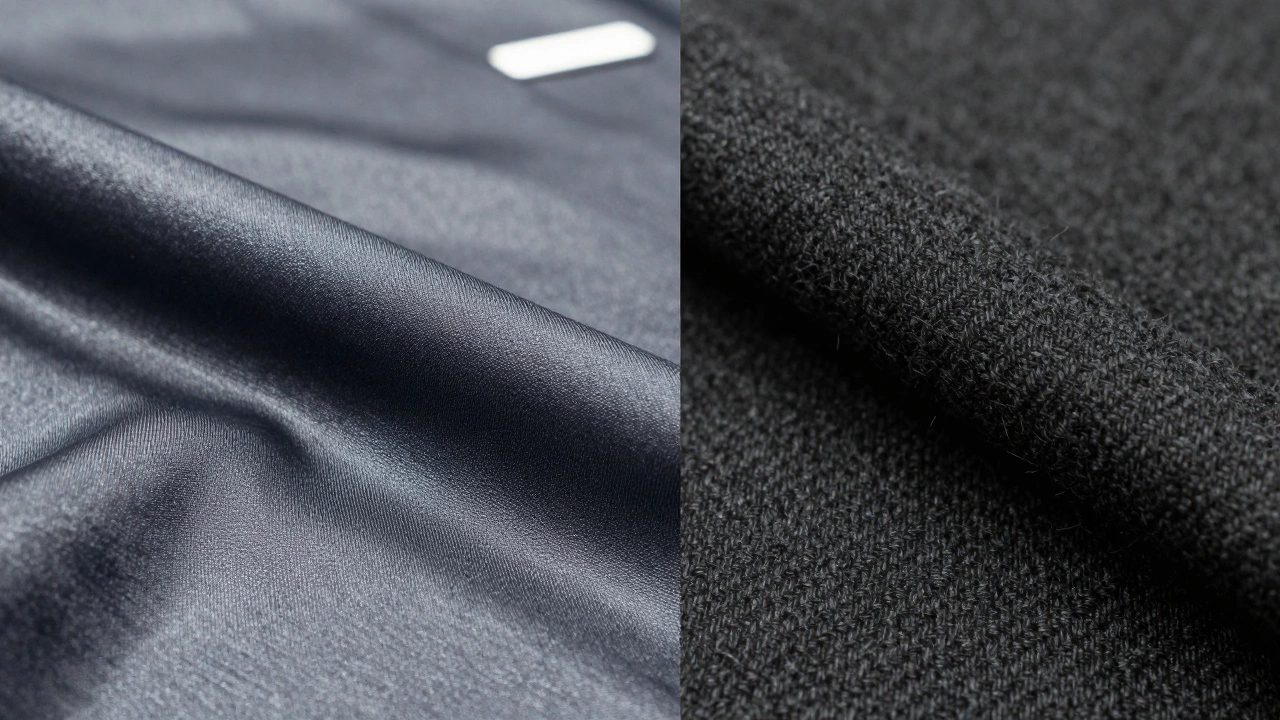
Suit Investment & Value Calculator
Budget Option
Luxury Option
Key Takeaways
- Cheap suits use synthetic blends (polyester) that don't breathe and look "shiny."
- Luxury suits use high-grade wool (Super 100s+) and a full canvas interior.
- The biggest cost jump is the construction method, not just the fabric.
- A $1000 suit lasts a decade with care; a $100 suit often wears out in two years.
The Fabric: Plastic vs. Protein
The first thing you'll notice is the material. A budget suit, the kind you might find in a fast-fashion outlet, is usually made from a Polyester a synthetic polymer that is durable but lacks breathability blend. To the untrained eye, it looks fine on the hanger. But once you're wearing it in a crowded pub during a match, you'll feel it. Polyester traps heat and moisture. You'll sweat more, and the fabric often has a tell-tale artificial sheen that screams "cheap" under bright office lights.
Now, step up to the luxury tier. Here, you're dealing with Merino Wool a high-quality, fine wool produced by Merino sheep, known for its softness and temperature regulation. High-end suits often reference "Super 100s" or "Super 120s." This refers to the fineness of the wool fibers. A Super 120s wool is thinner and softer, making the suit feel lighter and drape more naturally over your body. In the damp Irish climate, wool is your best friend because it's naturally water-resistant and regulates your body temperature far better than a plastic blend ever could.
The Secret Inside: Fused vs. Canvas
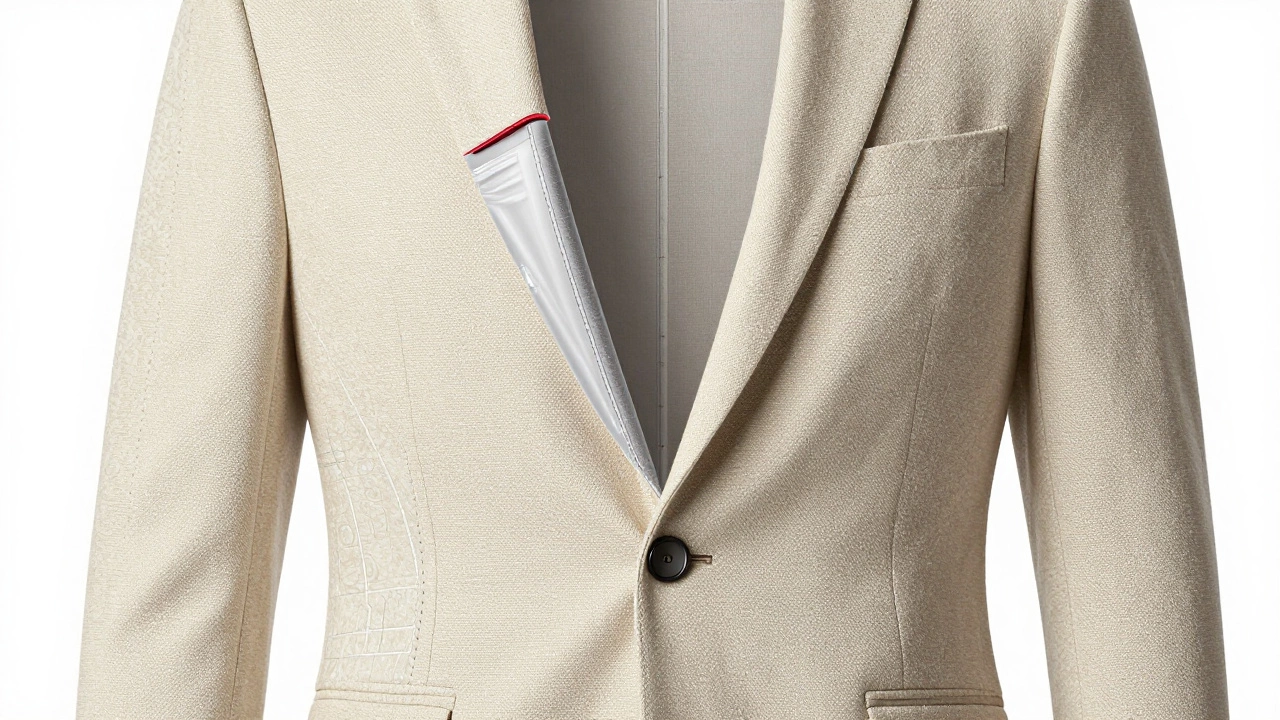
If you cut a suit open, you'd find the real reason for the price hike: the internal structure. Most $100 suits use Fused Construction a method where the internal interfacing is glued to the outer fabric using heat and adhesive. It's fast and cheap to produce. The problem? Over time, the glue can degrade, leading to "bubbling" on the chest of the jacket-a permanent scar that makes the suit look old and worn.
A $1000 suit uses Full Canvas a tailoring technique where a layer of horsehair canvas is stitched between the outer fabric and the lining. Because the canvas is sewn, not glued, it can mold to your specific shape. The more you wear a canvassed suit, the better it fits, as the horsehair remembers your body's contours. This is why a high-end jacket from a Savile Row-style tailor in Dublin feels like a second skin, whereas a budget jacket often feels like you're wearing a cardboard box.
| Feature | Budget Suit ($100) | Luxury Suit ($1000) |
|---|---|---|
| Material | Polyester/Viscose Blend | Pure Merino Wool / Cashmere |
| Internal Structure | Fused (Glued) | Full Canvas (Stitched) |
| Breathability | Low (Traps heat) | High (Natural thermoregulation) |
| Longevity | 1-3 Years | 10+ Years (with care) |
| Drape | Stiff, Boxy | Fluid, Contoured |
The Fit and the Finishing Touches
Budget suits are made for the "average" person. They use generic blocks that assume everyone has the same proportions. If you're slightly taller or broader than the norm, you'll find the sleeves are always too short or the waist is too baggy. You can get them altered at a local dry cleaner in Cork or Galway, but there's a limit to how much a cheap suit can be tweaked before it looks skewed.
Luxury suits, especially those that are Made-to-Measure a service where a suit is created based on the customer's specific body measurements, start with a much higher level of precision. Look at the buttons. A budget suit uses plastic buttons. A luxury suit uses Horn Buttons buttons made from genuine animal horn, prized for their durability and unique grain. Check the stitching. High-end suits often feature "working cuffs" (surgeon's cuffs), meaning the buttons on the sleeve actually open. While not purely functional for most of us, it's a hallmark of quality tailoring.
Practical Value: Which One Should You Buy?
Choosing between these two isn't just about how much money is in your bank account; it's about the occasion. If you're a student heading to a one-off graduation ceremony or a job interview for an entry-level role, spending $1000 is overkill. A budget suit, properly tailored to fit your waist and sleeves, will get the job done. Just remember to avoid the "shiny" fabrics-stick to matte navy or charcoal to hide the synthetic nature of the material.
However, if you're building a professional wardrobe for a career in law or finance in the city, the $1000 investment makes sense. A high-quality Two-Piece Suit a formal ensemble consisting of a matching jacket and trousers in a mid-weight wool is a tool of the trade. It signals attention to detail and professionalism. More importantly, it saves you money in the long run. Instead of buying three cheap suits over six years that all end up in a landfill, you buy one great suit and have it dry-cleaned sparingly.

Avoiding Common Pitfalls
One mistake people make when buying luxury suits is ignoring the "Super" number. While "Super 150s" sounds better than "Super 100s," it's actually more fragile. The higher the number, the thinner the fiber. If you're wearing your suit daily for commutes on the DART or Luas, a Super 100s or 110s wool is actually better because it's more durable and resists wrinkles more effectively than the ultra-fine luxury wools.
Another trap is the "Luxury Blend." Be wary of suits that claim to be "Wool Blend" but are 40% polyester. You're paying a premium for the brand name, but you're still getting a garment that doesn't breathe. If you're spending over $500, insist on 100% wool. The feel and the longevity are simply not comparable.
Can a $100 suit look like a $1000 suit?
To an extent, yes. The secret is tailoring. A cheap suit that fits perfectly looks better than an expensive suit that is too big. If you buy a budget suit, spend an extra €50 at a local tailor to have the trousers hemmed and the jacket waist taken in. It won't change the fabric quality or the internal canvas, but it will remove the "boxy" look associated with cheap clothing.
How often should I dry clean a luxury wool suit?
Far less than you think. Over-cleaning wool with harsh chemicals destroys the natural fibers. Instead, use a garment brush to remove dust and lint after each wear and hang it on a wide cedar hanger to let the wrinkles fall out. Only dry clean it once or twice a year, or when it's visibly stained.
Is a $1000 suit worth it for a wedding?
If it's your own wedding and you plan to wear the suit again for other formal events, then yes. If you're a guest and rarely wear suits, a mid-range option (around $300-$500) is the sweet spot. You get better fabric than the budget range without the extreme cost of a bespoke luxury piece.
What is the 'bubbling' effect in cheap suits?
Bubbling happens in fused suits when the adhesive glue between the fabric and the interfacing starts to peel away, usually due to heat or excessive dry cleaning. This creates small ripples or bubbles on the chest or lapels that cannot be ironed out.
Does the price always equal quality?
Not always. Some brands charge $1000 primarily for the logo. To ensure you're getting quality, check for a full canvas construction and 100% natural fibers. If a $1000 suit is "fused" and made of a poly-blend, you're paying for the brand, not the craftsmanship.
What to do next
If you're currently shopping, start by identifying your primary need. If you're on a budget, look for the best-fitting off-the-rack option and immediately take it to a professional tailor. If you're investing in a luxury piece, don't just trust the price tag-ask the salesperson specifically if the jacket is full canvas or fused.
For those in Ireland, keep an eye on the weather. If you're buying a suit for the summer wedding season, look for "Tropical Wool"-it's a lighter weave that keeps you cool during those rare Irish heatwaves while still maintaining the structure of a high-end garment.