Work Shoe Recommendation Finder
Select your profession below to see the podiatrist-recommended shoe specifications for your specific work environment.
Healthcare / Nursing
Long shifts, fluid exposure
Retail / Hospitality
Pivoting, constant standing
Corporate / Office
Professional look, commuting
Industrial / Manual
Impact, hazard protection
Podiatrist's Tip:
When you ask a foot specialist what they actually suggest, they aren't going to point you toward a specific trendy brand just because it's popular on Instagram. Instead, they look for a few non-negotiable features: a wide toe box, a firm heel counter, and a midsole that doesn't collapse under your weight. In the damp, unpredictable climate of Ireland, you also have to balance these health needs with materials that can handle a sudden downpour on the walk to the office or the humidity of a busy kitchen.
Quick Guide: What to Look For
- Arch Support: Not just a cushion, but a structural support that prevents the arch from flattening (over-pronation).
- Toe Room: Your toes should be able to wiggle. If they're squeezed, you're inviting bunions and neuromas.
- Heel Stability: A firm back to the shoe that keeps your ankle from rolling.
- Breathability: Essential for long shifts to prevent fungal infections and blisters.
The Anatomy of a Podiatrist-Approved Shoe
To understand why some shoes fail and others succeed, we have to look at the Foot Biomechanics is the study of the mechanical laws relating to the movement or structure form or function of the foot. Podiatrists focus on how weight is distributed across the plantar fascia. If you're wearing flat, cheap trainers, your weight shifts inward, putting immense strain on the tendons.
A recommended work shoe usually features a Orthotic as a corrective device, such as an insert, used to support the foot and correct its position. While some shoes come with built-in support, many pros suggest shoes with removable insoles. This allows you to swap out a generic foam piece for a medical-grade support tailored to your specific arch height.
Think about the typical Irish work environment. If you're a nurse in the Mater Hospital or a barista in a Galway cafe, you're dealing with a lot of "micro-movements"-constant shifting of weight from left to right. A shoe with a slight heel-to-toe drop (usually about 10-12mm) helps move your center of gravity forward, reducing the load on your Achilles tendon compared to completely flat shoes.
Top Recommendations by Profession
Different jobs put different stresses on the feet. A warehouse worker in an industrial estate in Naas has different needs than a corporate lawyer in the Docklands.
| Profession | Key Requirement | Recommended Style | Why it Works |
|---|---|---|---|
| Healthcare/Nursing | Fluid resistance & Cushioning | Professional Clogs/Sneakers | Prevents fatigue during 12-hour shifts |
| Retail/Hospitality | Arch Support & Breathability | Stability Trainers | Handles constant pivoting and standing |
| Corporate/Office | Aesthetics & Comfort | Leather Loafers with inserts | Professional look with internal support |
| Industrial/Manual | Impact Protection | Safety Boots with Gel Inserts | Protects toes while absorbing shock |
Dealing with Common Foot Issues in the Irish Climate
Living in Ireland means our feet spend a lot of time in damp environments. When your feet get sweaty or damp from the rain, the skin softens, making you far more susceptible to friction and blisters. This is where the material of your work shoe becomes critical.
Podiatrists often steer people away from cheap synthetic leathers that don't breathe. Instead, they recommend high-quality leather or engineered mesh. If you're working outdoors or in a wet environment, a Gore-Tex is a waterproof, breathable fabric membrane that protects against water while allowing vapor to escape. Using waterproof materials doesn't just keep you dry; it prevents the "swamp foot" effect that leads to fungal growth and skin breakdown.
If you suffer from Plantar Fasciitis as a common condition characterized by stabbing heel pain caused by inflammation of the thick band of tissue across the bottom of the foot, avoid any shoe that is too flexible in the middle. You want a shoe that resists twisting. Try the "twist test": hold the shoe by the heel and the toe and try to wring it like a towel. If it twists easily, it won't provide the stability your fascia needs to heal.
The Danger of "Comfort" Brands
You'll see plenty of shoes marketed as "comfort" or "walking shoes" in shops across Cork or Limerick. But be careful. A soft, squishy sole feels great for the first ten minutes in the store, but that's actually a red flag. Excessive softness provides no structural support. After four hours of standing, your foot will sink through that foam, and you'll end up feeling the hard floor anyway.
Real support feels firm but springy. Look for materials like EVA (Ethylene Vinyl Acetate) or polyurethane in the midsole. These materials maintain their shape over time and provide a consistent level of support. If you can press your thumb deep into the heel of the shoe and it doesn't bounce back immediately, it's not a supportive shoe; it's just a padded one.
How to Transition Your Footwear
If you've spent years wearing unsupportive shoes, jumping straight into a rigid, orthopaedic work shoe can actually cause pain. Your tendons and muscles have adapted to the "wrong" position. If you suddenly force them into the "right" position, you might feel soreness in your calves or arches.
- The Break-in Period: Wear your new shoes for two hours on the first day, then four the next. Give your feet time to adjust.
- Socks Matter: Pair your shoes with moisture-wicking socks (merino wool is great for the Irish winter). Avoid 100% cotton, which traps moisture and increases friction.
- Rotation: Don't wear the same pair every single day. Rotating between two pairs of supportive shoes allows the foam to decompress and prevents bacteria from building up.
- Check the Tread: Once the sole wears down on one side (usually the outer edge), the shoe is no longer supporting you correctly. In a high-activity job, this usually happens every 6 to 12 months.
Practical Advice for the Irish Worker
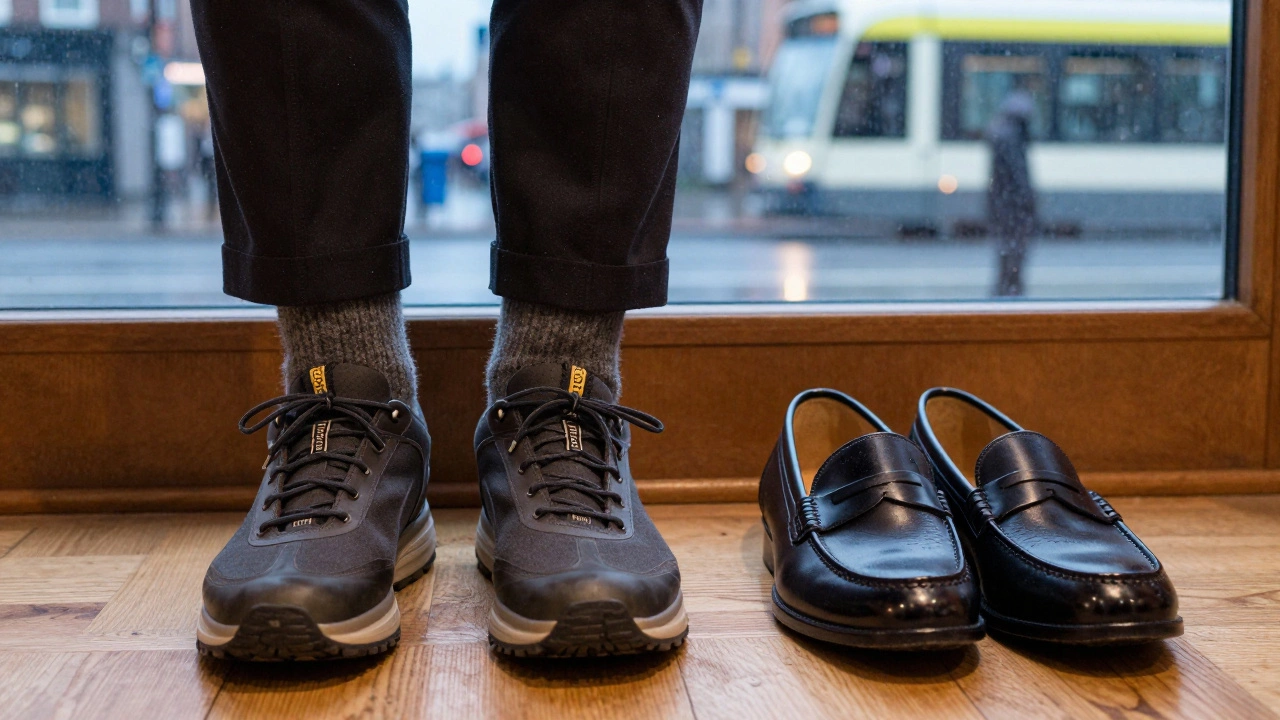
For those of us commuting via the DART or Luas, the walk from the station to the office can be the most damaging part of the day if you're wearing dress shoes. A common pro tip is to wear your supportive sneakers for the commute and swap into your professional footwear once you're at your desk. This saves your feet from the impact of the pavement.
If you are working in a high-pressure environment, like a busy hotel during the summer tourist peak in Killarney, the heat inside the building combined with long hours can cause your feet to swell. This is why podiatrists recommend buying work shoes in the late afternoon. Your feet are at their largest then, ensuring the shoes won't be too tight by 4 PM on a Tuesday.
Can I just use a gel insert in any shoe?
Not really. Gel inserts provide cushioning, but they don't provide structural support. If the shoe itself is unstable or has a collapsed arch, a gel pad is just a temporary bandage. For real relief, you need a contoured orthotic that supports the arch and aligns the heel.
Are barefoot shoes recommended for work?
Generally, no, not for long shifts on hard surfaces. While barefoot shoes are great for natural movement, they lack the shock absorption needed for concrete floors. Unless you have very strong intrinsic foot muscles and a gradual transition period, they can lead to fatigue and heel pain in a work setting.
How often should I replace my work shoes?
Most supportive shoes lose their structural integrity after 500 to 800 miles of walking, or about 6-12 months of full-time wear. If you notice the shoes leaning to one side or the cushioning feels "dead," it's time for a new pair.
Do I need a prescription for orthopaedic shoes?
Not necessarily. Many brands offer high-quality supportive options over the counter. However, if you have severe flat feet, high arches, or chronic pain, a podiatrist can create custom-molded orthotics that fit into standard shoes, which is often more effective than buying a generic "orthopaedic" shoe.
What's the best material for rainy Irish weather?
Treated leather or Gore-Tex are the gold standards. They keep the water out while allowing your feet to breathe. Avoid cheap plastics or canvases, as they either let water in or trap sweat inside, both of which lead to blisters and fungal issues.
Next Steps for Foot Health
If you're still feeling pain despite wearing supportive shoes, it's time to see a professional. Look for a registered podiatrist in your local area for a gait analysis. They can tell you exactly how your foot strikes the ground and whether you need a stability shoe (for over-pronation) or a neutral shoe (for high arches). In the meantime, try simple stretches for your calves and plantar fascia every evening to keep the tension low.