
Irish Workplace Crocs Acceptability Checker
Not sure if you can wear your Crocs to the office today? Answer a few questions about your environment and outfit to get an instant acceptability rating.
You’re standing on the damp pavement outside a tech hub in Dublin’s Silicon Docks, or maybe you’re rushing to catch the Luas in Cork, and your feet are screaming. The rain has just started again-it’s November in Ireland, after all-and your leather brogues are soaked through. You look down at the bright yellow Crocs sitting by your door. They promise comfort. They promise dry feet. But do they promise a promotion? Or worse, do they promise an awkward conversation with HR?
The debate over whether Crocs belong in the workplace has raged since the foam clog first hit shelves. For years, they were strictly for gardeners, nurses, and chefs. But as remote work blurs lines and comfort becomes a priority, many Irish professionals are asking: can we actually wear these in the office? The answer isn’t a simple yes or no. It depends entirely on who you work for, what you do, and how well you style them.
The Changing Face of Workplace Dress Codes in Ireland
If you worked in a bank on St Stephen’s Green ten years ago, wearing Crocs would have been about as acceptable as showing up in pyjamas. Traditional Irish corporate culture leaned heavily towards formal attire-suits, ties, polished leather shoes. However, the landscape has shifted dramatically. The rise of multinational tech companies setting up shop in Dublin, Galway, and Limerick brought a more relaxed approach to dressing.
Today, many startups and creative agencies in the Grand Canal Dock area don’t care what you wear, as long as you deliver results. In these environments, functionality often trumps formality. If your role involves moving around a warehouse, walking between meetings, or standing for long periods, the rigid expectations of traditional work shoes are being replaced by practicality. This cultural shift means that while you might not see Crocs in a law firm on Merrion Square, you’ll spot plenty of them in open-plan offices where the dress code is "business casual" at best.
Where Crocs Shine: Industries That Embrace Comfort
Crocs aren’t trying to be fashion statements; they are tools. And like any tool, they excel in specific scenarios. In Ireland, several industries have quietly accepted, or even encouraged, this type of footwear due to the physical demands of the job.
Healthcare and Hospitality: Nurses working shifts in hospitals like Mater Misericordiae or University Hospital Galway often choose Crocs because they are easy to clean, waterproof, and provide arch support during 12-hour shifts. Similarly, staff in busy pubs or hotels dealing with spills find that foam clogs survive the chaos better than suede loafers.
Tech and Creative Sectors: Many software developers and designers spend hours seated but also move frequently between meeting rooms and coffee machines. The ease of slipping into Crocs (or their more stylish siblings, like the Pollex Clog) fits the low-effort vibe of modern tech culture. Companies like Stripe or Microsoft in Dublin often tolerate them if the rest of your outfit looks put-together.
Retail and Warehousing: If you work in logistics centers near Dublin Airport or retail parks in Naas, standing on concrete floors all day is brutal on your joints. Crocs offer cushioning that standard sneakers sometimes lack. Here, safety regulations matter more than aesthetics, so ensure your pair has closed toes if required.
The Styling Challenge: Making Crocs Look Professional
Let’s be honest: classic Classic Crocs in neon green look like something you’d wear to a festival, not a boardroom. If you want to pull off Crocs in a semi-professional setting, you need to curate the rest of your outfit carefully. Think of it as balancing an equation: one side is the quirky shoe, the other side must be sharp clothing.
In Ireland, where weather dictates much of our wardrobe, layering is key. Pair neutral-colored Crocs (black, navy, grey, or beige) with tailored trousers or smart chinos. Avoid jeans with holes unless you work in a very casual startup. Add a structured blazer or a high-quality knit sweater. This elevates the look from "I forgot my shoes" to "I made a deliberate choice."
Consider the model you buy. Not all Crocs are created equal. The Litera Clog features a sleeker design with fewer holes and a more refined silhouette, making it far easier to integrate into a business-casual wardrobe than the bulky Classic Clog. Another option is the Baya Line, which offers a lower profile and less bulk. These variants signal that you’ve thought about your appearance, rather than just grabbing whatever was closest to the door.
| Model Type | Aesthetic Profile | Best For | Workplace Rating |
|---|---|---|---|
| Classic Clog | Bulky, iconic, sporty | Healthcare, Outdoor roles | Low (unless uniform) |
| Litera Clog | Sleek, minimal holes | Office, Retail | Medium-High |
| Pollex Clog | Fashion-forward, chunky sole | Creative Agencies, Startups | Medium |
| Baya Line | Lightweight, streamlined | General Office Wear | High |

Irish Weather and Practical Considerations
Living in Ireland means dealing with unpredictable weather. One minute it’s sunny, the next it’s sideways rain. This affects shoe choices significantly. Crocs are inherently water-resistant, which is a massive plus when commuting on wet footpaths in Belfast or walking across Trinity College grounds in Dublin. Unlike canvas trainers that absorb moisture and take days to dry, Crocs can be wiped clean in seconds.
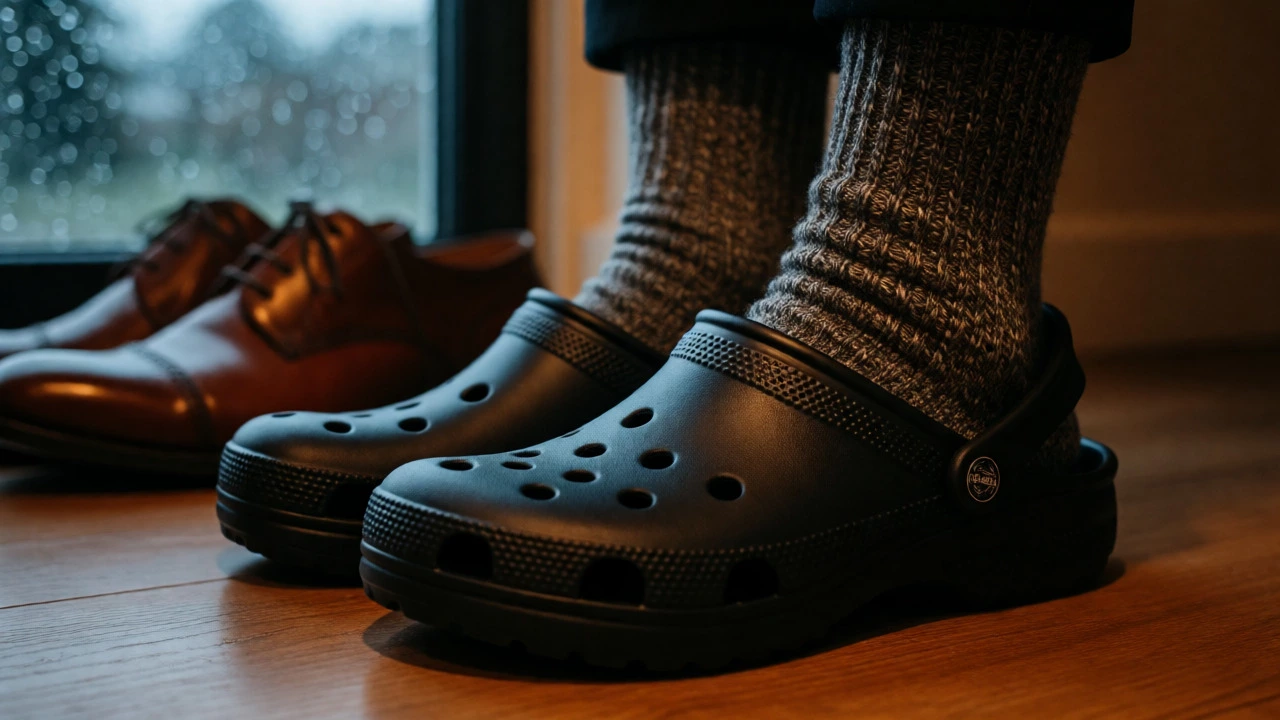
However, there’s a downside: insulation. Foam doesn’t retain heat well. In January, your toes will feel the chill. To combat this, invest in thick wool socks. Merino wool blends are popular here for a reason-they wick moisture away while keeping feet warm. Wearing black Crocs with dark wool socks creates a cohesive look that hides the fact you’re wearing foam clogs. It’s a practical hack that respects both the climate and the dress code.
Also, consider the surface. While Crocs have good grip, some older models can become slippery on wet tiled floors common in Irish shopping centres or office lobbies. Always check the tread pattern before relying on them for a rainy commute.
Reading the Room: When to Leave Them at Home
Even in relaxed workplaces, context matters. Are you meeting a client from a traditional financial institution? Are you attending a formal presentation at the RDS? In these scenarios, Crocs are likely to send the wrong message. They can imply a lack of seriousness or effort, especially to older generations or conservative industries like banking, law, or insurance.
A good rule of thumb is the "Client-Facing Test." If you are directly interacting with external stakeholders who expect a certain level of polish, stick to leather shoes or high-end sneakers. Save the Crocs for internal days, deep-focus coding sessions, or hybrid work setups where you only appear on camera from the waist up. Many employees in Dublin keep a pair of smart shoes under their desk and swap out when needed. It’s a small compromise that keeps everyone happy.
Furthermore, pay attention to company policy. Some organizations explicitly ban open-toed shoes or sandals. Since Crocs are technically closed-toe but open-backed, they fall into a gray area. Check your employee handbook. If it says "closed-toe shoes," you’re usually safe. If it says "professional footwear," you might need to use discretion or ask your manager.
Alternatives to Crocs for the Irish Professional
If you love the comfort of Crocs but worry about the perception, there are alternatives that bridge the gap between orthopedic support and professional aesthetics. Brands like Allbirds, known for their sustainable materials, offer merino wool runners that look like smart casual shoes but feel like slippers. They are increasingly common in Dublin’s tech scene.
Another option is supportive loafers from brands like Ecco or Clarks. These provide the structure expected in a business environment but include cushioned insoles similar to what you get in Crocs. For those who prefer the slip-on convenience, try leather mules or backless loafers. They offer the same ease of entry and exit without the plastic-y visual cue of a clog.
Ultimately, the goal is to find footwear that supports your health without undermining your professional image. Your feet bear the weight of your career-literally. Ignoring discomfort leads to fatigue, which impacts productivity. So, while Crocs might not be universally accepted, they have carved out a legitimate niche in the Irish workplace.
Frequently Asked Questions
Can I wear Crocs to a job interview in Ireland?
Generally, no. Unless you are interviewing for a highly creative role or a manual labor position where safety gear is standard, stick to traditional smart shoes. First impressions matter, and Crocs can come across as too casual or lazy for most Irish employers.
Are Crocs considered unprofessional in Dublin offices?
It varies by industry. In tech startups and creative agencies in areas like Docklands, they are widely accepted. In traditional sectors like finance or law in City Centre, they are still viewed as unprofessional. Always observe what senior colleagues wear before trying them yourself.
What color Crocs are most appropriate for work?
Stick to neutral tones like black, navy, charcoal, or white. Bright colors like lime green or pink draw unnecessary attention and can clash with professional attire. Neutral colors blend better with trousers and skirts, making the shoes less of a focal point.
Do Crocs meet health and safety standards for warehouses?
Some models do, but you must check specifically for steel toe caps or composite toes. Standard Crocs offer slip resistance and closed toes, but they may not protect against heavy falling objects. Always verify with your employer's safety officer before wearing them on site.
How do I keep Crocs looking clean in muddy Irish winters?
Use a mixture of warm water and mild soap. Scrub with a soft brush to remove mud from crevices. Avoid harsh chemicals that can degrade the foam. For white Crocs, baking soda paste can help restore brightness. Dry them naturally away from direct heaters to prevent warping.