Air Jordan Material & Care Identifier
Select your Jordan model or material type below to get instant verification tips and care instructions tailored for the Irish climate.
If you have ever stood in the queue outside Brown Thomas on Grafton Street or browsed the racks at JD Sports in Dundrum Town Centre, you have probably asked yourself: are Air Jordans made of leather? It is a fair question. For many people in Ireland, these shoes are more than just footwear; they are cultural artifacts, status symbols, and sometimes, significant investments. With prices often hovering around €150 to €200+ for a standard pair, knowing what your money buys matters.
The short answer is yes, but it is not that simple. Most classic Air Jordan models, particularly the OG releases like the Jordan 1 and Jordan 4, are primarily constructed from leather. However, "leather" is a broad term. Depending on the specific model, the year of release, and whether it is an original vintage pair or a modern reproduction, the material can range from premium full-grain calfskin to synthetic polyurethane (PU) alternatives. Understanding this distinction saves you heartache when cleaning them after a rainy Tuesday in Galway or helps you spot a fake before you hand over your cash.
The Material Mix: What Actually Goes Into a Pair
Nike, the parent company of the Jordan Brand, uses a variety of materials. While the upper part of the shoe-the bit that covers your foot-is often leather, other parts might not be. Here is a breakdown of what you typically find in a standard Air Jordan 1 High:
- Full-Grain Leather: This is the top-tier material. It comes from the outer layer of the hide and retains its natural grain. It is durable, breathable, and ages well, developing a patina that many collectors in Dublin’s sneaker community love.
- Suede: Often used for the toe box or heel overlays. Suede is technically leather with a brushed finish, giving it a soft, matte texture. It looks great but hates water-something any Irish resident knows all too well.
- Nubuck: Similar to suede but sanded down further for a smoother feel. You will see this on models like the Jordan 3. It is slightly more resistant to stains than suede but still requires care.
- Synthetic Materials (PU): Some lower-cost collaborations or specific lifestyle editions use polyurethane. It mimics the look of leather but does not breathe as well and tends to crack faster.
Why does this matter? Because treating a synthetic shoe like real leather can ruin it, and vice versa. If you buy a pair of Jordan 1s from a reseller on DoneDeal.ie, check the tag inside the tongue. It usually lists the materials explicitly.
How to Spot Real Leather vs. Synthetic
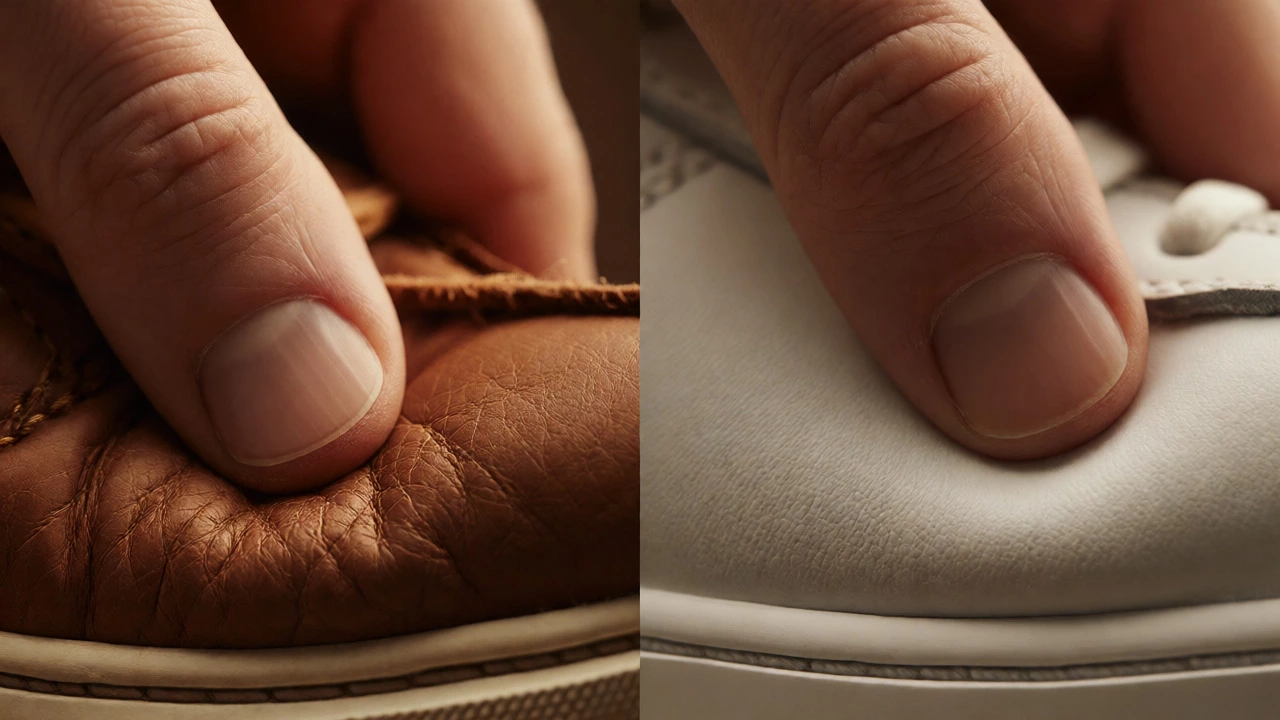
You do not need a degree in textile science to tell the difference. Use your senses. Genuine leather has a distinct smell-a rich, earthy aroma that synthetics cannot replicate, no matter how hard they try. When you press your thumb into genuine leather, it should wrinkle slightly and bounce back slowly. Synthetic PU tends to feel plasticky and springs back instantly without creasing.
Look at the edges. If the material is cut, real leather shows a fibrous cross-section. Synthetic material often has a fabric backing visible at the edge or looks uniformly solid throughout. Another trick? The heat test. Hold a lighter near a hidden seam for a second. Real leather chars slightly and smells like burnt hair. Plastic melts and smells like chemicals. Be careful not to burn your new kicks!
Irish Weather and Your Leather Jordans
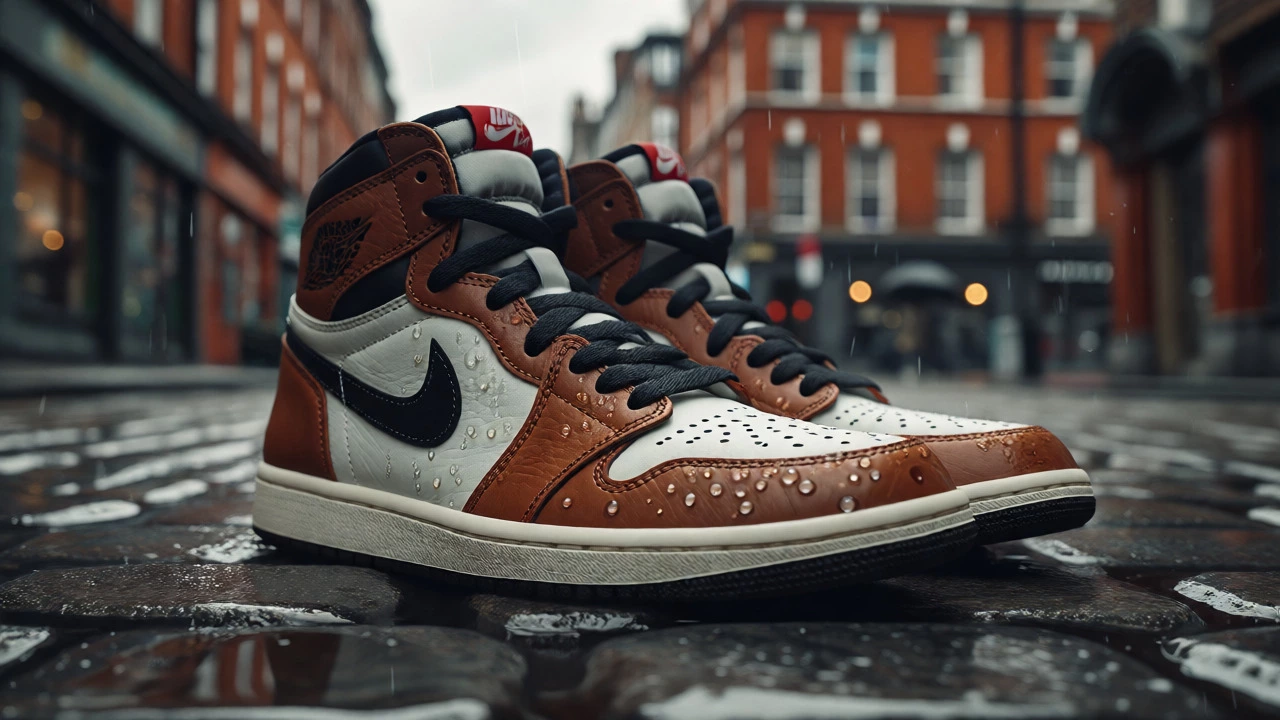
Living in Ireland means dealing with rain. Lots of it. According to Met Éireann, some parts of the west receive over 2,000mm of rainfall annually. How does this affect your leather Air Jordans?
Leather is porous. Without protection, it absorbs water, which can lead to warping, discoloration, and mold growth if dried improperly. Many sneakerheads in Cork and Limerick swear by protective sprays. Brands like Crep Protect or Jason Markk offer nano-sprays that create a hydrophobic barrier. Apply two coats before wearing your Jordans out in a Dublin drizzle. Reapply every few weeks depending on wear.
If you do get caught in a downpour while walking along the Cliffs of Moher or waiting for a bus in Belfast, do not put your wet shoes near a radiator. Heat dries leather too quickly, causing it to crack. Instead, stuff them with newspaper to absorb moisture and let them air dry at room temperature. Patience is key here.
Cleaning and Maintenance Tips for the Irish Climate
Maintaining leather sneakers in a damp climate requires a routine. Here is a simple checklist to keep your Jordans looking fresh:
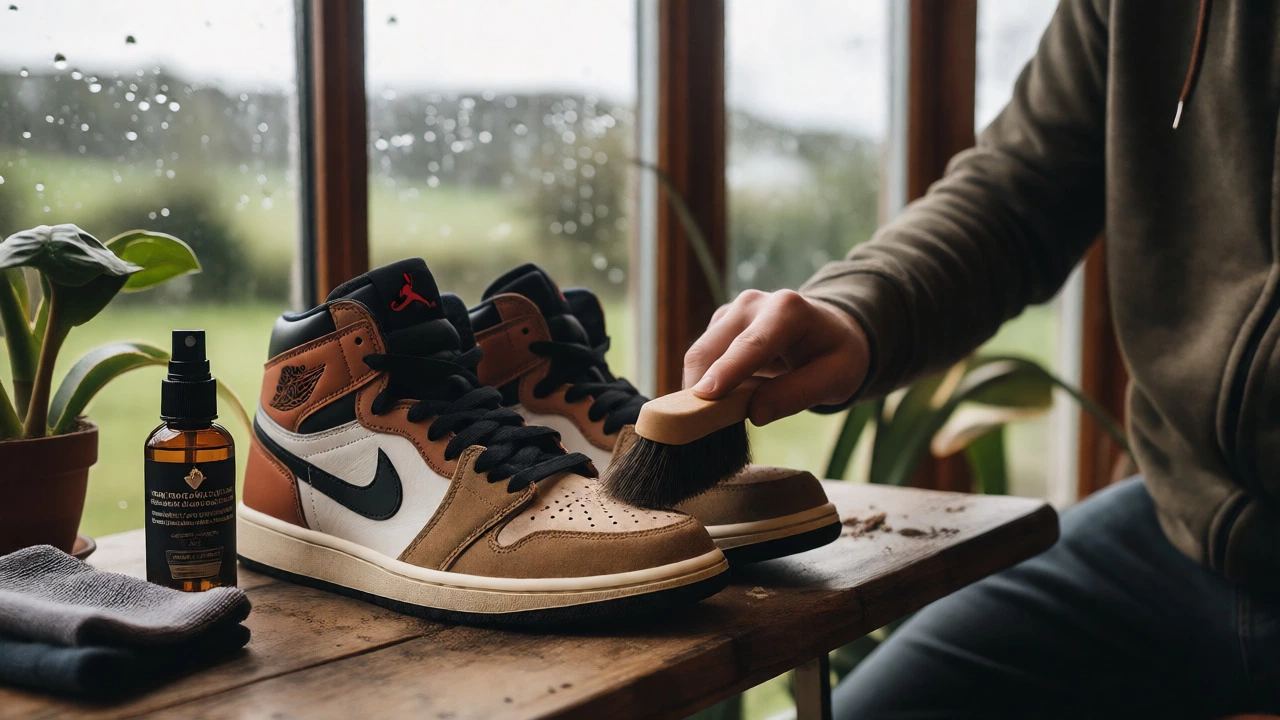
- Dry Brush First: Remove loose dirt and mud with a soft-bristled brush. Do this when the shoes are dry. Wetting muddy shoes first spreads the grime deeper into the leather pores.
- Use pH-Balanced Cleaner: Regular soap can strip natural oils from leather. Use a dedicated sneaker cleaner. Work it into a lather with a soft brush and gently scrub in circular motions.
- Rinse Carefully: Wipe away soap residue with a damp microfiber cloth. Do not submerge the shoe unless the label says it is safe. Most leather Jordans are not machine washable.
- Condition the Leather: Once clean and dry, apply a leather conditioner. This restores flexibility and prevents cracking. This step is crucial in winter when indoor heating dries out the air.
- Store Properly: Keep your pairs in their boxes or a breathable shoe bag. Add silica gel packets to absorb excess humidity, especially during the wetter months from October to March.
| Model | Primary Upper Material | Secondary Materials | Ideal For |
|---|---|---|---|
| Jordan 1 Retro High OG | Full-Grain Leather | Suede (Toe Box), Nylon (Tongue) | Everyday wear, casual fashion |
| Jordan 3 Retro | Nubuck & Elephant Print | Textile lining, Rubber midsole | Style statements, collectors |
| Jordan 4 Retro | Leather & Mesh | TPE Wings, Rubber sole | Basketball heritage, streetwear |
| Air Jordan 1 Low SE | Variety (Canvas, Suede, Synth) | Depends on colorway | Summer festivals, light wear |
Buying Authentic Pairs in Ireland
The resale market in Ireland is vibrant. Platforms like StockX and eBay are popular, but local options exist too. Stores like Kicks Crew in Dublin or online Irish retailers often stock limited releases. Always verify authenticity. Fake Jordans are common, and counterfeiters often use cheaper synthetic leathers that peel after a month of wear.
Check the stitching. On genuine pairs, stitching is tight and even. Loose threads or uneven gaps suggest poor quality control or a fake. Also, inspect the box label. The font, spacing, and barcode should match official Nike standards. If the price seems too good to be true-say, €80 for a rare Jordan 1-it probably is.
Environmental Impact and Ethical Considerations
Some buyers in Ireland are increasingly concerned about sustainability. Traditional leather production has a high carbon footprint. In response, Nike has introduced initiatives like Flyleather, which uses recycled leather fibers. Some newer Jordan collaborations feature vegan-friendly materials. If ethical sourcing matters to you, look for tags indicating recycled content or alternative materials. The Irish consumer base is becoming more conscious of these issues, pushing brands toward greener practices.
Frequently Asked Questions
Do all Air Jordans contain animal products?
Most classic Air Jordans do contain leather, which is an animal product. However, some modern lifestyle editions or specific collaborations may use synthetic alternatives. Always check the material composition listed on the inner tongue tag or the product description on the retailer's website to confirm if a specific pair is vegan-friendly.
Can I wear my leather Air Jordans in the rain in Ireland?
You can, but it is risky without protection. Leather is not naturally waterproof. To wear them safely in Irish weather, treat them with a high-quality water-repellent spray. Avoid heavy downpours, and never dry wet leather shoes directly on a heater, as this causes cracking.
How do I clean suede parts on my Jordans?
Suede requires gentle care. Use a specialized suede eraser to remove scuffs and a suede brush to restore the nap. Avoid using water-based cleaners on suede unless necessary, as water can stain it permanently. For deep stains, consider professional cleaning services available in major cities like Dublin and Cork.
Is synthetic leather worse than real leather for Jordans?
Not necessarily. Synthetic leather (PU) is easier to clean and more consistent in appearance. However, it lacks breathability and durability compared to high-quality full-grain leather. Real leather ages better and offers superior comfort over time, but it requires more maintenance, especially in humid climates.
Where can I buy authentic Air Jordans in Ireland?
Authorized retailers include Nike.com, JD Sports, Foot Locker, and specialty stores like Kicks Crew in Dublin. For resale, trusted platforms like StockX or verified sellers on eBay are safer bets than random social media groups. Always request proof of purchase or authentication certificates when buying second-hand.